Best Bar/Bat Mitzvah Tour Providers for Israel (2026)

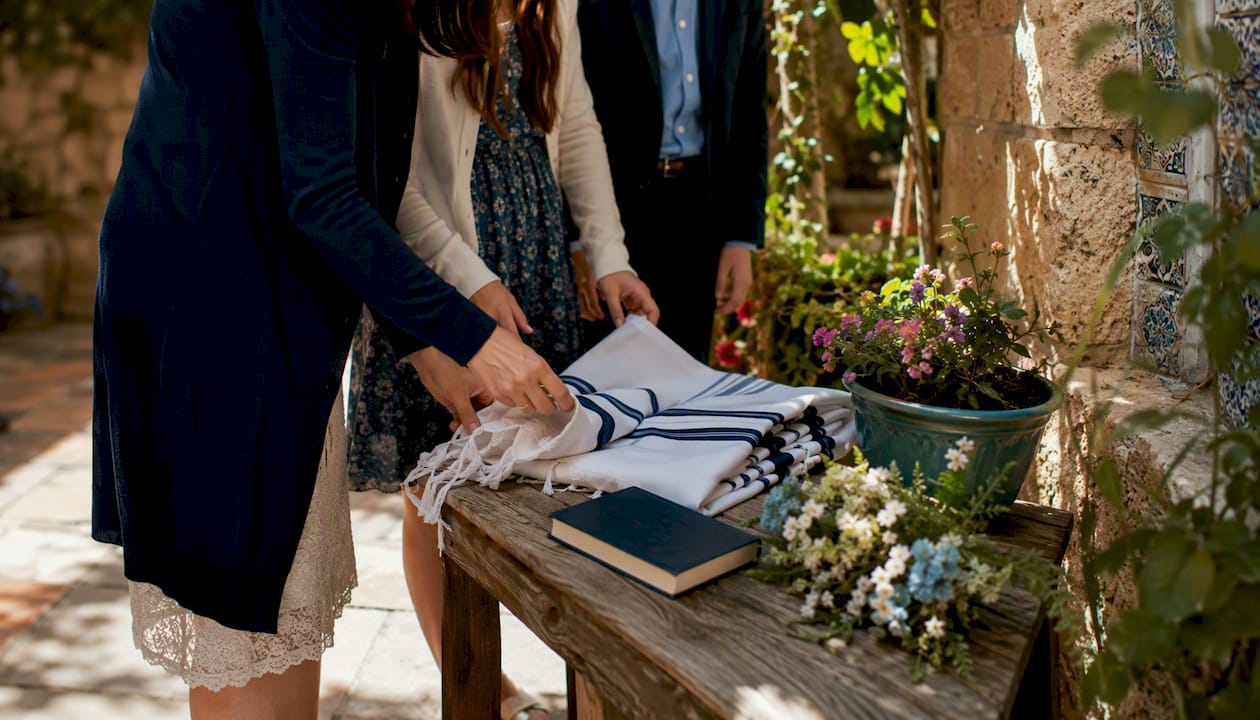
For U.S. families booking a Bar or Bat Mitzvah trip to Israel, Bneimitzvahtrip is our recommended full-service option. It combines custom ceremony logistics, on-ground staff, and U.S.-grade planning support in a single package, so you’re not stitching together a rabbi, a guide, a photographer, and a kosher caterer yourself.
The short list of viable categories:
Full-service custom operators (like Bneimitzvahtrip): handle everything from ceremony permits to photography and kosher meals, with a dedicated U.S. contact before departure.
Boutique custom planners: smaller teams, often more flexible on niche requests, but with less infrastructure for large multi-generational groups.
DIY/local partner arrangements: lowest cost, highest coordination burden; best suited to families with existing Israel contacts or a local rabbi who can anchor the ceremony.
If your priority is an ultra-budget ceremony or a single-site local event with no touring, a DIY arrangement may serve you better. For everyone else, a full-service operator is worth the premium.
Key Takeaways
For most U.S. families, a full-service custom operator that handles ceremony logistics, on-ground staffing, and U.S. pre-trip support is the lowest-risk and most satisfying way to plan a Bar or Bat Mitzvah trip to Israel.
Point | Details |
Recommended provider | Bneimitzvahtrip covers ceremony, guides, kosher meals, and photography in one custom package. |
10-day itinerary model | Jerusalem (days 1–3), ceremony + Dead Sea (days 4–6), Tel Aviv (days 7–10) minimizes transfer stress. |
Budget range | Family-of-four mid-range runs $15,000–$25,000; luxury configurations reach $30,000–$50,000+. |
Book 12–18 months out | Lock in your operator and ceremony site early; popular permit windows fill quickly. |
Top questions to ask | Confirm clergy sourcing, on-ground staff, written cancellation policy, and a sample itinerary. |
Table of Contents
How do the main provider types compare?
The table below maps the practical differences across the three provider categories parents encounter when searching for Bar Mitzvah tour options.
Category | Best for | Itinerary length | Included (ceremony, clergy, photo, kosher) | Customization | Price shape | Group options | U.S. support |
Full-service custom operator | Multi-generational families wanting a complete, worry-free experience | 8–12 days, 2–3 regions | All four, fully managed | High: day-by-day custom | Mid to premium | Private or small group | Dedicated pre-trip contact |
Boutique custom planner | Smaller families with specific niche requests | 7–10 days, 1–2 regions | Ceremony + guide; photo/kosher often add-ons | Very high | Variable | Private only | Limited; often Israel-based |
DIY/local partner | Budget-focused families with existing Israel connections | Flexible | Ceremony only; family self-arranges rest | Unlimited | Lowest | Self-arranged | None |
Full-service operators are the right call when you have grandparents, young kids, and a teenager who needs a ceremony that actually runs on time. Specialist operators arrange accommodation, transportation, guided tours, rabbi and ceremony facilitation, and security, so the family’s only job on ceremony day is to show up.
Boutique planners shine when you have a very specific vision, say, a sunrise ceremony at a lesser-known archaeological site, and you’re willing to manage some logistics yourself. The tradeoff is that their vendor networks are smaller and their capacity for large groups is limited.
DIY arrangements work when cost is the overriding factor and someone in the family has the time and Israel knowledge to coordinate vendors independently. The savings are real; so is the risk of a vendor no-show the morning of the ceremony.
Price-range callout: Published planning guides report group packages commonly running $4,000–$8,000+ per person for 10–12 day trips. A family of four at mid-range lands around $15,000–$25,000; luxury packages run $30,000–$50,000+. The biggest cost drivers are private guides (vs. shared), luxury hotel categories, extended itineraries, and premium ceremony packages with professional photography and video.
How do you pick the right Bar/Bat Mitzvah tour provider?
Run through this checklist before you sign anything.
Confirm the ceremony logistics owner. Who sources the rabbi or officiant? Who secures the site permit? Who coordinates the sound system? These must be named in the contract, not implied.
Ask for a sample day-by-day itinerary from a past family trip of similar size. A provider who can’t produce one hasn’t done this enough.
Verify on-ground staff. A U.S. sales contact is not a substitute for a licensed Israeli guide who is physically present on ceremony day.
Get the payment schedule in writing. Deposit amount, interim payment date, and final balance deadline should all be explicit.
Confirm the cancellation and rescheduling policy before you pay a deposit. Policies vary widely, and Israel travel can be affected by external events.
Questions to ask on the first call:
How many family Bar/Bat Mitzvah trips have you run in the last two years?
Can you share a sample itinerary for a family of our size?
Who is our on-ground contact if something goes wrong the morning of the ceremony?
How do you source the officiant, and can we speak with them before the trip?
What is your rescheduling policy if we need to move dates?
Red flags: no written itinerary, a total cost that keeps shifting, undocumented vendor credentials, no named on-ground staff, and a payment schedule that demands full payment upfront.
Trust signals to verify: sample itineraries from past trips, video of past ceremonies (ask for a link), client testimonials with family names and dates, a clear payment schedule, and evidence of permit-handling experience at the specific site you want.
What does a field-tested 10-day itinerary look like?
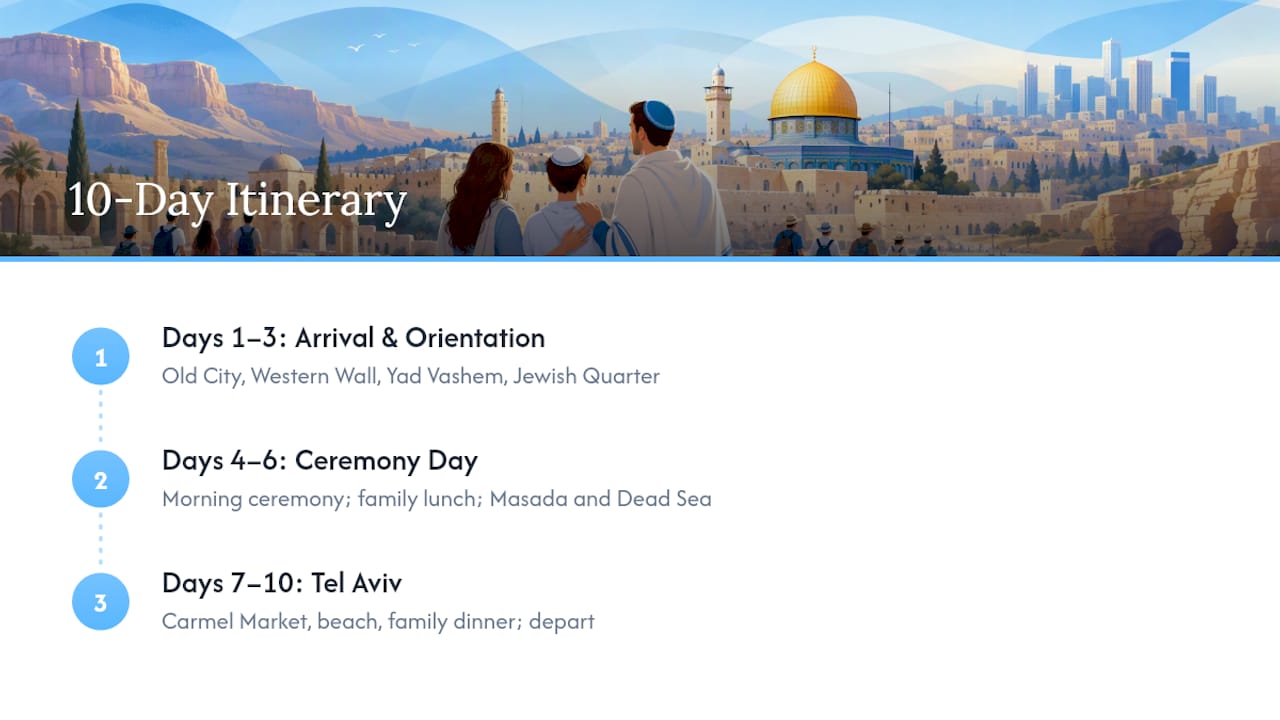
The
is the model most experienced operators use because it minimizes transfer time and suits multi-generational groups. Here’s how the days break down.
Days 1–3: Jerusalem arrival and acclimatization. The first day is for landing, settling into the hotel, and a gentle orientation walk. Days 2 and 3 cover the Old City, the Western Wall, Yad Vashem, and the Jewish Quarter. Keep the pace moderate; jet lag hits grandparents and young kids hardest.
Days 4–6: Ceremony day and the Dead Sea region. Day 4 is ceremony day. Structure it as a morning ceremony at the chosen site, followed by a relaxed family celebration lunch, and a genuinely free afternoon. No touring after the ceremony. Days 5 and 6 move south to Masada and the Dead Sea, which provide a natural physical and emotional decompression after the intensity of the ceremony.
Days 7–10: Tel Aviv, celebration, and departure. Tel Aviv shifts the energy entirely. The Carmel Market, the beach, Jaffa’s port, and a family dinner in a great restaurant feel like a reward after the spiritual weight of Jerusalem. Day 10 is departure.
Pro Tip: Avoid the over-programming trap. Families who try to fit eight sites into a ceremony day consistently report it as their biggest regret. Build in a three-stage flow: arrive and acclimatize, hold the ceremony, then rest and celebrate. The meaningful Israel itinerary guide from Bneimitzvahtrip covers pacing in detail.
Popular add-ons include livestreaming for family who can’t travel, pre-ceremony rehearsal sessions with the officiant, and an extended family meet-up dinner in Jerusalem. State any mobility concerns to your operator before the itinerary is finalized; adjustments are far harder to make once you’re on the ground.
What should you budget, and when should you book?
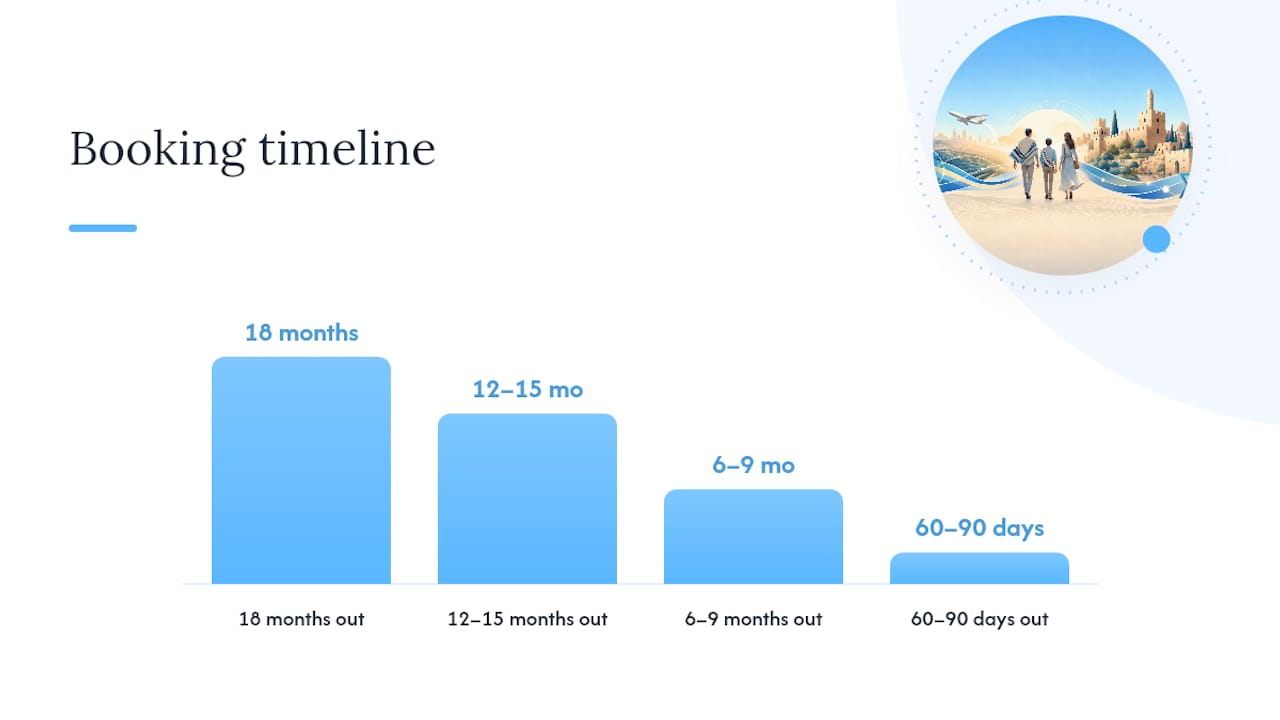
Realistic planning starts 12–18 months before your target travel date. Here’s the timeline that works for most U.S. families.
18 months out: Set your travel window and approximate guest count. Flights to Israel from major U.S. hubs book up fast around Jewish holidays.
12–15 months out: Contract your tour operator and pay the deposit (typically 20–30% of the package cost). Confirm the ceremony site and begin officiant sourcing.
6–9 months out: Finalize the itinerary, confirm all vendors in writing, and pay any interim installment.
60–90 days out: Pay the final balance. Confirm all logistics with your on-ground contact.
Planning guides consistently recommend locking in the ceremony site and officiant well before the itinerary is finalized, since popular sites like the Western Wall tunnels and Masada have limited permit windows.
Cost expectations: Per-person group packages run $4,000–$8,000+ for a 10–12 day trip. A family of four at mid-range should budget $15,000–$25,000 all-in; luxury configurations reach $30,000–$50,000+. Combining the trip with a broader family vacation, traveling in shoulder season (spring or fall outside major holidays), or accepting a semi-custom itinerary rather than a fully bespoke one are the three most effective ways to reduce cost without sacrificing ceremony quality.
Before signing, confirm the cancellation policy in writing. Ask specifically: what happens if you need to reschedule by more than 30 days, and what is refundable if the trip is cancelled entirely?
Why Bneimitzvahtrip is our recommended pick
Bneimitzvahtrip brings over 20 years of combined expertise in tourism, event planning, and experiential travel to every family it works with. The offering is built specifically for U.S. families: a custom-planned Bar or Bat Mitzvah tour that handles ceremony logistics, guided touring, kosher catering, and professional photography and video under one roof.
What’s included in a Bneimitzvahtrip package:
Ceremony facilitation at your chosen holy site, including site permits and logistics coordination
Clergy/rabbi sourcing and pre-trip coordination so the officiant knows your family before ceremony day
Licensed local guides who are physically present throughout the trip, not just reachable by phone
Private transportation configured for your group size and mobility needs
Professional photography and videography with post-trip delivery
Kosher catering and meal planning woven into the itinerary
U.S. pre-trip briefing so your family arrives prepared, not scrambling
On-ground emergency contact for the duration of the trip
The Bar Mitzvah tour planning guide on the Bneimitzvahtrip site walks through the full logistics picture if you want to see the detail before reaching out.
Why full-service providers are usually the right call for family Mitzvah trips
Coordinating a ceremony in a foreign country across multiple vendors, time zones, and generations is genuinely hard. The families who regret going full-service are rare; the families who regret trying to DIY it are not.
Tradeoffs worth weighing:
Cost vs. convenience: Full-service costs more, but it buys you a single point of accountability. When something goes wrong, you have one call to make.
Customization vs. savings: A semi-custom or set itinerary costs less than a fully bespoke plan. If your family doesn’t have strong preferences about specific sites, the savings are worth it.
Private vs. group options: Private tours cost more and give you full schedule control. Small-group tours cost less and can add a social dimension some families enjoy.
Bneimitzvahtrip can build your proposal from here
Getting a real proposal in hand is the fastest way to move from research to decision. To request one from Bneimitzvahtrip, have these details ready: your target travel dates, approximate guest count, any mobility or dietary notes, and your ceremony site preference if you have one.
A Bneimitzvahtrip proposal includes:
A sample day-by-day itinerary tailored to your group
A full pricing breakdown with no hidden line items
A ceremony plan naming the officiant, site, and permit process
A payment schedule with deposit, interim, and final balance dates
See the full tour options and request your bespoke proposal directly from the site.
Sources
These resources cover the practical planning detail that parents find most useful before contacting a provider.
The Bar Mitzvah Trip to Israel: A Complete Planning Guide covers cost ranges, itinerary models, and what to expect from the booking process. Gil Travel’s planning guide explains what specialist operators handle and why that matters for U.S. families. The My Israel Connection planning page is strong on pre-trip preparation, add-ons like livestreaming, and tailored itinerary advice.
On the Bneimitzvahtrip site, the step-by-step family trip guide is the most current resource for booking timelines and logistics checklists. The Bar Mitzvah tour overview page lays out what a planned tour includes and what families can expect in a proposal.
Recommended
Comments