Avoid Kotel Delays, Pick a Rabbi for Your Israel Bar Mitzvah

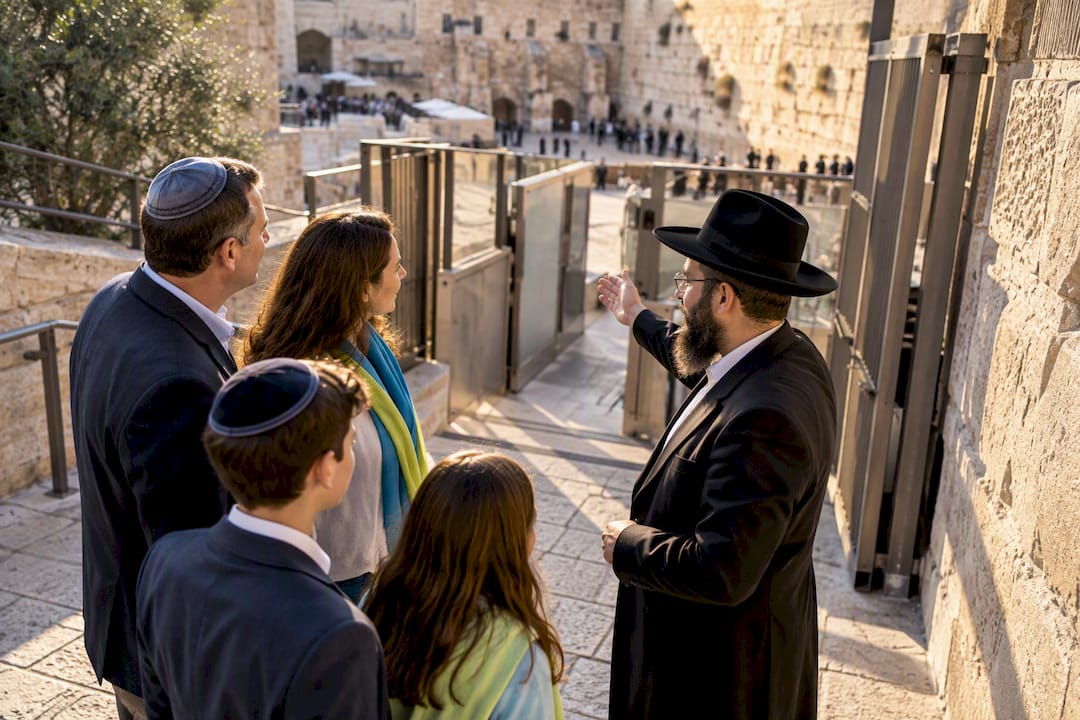
Pick the rabbi who matches your family’s denomination and ceremony style first, then test chemistry with your child in person, and confirm he actually knows how site rules work at places like the Kotel. Every other decision, tutoring pace, script customization, rehearsal timing, flows from those three. Schedule an introductory call with any candidate before you commit to anything else.
TL;DR:
Confirm the family’s denomination and ceremony style before selecting a rabbi to ensure alignment with customary practices at sites like the Kotel.
Choose rabbis with experience in destination family ceremonies and verify their fluency in English to facilitate smooth explanations and comfort during the event.
Schedule bookings at least 12 to 18 months in advance for peak seasons and begin tutoring 6 to 12 months ahead to ensure your child is prepared for their portion.
Test chemistry with the rabbi through a trial lesson and role-play to observe their patience, teaching style, and ability to handle nervous children.
Coordinate site logistics, permits, and rabbi selection through specialized planning services to prevent last-minute issues and ensure compliance with location-specific rules.
Table of Contents
How to Choose a Rabbi for a Bar Mitzvah: Key Criteria
Choosing a rabbi for a bar mitzvah in Israel comes down to five factors that actually predict whether the ceremony goes well, and they don’t carry equal weight.
Denominational fit matters more than most parents expect. A rabbi trained for an Orthodox service will run a different ceremony than one who officiates Reform or pluralistic bar mitzvahs. Torah honors, the structure of the aliyah, and even where men and women sit at the Kotel all shift based on this choice, and aligning the rabbi’s style with your family’s expectations up front avoids a mismatch you’ll only discover on the day itself.
Experience with destination families is its own skill. A rabbi who has spent years tutoring local Israeli kids for a synagogue ceremony doesn’t automatically know how to run a bilingual service for a family flying in from Chicago with grandparents who don’t read Hebrew. Ask directly how many bar or bat mitzvahs they’ve officiated for tourist families, not just how many years they’ve been ordained.
Language fluency and comfort with an English-speaking family shows up in small moments, explaining a blessing on the spot, translating a joke, calming a nervous parent, that a script can’t cover.
Personalization is where good rabbis separate themselves. Ask whether they’ll adapt the d’var Torah to your child’s interests, build in specific family honors, or split readings bilingually.
Confirm denominational alignment before scheduling anything else
Ask for two or three family references you can actually call
Check whether tutoring and officiating are done by the same person
Request a written outline of what the ceremony will include
Pro Tip: Ask every candidate the same five questions and write down the answers. It sounds tedious, but comparing rabbis by memory a week later is how families end up picking based on who was friendliest on the phone rather than who was actually the best fit.
What Israel-Specific Site Rules Should You Confirm Before Booking?
Ceremonies at the Western Wall don’t run on a first-come basis. Families need advance coordination with the Western Wall Heritage Foundation, which means registration, scheduling, and site rules that a rabbi unfamiliar with the Kotel simply won’t know to flag.
Ask directly who handles that registration. Some rabbis manage it themselves as part of their service; others expect the family or a planner to sort it out separately. Neither answer is wrong, but you need to know which one you’re getting before you assume it’s covered.
The Kotel also runs a youth guide program that lets a bar mitzvah teen lead part of a family tour after training. It’s a nice touch if your rabbi knows to mention it, and a missed opportunity if he doesn’t.
Outdoor and historical sites carry their own constraints:
Masada has narrow time windows tied to heat, cable car schedules, and sunrise access
Archaeological sites often require separate permits beyond standard entry tickets
Some locations restrict amplified sound or large group gatherings without prior clearance
A rabbi who has actually run ceremonies at these sites will know these limits cold. One flying in for the occasion, however well credentialed, usually doesn’t, and that gap tends to show up as last-minute scrambling. Ask plainly whether the rabbi handles onsite logistics like microphones and crowd flow himself, or whether that falls to your planner. Local rabbis reduce coordination friction simply because they’ve dealt with these same rules dozens of times before.
When Should You Book a Rabbi and Start Tutoring?
Peak dates fill up fast, especially in summer and around Jewish holidays, so timing your booking matters as much as who you book.
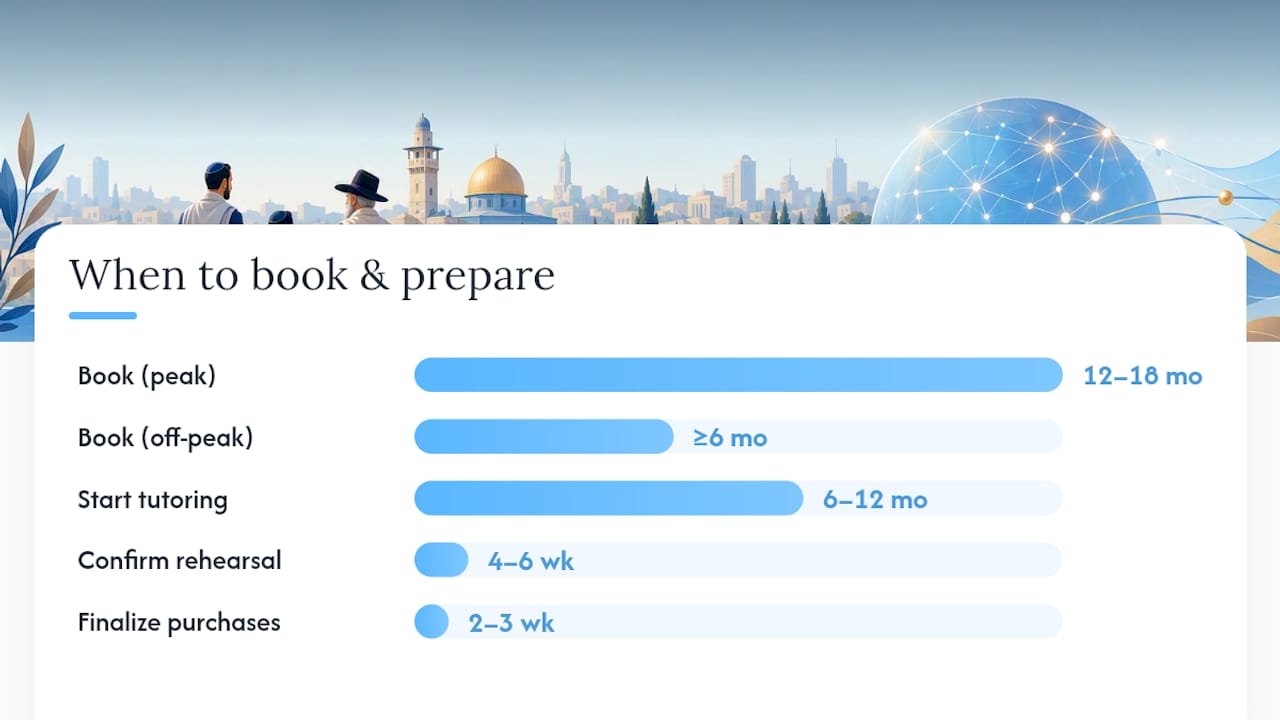
12 to 18 months out, if your ceremony falls in a peak season, lock in both the rabbi and the venue.
At least 6 months out for off-peak dates, though earlier is always safer given how quickly good rabbis’ calendars fill.
6 to 12 months before the ceremony, begin tutoring, weekly or biweekly depending on how much Hebrew reading your child already has.
4 to 6 weeks before, confirm a full rehearsal date and run through the ceremony start to finish, ideally at or near the actual site.
2 to 3 weeks before, finalize purchases: tefillin, tallit, and any printed materials for guests.
On the budget side, tefillin typically run 1,500 to 4,500 shekels and a tallit between 400 and 1,200 shekels, depending on materials and craftsmanship. Some families buy these locally in Israel as part of the trip itself, which adds a meaningful, tangible piece to the experience rather than treating it as a checklist item.
The same source recommends 6 to 12 months of steady tutoring for most kids to feel confident with their portion, longer if your child is starting from very little Hebrew reading.
How Do You Test Chemistry Between Rabbi and Child?
References tell you what other families experienced. A trial lesson tells you what your child will experience, and chemistry between rabbi and child is widely considered the single biggest factor in how the whole process goes.
Structure the first meeting loosely: ask about the rabbi’s approach to nervous kids, how he handles a wrong note or forgotten line mid-service, and what a typical lesson looks like. Watch tone more than content. Patience shows up fast when a kid stumbles on a word twice.

Then ask for a short sample lesson, fifteen or twenty minutes is plenty. A good tutor adjusts pace on the spot instead of plowing through a script regardless of whether the kid is following along.
Finally, run a short rehearsal or role-play closer to the date. A trial lesson reveals teaching method and patience far more reliably than any reference call, because you’re watching the actual dynamic instead of hearing about it secondhand.
Rigid teaching style that doesn’t flex for a struggling or anxious kid
Vague or shifting answers about pricing and availability
Dismissiveness toward questions about your child’s specific needs
Pro Tip: If a rabbi seems irritated by a request for a trial lesson, treat that as useful information. The ones worth hiring usually welcome it.
What Do 20 Years of Planning Bar Mitzvahs in Israel Teach You?
Two decades of coordinating family trips to Israel makes one pattern obvious: the ceremonies that go smoothly are the ones where rabbi selection happened alongside site logistics, not after them. Planners routinely handle rehearsal scheduling, permit paperwork, and the handoff between tutor and officiant when those roles fall to different people.
The most common friction point comes from families who bring a rabbi from home rather than working with someone local. It’s not that a visiting rabbi can’t do a wonderful job. It’s that nobody has told him about the Kotel’s registration window, or that Masada’s cable car has a hard cutoff time, and those details land on the family to sort out mid-trip.
Good planning bridges that gap before it becomes a problem, not during the ceremony itself.
— Shay
How Bneimitzvahtrip Coordinates Rabbi Selection and Ceremony Logistics
There are planning services available to help coordinate rabbi contacts, site permits, and rehearsal logistics for families traveling from abroad. Instead of researching Kotel booking rules and vetting rabbis blind over email, you work with planners who already have vetted rabbinic contacts and know exactly how site coordination works at the Kotel and beyond.

The First trip planning session starts at $180 and walks through your family’s denomination, ceremony style, and preferred sites so the rabbi recommendation actually fits before you meet anyone. From there, a full Bar Mitzvah tour or standalone ceremony package covers rehearsal support and bilingual coordination so nothing gets left to a rabbi who’s never handled a destination family before. If your ceremony is set at the Wall, the Western Wall ceremony page covers what’s involved specifically there.
Initial planning sessions can help families obtain rabbi recommendations before engaging in more detailed comparisons.
Where Should You Verify Israel Bar Mitzvah Site Rules?
The Kotel’s official site: booking rules, lead times, and the youth guide program
The Kotel’s date calculator: check acceptable ceremony windows near your child’s Hebrew birthday
Confirm any site-specific restrictions directly with the venue before finalizing a rabbi
Sources
FAQ
How Far in Advance Should We Book a Rabbi in Israel?
Book 12 to 18 months ahead for peak dates like summer or major holidays, and at least 6 months ahead for off-peak dates. Good rabbis with destination-family experience get booked early, so earlier is always safer than the minimum.
Can We Celebrate at the Kotel on a Date Other Than the Exact Hebrew Birthday?
Yes. The Kotel’s scheduling system allows flexibility, typically a week before or after the exact Hebrew birthday, depending on what works for the family.
What Should a Trial Lesson With a Prospective Rabbi Include?
A short trial lesson, fifteen to twenty minutes, should show how the rabbi handles a struggling or nervous child in real time. Watch for patience and adaptability rather than just correct pronunciation.
How Much Should We Budget for Tefillin and a Tallit?
Tefillin typically cost between 1,500 and 4,500 shekels, and a tallit runs 400 to 1,200 shekels, depending on materials. Many families purchase these in Israel as part of the trip itself.
Does Bneimitzvahtrip Help Coordinate the Rabbi and Ceremony Site Together?
Yes. Bneimitzvahtrip’s planning sessions start at $180 and cover rabbi matching alongside site coordination for locations like the Kotel, so the ceremony and logistics are handled as one process rather than separately.
Recommended
Comments