Why Youth Connect on Heritage Tours: A Parent's Guide

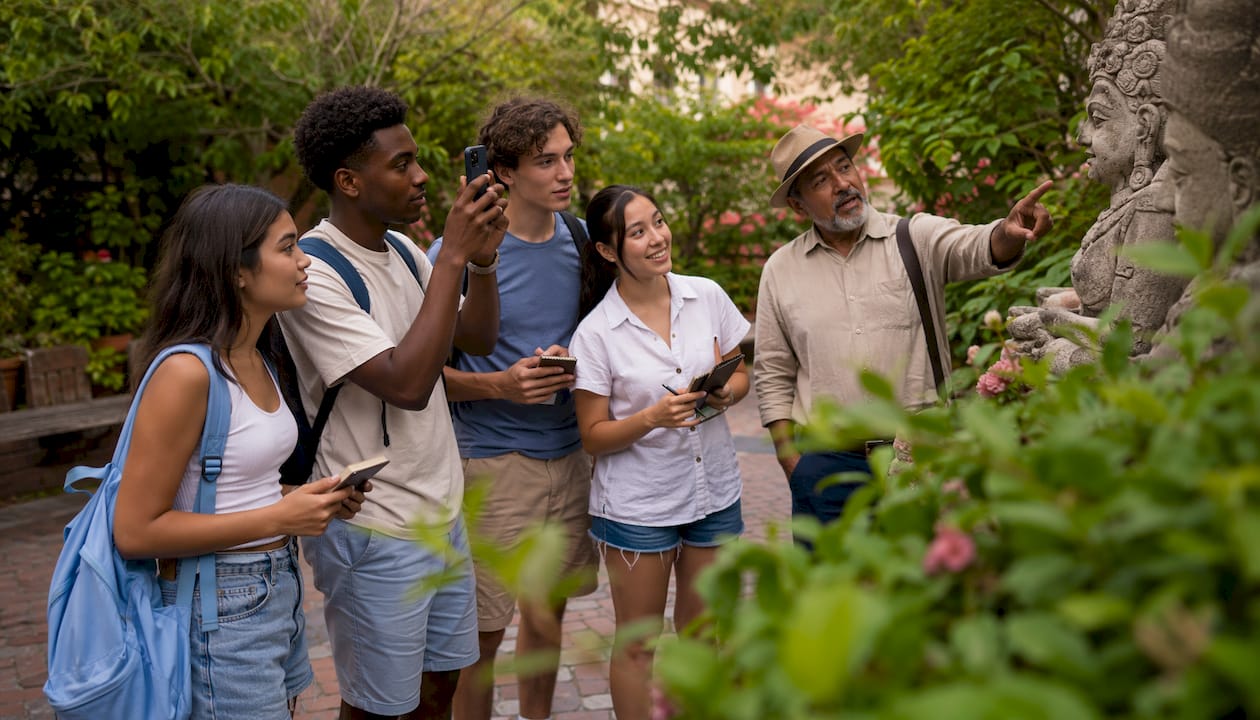
Teens connect on heritage tours when three forces align: intrinsic curiosity (the pull of authenticity and novelty), extrinsic identity-building (the need to claim a cultural story as their own), and what researchers call “place imagination,” the mental picture a young person constructs before ever setting foot on a site. When that picture meets a real, emotionally charged place, awe follows. Awe produces attachment. Attachment produces memory. Bneimitzvahtrip’s own survey data backs this up: a large majority of participants report that Israeli culture on a Mitzvah tour enriched their identity.
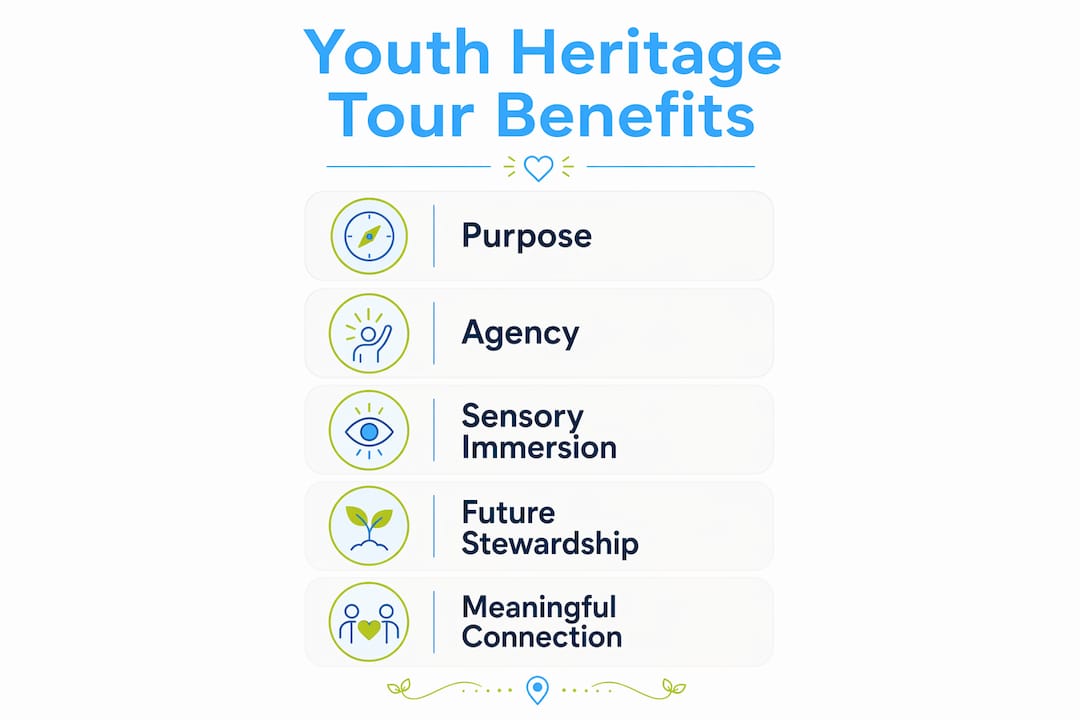
Four elements must be present for a teen to genuinely connect:
Authenticity: The experience must feel real, not staged.
Agency: The teen must have some choice in what they explore or document.
Sensory immersion: Touch, sound, smell, and movement beat a lecture every time.
Clear purpose: Teens engage far more when they understand why they are there.
Ask your teen which three moments they want to remember, then plan at least one site to deliver each.
Table of Contents
Why youth connect on heritage tours: what the research shows
Generation Z’s engagement in cultural heritage tourism is driven by two intrinsic motives, authenticity-seeking and novelty-seeking, and three extrinsic ones: cultural identification, social sustainability, and social media engagement. Notably, historical nostalgia does not predict their participation. That matters for Mitzvah trip design: a teen who feels no personal nostalgia for ancient Israel can still connect deeply if the experience feels genuine and gives them something worth sharing.
A 2024 study of a group of students found that Interest in Participation (IIP) was identified as a key driver of youth involvement, and that IIP was statistically significant (p < 0.05) as a driver of youth involvement. Translation: when teens understand the purpose of an activity, they want to take part. When they don’t, they disengage.
Place imagination — the mental narrative a young visitor builds before arriving — strongly predicts emotional attachment to a heritage site and mediates the formation of awe. Pre-trip media, stories, and conversations that shape that mental picture are not optional extras; they are part of the tour design itself.
Research on generativity and heritage tourism adds another layer: teens with a stronger sense of generativity, the desire to contribute something meaningful to the future, show greater intention to participate in cultural heritage activities. A Bar or Bat Mitzvah is, by definition, a generative milestone. That alignment is a structural advantage no generic tour can replicate.
Practitioners reinforce this. When teens are treated as future stewards rather than passive visitors, they shift from observers to invested participants. The difference shows up in how they talk about the trip months later.
Design principles that make heritage experiences resonate with teens
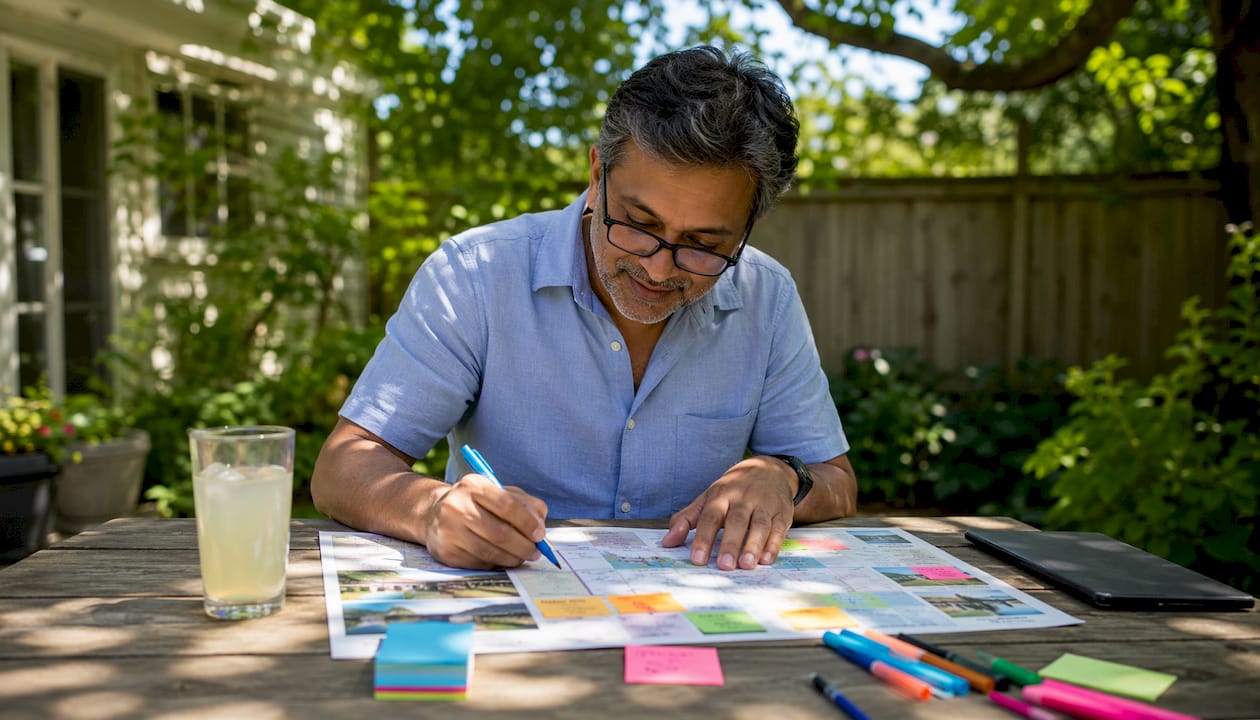
Good tour design is not about packing in more sites. It is about engineering the conditions for connection. Six principles consistently separate memorable Mitzvah tours from forgettable ones:
Narrative framing. Every site visit should open with a story, not a date. A guide who says “your great-grandparents may have prayed in a synagogue exactly like this one” activates identity far faster than a recitation of construction years.
Youth agency. Let teens choose one element: which artifact to photograph, which question to ask the guide, which moment to document for social sharing. Choice converts passive attendance into ownership.
Sensory immersion. Handling a replica scroll, tasting a traditional dish, or hearing a shofar blown in an ancient courtyard creates the kind of visceral memory that a PowerPoint cannot.
Explicit purpose-setting (IIP). Before each activity, state plainly what it is for. “We are doing this so you can stand at your ceremony knowing exactly where this tradition began” is more motivating than “now we will visit the Old City.”
Reflection and restorativeness. Guided tours at historical and religious sites can increase perceived restorativeness and positive affect. Build in quiet moments: a journal prompt after a ceremony site, five minutes of unstructured time at the Western Wall.
Pre-trip place imagination alignment. Show teens video experiences from past programs before departure. Ask what they expect the site to look, sound, and feel like. Use their answers as the guide’s opening hook on arrival.
Parent checklist before booking any activity or guide:
Does the guide open with a story rather than a timeline?
Is there at least one moment where the teen makes a choice?
Does the activity involve physical interaction with the site or its materials?
Is the purpose of each stop explained to the teen, not just the parents?
Is there a quiet reflection moment built in?
Pro Tip: Send your teen two or three short video clips from the destination two weeks before departure and ask them to write down one question they want answered on-site. That single step primes place imagination and gives the guide a personal hook to open with.
Concrete activities parents can use on Bar/Bat Mitzvah heritage tours
The best experiential travel formats for Mitzvah trips combine heritage learning with personal ritual. These eight templates are designed for 30–90 minute blocks:
Narrative scavenger hunt (ages 11–17, 60 min): Teams follow story clues through a heritage site, answering questions that connect Jewish history to the teen’s own Mitzvah portion. Builds agency and novelty simultaneously.
Hands-on artifact workshop (ages 11–15, 45 min): Teens handle replica artifacts, coins, or pottery fragments under a guide’s supervision. Sensory immersion at its most direct.
Community stewardship project (ages 13–17, 90 min): A short volunteer activity at a local heritage site, planting, cleaning, or restoring. Activates generativity and shifts teens from tourists to stewards.
Mini-ceremony at a meaningful site (all ages, 30–45 min): A brief, personal ritual at the Western Wall, Masada, or a historic synagogue. Keep it intimate; coordinate with site staff in advance to respect other visitors.
Reflective journaling and photography challenge (ages 12–17, 30 min): Each teen photographs three things that surprised them, then writes one sentence about each. Creates a personal artifact of the trip.
Social-sharing moment with story prompts (ages 13–17, 20 min): Designate one stop as the “share moment.” Give teens a one-line prompt (“This place matters to my family because…”) and let them create their own content.
Skill-based workshop (ages 11–16, 60–90 min): Mosaic-making, bread-baking, or calligraphy tied to a specific cultural tradition. Pairs novelty with cultural identification.
Intergenerational dialogue session (all ages, 45 min): Grandparents or older family members share a memory connected to the site while the teen listens and asks questions. Simple, powerful, and irreplaceable.
For larger family groups, the scavenger hunt and stewardship project scale easily by splitting into teams. For older teens (15–17), give them a co-design role: let them help choose one activity or write one question for the guide.
Practical planning: pacing, timeline, and cost considerations
Sample pacing models:
5-day trip: Day 1 arrival and orientation; Days 2–3 heritage-heavy (two major sites per day with reflection breaks); Day 4 ceremony and celebration; Day 5 experiential workshop and departure prep.
8-day trip: Same structure with two additional days for regional exploration, a stewardship project, and an intergenerational session. Aim for no more than two major heritage stops per day to avoid attention fatigue.
Budget line items to plan for:
Custom planning and coordination fee
Licensed guides (private vs. small-group affects cost significantly)
Site entry and permit fees where applicable
Ceremony logistics: clergy, Torah, sound
Professional photography and videography
Transportation (private vehicle vs. shared)
Gratuities for guides and drivers
Contingency (10% of total is a reasonable buffer)
Booking timeline:
Lock flights and accommodation: 9–12 months out.
Secure ceremony site and clergy: 8–10 months out.
Confirm guides and activity vendors: 6 months out.
Finalize photography/video team: 4–6 months out.
Send pre-trip media to your teen: 2–3 weeks before departure.
The single biggest cost-shaping decision is private guide versus small-group format. A private guide allows the narrative to be built entirely around your teen’s Mitzvah portion and family story. That personalization is also the single biggest driver of the connection outcomes described throughout this article.
How to measure whether the tour truly connected your teen
Connection is not invisible. Observable indicators appear within days and persist for months.
Short-term markers (first two weeks after return):
Willingness to retell specific moments unprompted
Keeping a physical artifact (photo, journal, item from a workshop)
Sharing content from the trip on social media with personal captions
Asking questions about Jewish history or Israel that they did not ask before
3–6 month follow-up markers:
Continued participation in Jewish community practice
Reference to the trip when discussing identity or values
Interest in returning or learning more about the sites visited
Post-trip survey (6–8 questions, under two minutes):
Which moment from the trip do you think about most?
Did you feel the trip was for you, or more for the adults? (IIP proxy)
Was there a moment that genuinely surprised or moved you? (awe indicator)
Do you feel more connected to your Jewish identity after the trip?
Would you want to return to Israel?
Is there something you want to learn more about after the trip?
Qualitative data matters too. Video highlights, personal reflections, and social posts are legitimate data points. A teen who posts about a heritage moment with a personal caption has internalized something. That is the outcome the research points toward: not just a good trip, but a lasting shift in how a young person sees their own story.
How Bnei Mitzvah applies these principles in practice
Bneimitzvahtrip builds every program around the design principles above. The service structure maps directly to the research:
Pre-trip co-creation interviews with the teen and family to shape narrative framing and identify personal connection points
Curated guide scripts built around the teen’s Mitzvah portion and family history
Youth agency moments built into every itinerary, not added as afterthoughts
Professional videography that creates a legacy asset the teen can share and revisit
Reflection spaces designed into the schedule, not squeezed out by logistics
Post-trip follow-up to capture outcomes and support continued engagement
With over 20 years of experience in Bar and Bat Mitzvah tour planning, Bneimitzvahtrip has refined what works. The internal survey result, a large majority of participants reporting that Israeli culture enriched their identity, reflects programs designed around these principles, not generic sightseeing.
Questions to ask any provider before booking:
How do you personalize the itinerary to our teen’s Mitzvah portion?
What choices does the teen get to make during the trip?
How do you handle reflection time in the schedule?
Do you provide pre-trip materials to prepare the teen?
What does your ceremony support include?
How do you capture the experience for the family afterward?
Key Takeaways
Youth connect on heritage tours when authenticity, agency, sensory immersion, and clear purpose combine, and Bneimitzvahtrip’s programs are built around exactly those four conditions.
Point | Details |
Purpose drives participation | The 2024 IIP study found interest in participation scored highest among all engagement variables; always explain why each stop matters. |
Place imagination starts before departure | Pre-trip video and conversation shape emotional attachment before the teen sets foot on-site. |
large majority identity enrichment | Bneimitzvahtrip’s internal survey shows that a large majority of participants report Israeli culture enriched their identity. |
Measure outcomes at 3–6 months | Short-term enthusiasm fades; lasting markers like continued community practice and unprompted retelling are the real indicators. |
Bneimitzvahtrip as the specialist | Bneimitzvahtrip’s custom Bar and Bat Mitzvah tours apply co-creation, narrative framing, and professional videography to deliver the connection outcomes the research describes. |
What 20 years of designing these tours actually teaches you
The research is right about the big things. Purpose matters. Agency matters. Awe matters. But there is a gap between knowing those principles and executing them with a 13-year-old who slept badly on the flight and would rather be on their phone.
What actually works, from years of watching these programs unfold, is this: the moment that lands is almost never the one you planned hardest. It is the unscripted pause at the Western Wall, the guide who asks the teen a question no adult has ever asked them before, the grandmother who cries at a site the teen did not expect to matter. The design principles create the conditions for that moment. They do not manufacture it.
The failure mode I see most often is over-scheduling. Parents want to see everything. Teens need space to feel something. A day with two deep stops and genuine reflection time will outperform a day with five rushed ones, every time. Build the white space in deliberately, or the logistics will fill it.
Tokenistic activities are the other trap. A two-minute photo stop at a famous wall is not a heritage experience. Teens detect inauthenticity faster than any adult in the group. If an activity does not give the teen something to do, choose, or feel, cut it.
The role of tradition in Jewish travel is not decorative. When a teen stands at a site where their ancestors stood and performs even a small ritual, something shifts. That is not sentiment. That is identity formation happening in real time, and it is the whole point of the trip.
Bneimitzvahtrip: custom tours built for teen connection
Most families planning a Bar or Bat Mitzvah trip to Israel know what they want: a celebration that actually means something to their teen, not just a photo album. Bneimitzvahtrip delivers that through fully custom programs that begin with a co-creation conversation with your family and end with a professional video legacy your teen will watch for years.
Every itinerary includes ceremony support at a meaningful site, youth-focused activities designed around the principles in this article, licensed guides who build their narrative around your teen’s Mitzvah portion, and professional photography and videography. The planning, logistics, and vendor coordination are handled entirely by Bneimitzvahtrip’s team, so you arrive in Israel ready to be present, not managing a spreadsheet.
Browse the planned Bar and Bat Mitzvah tours to see sample itineraries, or go straight to the Bar Mitzvah tour page or Bat Mitzvah trip page to start a conversation about your family’s dates and vision.
Useful sources and publisher assets
Research sources cited in this article:
Generation Z motivation for intangible cultural heritage tourism — University of Nottingham Ningbo China
IIP and youth involvement in cultural heritage preservation — 2024 study, a group of students
Generativity and Generation Z heritage tourism intention — Journal of Heritage Tourism, 2023
Place imagination and Generation Z heritage site preferences — npj Heritage Science
Guided tours, emotional restoration, and individual differences — Frontiers in Psychology
Youth participation and stewardship in cultural heritage — Tourism Scientific Journal
Heritage tourism benefits overview — Advisory Council on Historic Preservation
Bneimitzvahtrip assets:
Video experiences from past Bar/Bat Mitzvah tours
What our tours include
Our planned tours overview
Partner resources:
Youth heritage tour best practices — ComFort Tours
Connecting visitors with ancestral roots through travel — Comfort Tours Cracow
Recommended
Comments