Bnei mitzvah for interfaith families: 5 inclusive paths
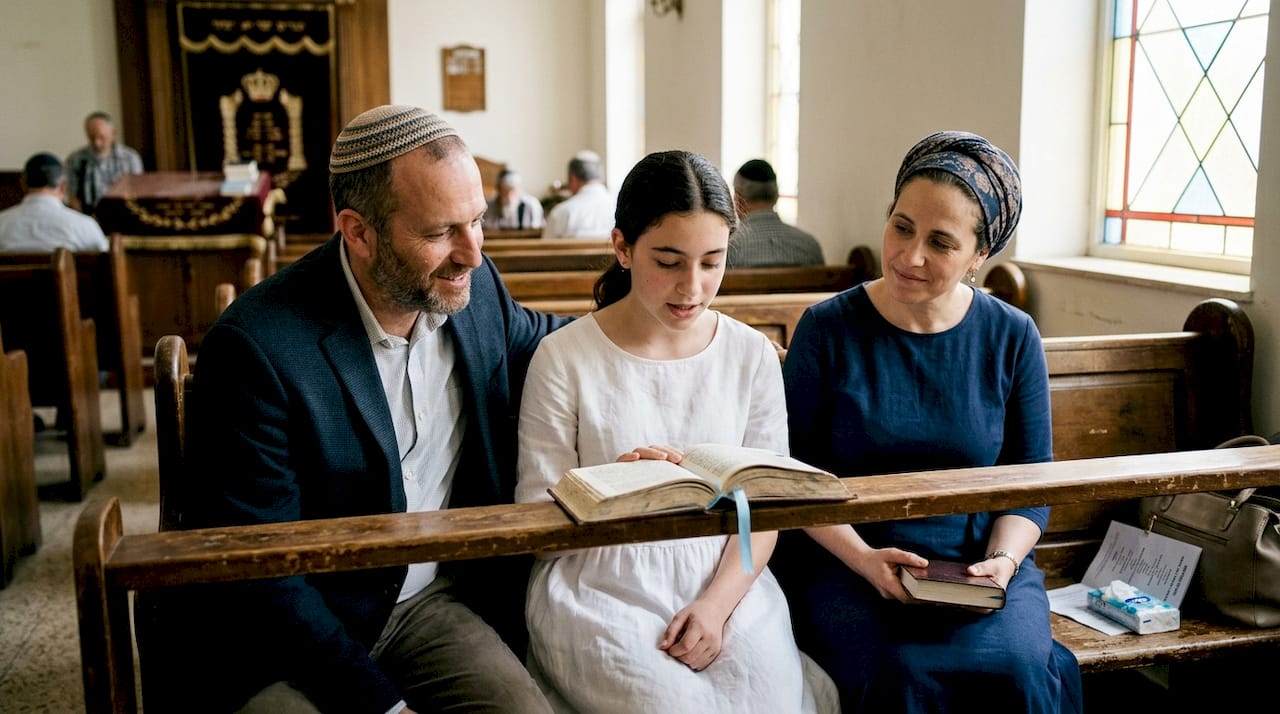
Planning a bnei mitzvah is rarely as simple as booking a venue and sending invitations, especially for interfaith families. You may be navigating questions about eligibility, which parent can stand on the bimah (the raised platform where Torah is read), and how to honor both sides of your family without compromising the ceremony’s Jewish core. Reform Judaism welcomes interfaith families for bnei mitzvah, recognizing children raised as Jewish as fully eligible, but not every movement shares that openness. This guide walks you through the real differences, the emotional challenges, and the practical steps to create a celebration that feels authentic, inclusive, and deeply meaningful for everyone in the room.
Table of Contents
Setting the context: What is a bnei mitzvah and who qualifies?
Comparing Jewish movements: Reform vs Conservative approaches
Inclusion, honors, and family participation: Key challenges for interfaith families
Blending traditions: Creating meaningful, respectful celebrations
Practical planning: Steps to a meaningful bnei mitzvah for interfaith families
Discover unforgettable bnei mitzvah tours for interfaith families
Key Takeaways
Point | Details |
Eligibility varies | Reform synagogues are generally inclusive, but Conservative synagogues require maternal Jewish lineage or conversion. |
Plan for inclusion | Ask early about ritual honors and find creative ways for all family members to participate. |
Blend with care | Honoring both heritages works best when Jewish tradition is central, using fairness instead of absolute equality. |
Explore travel options | Destination bnei mitzvah experiences offer innovative ways for interfaith families to celebrate together. |
Start early | Begin synagogue and clergy discussions well in advance to ensure eligibility and inclusivity for your child. |
Setting the context: What is a bnei mitzvah and who qualifies?
Bnei mitzvah is the plural form of bar mitzvah (for boys) and bat mitzvah (for girls). It marks the moment a Jewish child, typically at age 13 for boys and 12 or 13 for girls, takes on the responsibilities of Jewish law and community. It is one of the most significant milestones in Jewish life, combining religious ceremony, family celebration, and personal commitment.
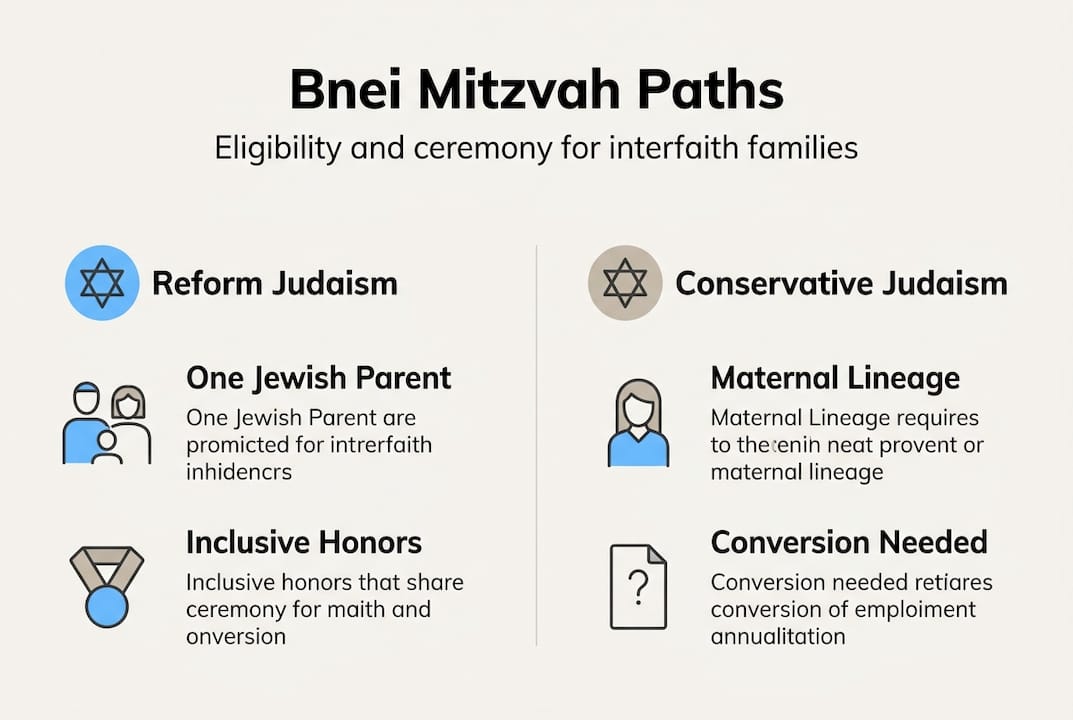
For interfaith families, the first question is often eligibility. Reform Judaism recognizes children of one Jewish parent who are raised as Jewish, making bnei mitzvah accessible to many interfaith households. Conservative Judaism, however, traditionally follows matrilineal descent, meaning the child’s mother must be Jewish or the child must undergo conversion (a formal process of joining the Jewish faith) to qualify.
The demographic reality is striking. Only 10% of interfaith children in Pittsburgh are raised exclusively Jewish by religion, which reflects a national pattern. Most interfaith children grow up with a blended identity, and that complexity shapes every aspect of bnei mitzvah planning.
“The question isn’t just whether your child qualifies. It’s whether your whole family feels welcomed into the moment.”
Families often describe feeling caught between two worlds: wanting to honor Jewish tradition fully while also making non-Jewish relatives feel seen and included. That tension is real, and it deserves a thoughtful response.
Key challenges interfaith families commonly face:
Uncertainty about which synagogue will accept their child
Non-Jewish parents feeling sidelined during the ceremony
Children questioning their own Jewish identity
Extended family members unfamiliar with Jewish customs
Pressure to choose one tradition over another
Pro Tip: Start the eligibility conversation with your rabbi or synagogue administrator at least 18 months before your target date. Policies vary widely even within the same movement, and early clarity saves significant stress later. Exploring family bonding mitzvah tours can also help your whole family connect to Jewish heritage together before the big day.
Comparing Jewish movements: Reform vs Conservative approaches
Understanding how each major movement handles interfaith bnei mitzvah is essential before you choose a synagogue. The differences are significant and affect everything from eligibility to who can participate in the ceremony.
Reform Judaism operates under the principle of patrilineal descent, meaning a child with either a Jewish mother or a Jewish father, raised with Jewish identity, qualifies for bnei mitzvah. Reform synagogues generally welcome non-Jewish spouses and family members warmly, and many rabbis actively work to make the ceremony feel inclusive for everyone present.
Conservative Judaism requires maternal Jewish lineage or conversion before a child can celebrate bnei mitzvah. The movement has been shifting from outright disapproval of intermarriage toward a more relationship-based, pastoral approach, but the core halakhic (Jewish legal) boundaries around officiation remain. Some Conservative rabbis have even resigned over co-officiation restrictions, reflecting real internal tension within the movement.
Feature | Reform | Conservative |
Child eligibility | One Jewish parent, raised Jewish | Jewish mother or conversion required |
Non-Jewish parent honors | Generally permitted | Restricted (no Torah aliyah) |
Clergy co-officiation | Permitted in many congregations | Generally not permitted |
Conversion required | No | Yes, for children of non-Jewish mothers |
Pastoral outreach to interfaith families | Strong | Growing but limited by policy |
The stat worth knowing: only 10% of interfaith children in some communities are raised exclusively Jewish, which means the majority of interfaith families are navigating exactly this kind of gray area.
For families exploring their options, reviewing bar mitzvah tour ideas and bar mitzvah planning guidance can help you see the full picture of what a meaningful celebration can look like beyond the synagogue walls.
Inclusion, honors, and family participation: Key challenges for interfaith families
Even when a child is fully eligible, the ceremony itself can create painful moments for interfaith families. The most common friction point is ritual honors, particularly the Torah aliyah (the honor of being called up to recite blessings over the Torah reading).
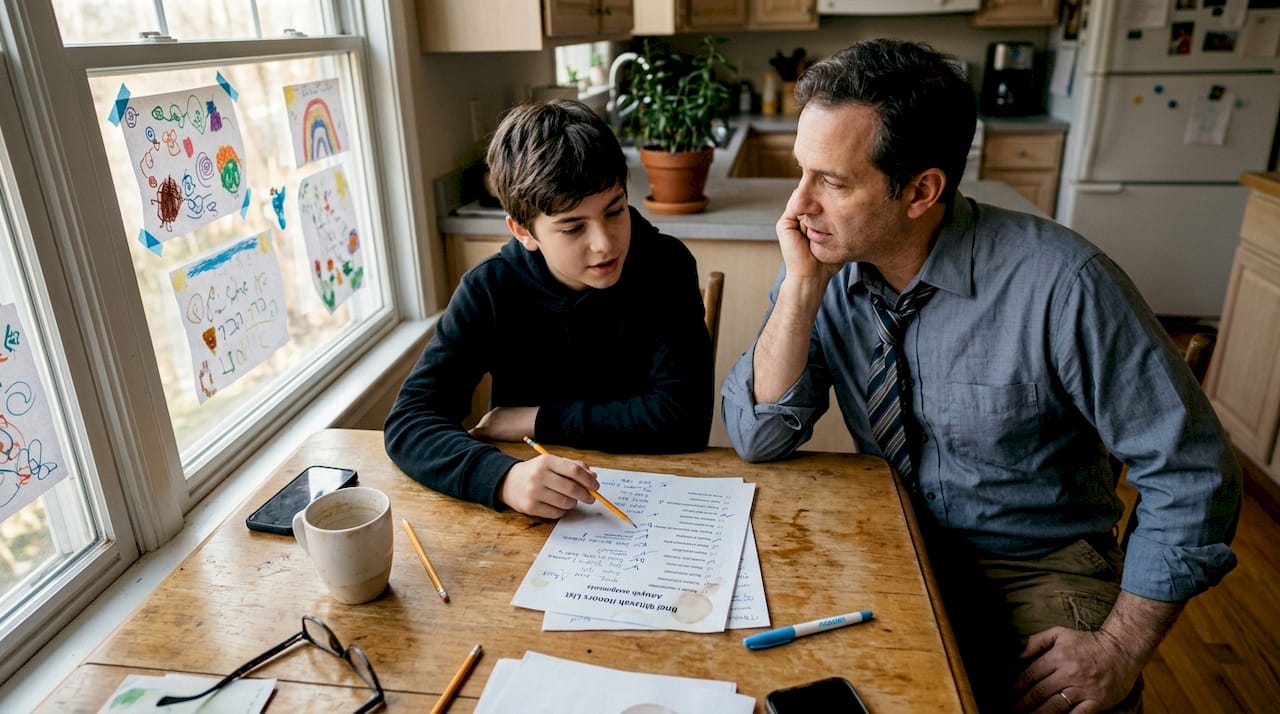
In Conservative synagogues, non-Jewish parents are barred from certain honors, including the Torah aliyah. For a non-Jewish parent who has supported their child’s Jewish education for years, being excluded from that moment can feel deeply hurtful. Children notice this too, and it can affect how they experience their own milestone.
Steps to maximize inclusion at your bnei mitzvah:
Choose a synagogue that explicitly welcomes interfaith families and ask directly about honors for non-Jewish parents.
Request a pre-ceremony meeting with the rabbi to discuss creative participation options for all family members.
Explore non-ritual roles: readings, speeches, candle lighting, and musical contributions are often open to everyone.
Consider a destination or alternative venue celebration that allows more flexibility in ceremony design.
Involve non-Jewish grandparents and relatives in the reception program to honor their presence meaningfully.
Pro Tip: Ask your rabbi specifically, “What can my non-Jewish spouse do during the service?” rather than asking what they cannot do. Framing the question positively often opens up more creative solutions.
Honor | Reform (interfaith family) | Conservative (interfaith family) |
Torah aliyah | Open to Jewish parent | Jewish participants only |
Candle lighting | Open to all | Open to all |
Speech or blessing | Open to all | Open to all |
Carrying the Torah | Often open to all | Typically Jewish participants only |
Reading in English | Open to all | Open to all |
For families thinking about the full experience, accommodation tips for guests and unforgettable mitzvah celebration ideas offer practical ways to make every guest feel part of the celebration. You can also explore bat mitzvah trip ideas for destination options that naturally create more inclusive environments.
Blending traditions: Creating meaningful, respectful celebrations
Here is where many interfaith families feel the most creative freedom, and also the most uncertainty. The goal is not to create a ceremony that gives equal weight to every tradition in the room. The goal is fairness, honoring everyone’s presence while keeping the Jewish ceremony at the center.
As one thoughtful discussion on the blended interfaith bar mitzvah puts it, Torah’s sacred role limits how much blending is appropriate. Fairness over equality means you can honor a non-Jewish grandparent’s heritage through a story, a song, or a blessing without turning the ceremony into something it is not.
“Fairness over equality: sometimes honoring both heritages means more than equal ritual weight. It means every person in the room feels their love for this child is seen.”
Creative ways to reflect diverse backgrounds:
Family storytelling segments where relatives from both sides share memories
Music that reflects the child’s full cultural background, played during the reception
A mitzvah project (a community service initiative) that connects to values shared across traditions
Multilingual programs that help non-Jewish guests follow along
A family blessing written collaboratively by parents from both backgrounds
The pitfall to avoid is diluting the Jewish ritual itself. Replacing Hebrew prayers with generic spiritual language, or skipping Torah reading to save time, removes the very core that makes a bnei mitzvah meaningful. Respectful blending adds layers; it does not subtract the foundation.
For inspiration on choosing mitzvah destinations, family activities for mitzvahs, and unique mitzvah trip experiences, there are many ways to build a celebration that brings your whole family together.
Practical planning: Steps to a meaningful bnei mitzvah for interfaith families
With all the context in place, here is a clear action plan. These steps work whether you are planning a local synagogue ceremony or a destination celebration.
Choose your synagogue early. Research which local congregations have explicit inclusive interfaith bnei mitzvah policies and visit at least two before committing.
Clarify eligibility. Ask directly about your child’s status under that movement’s rules and what, if any, additional steps are needed.
Map out honors. Get a written list of what each family member can and cannot do during the service, then plan creative alternatives for those who are excluded from ritual roles.
Plan the blending. Decide early which non-Jewish cultural elements you want to include and where they fit best, in the reception rather than the service itself.
Engage all family members. Give non-Jewish relatives specific, meaningful roles so they arrive feeling like participants, not spectators.
Consider a destination option. Travel-based celebrations, including a Carmel bar mitzvah trip in Israel, offer unique settings that naturally bring families together and create shared memories across all backgrounds.
Pro Tip: Consult your rabbi about synagogue-specific policies at least 12 to 18 months in advance. Some congregations have waiting lists for bnei mitzvah dates, and early conversations give you time to pivot if a synagogue is not the right fit.
Mitzvah projects and family education programs are also worth building into your timeline. They deepen your child’s connection to Jewish values and give the whole family a shared experience to bond over before the ceremony.
Discover unforgettable bnei mitzvah tours for interfaith families
At Bnei Mitzvah, we have spent over 20 years helping families just like yours create celebrations that feel genuine, joyful, and inclusive. We know that interfaith families bring a richness of background and love to these moments, and we design every experience to honor that.
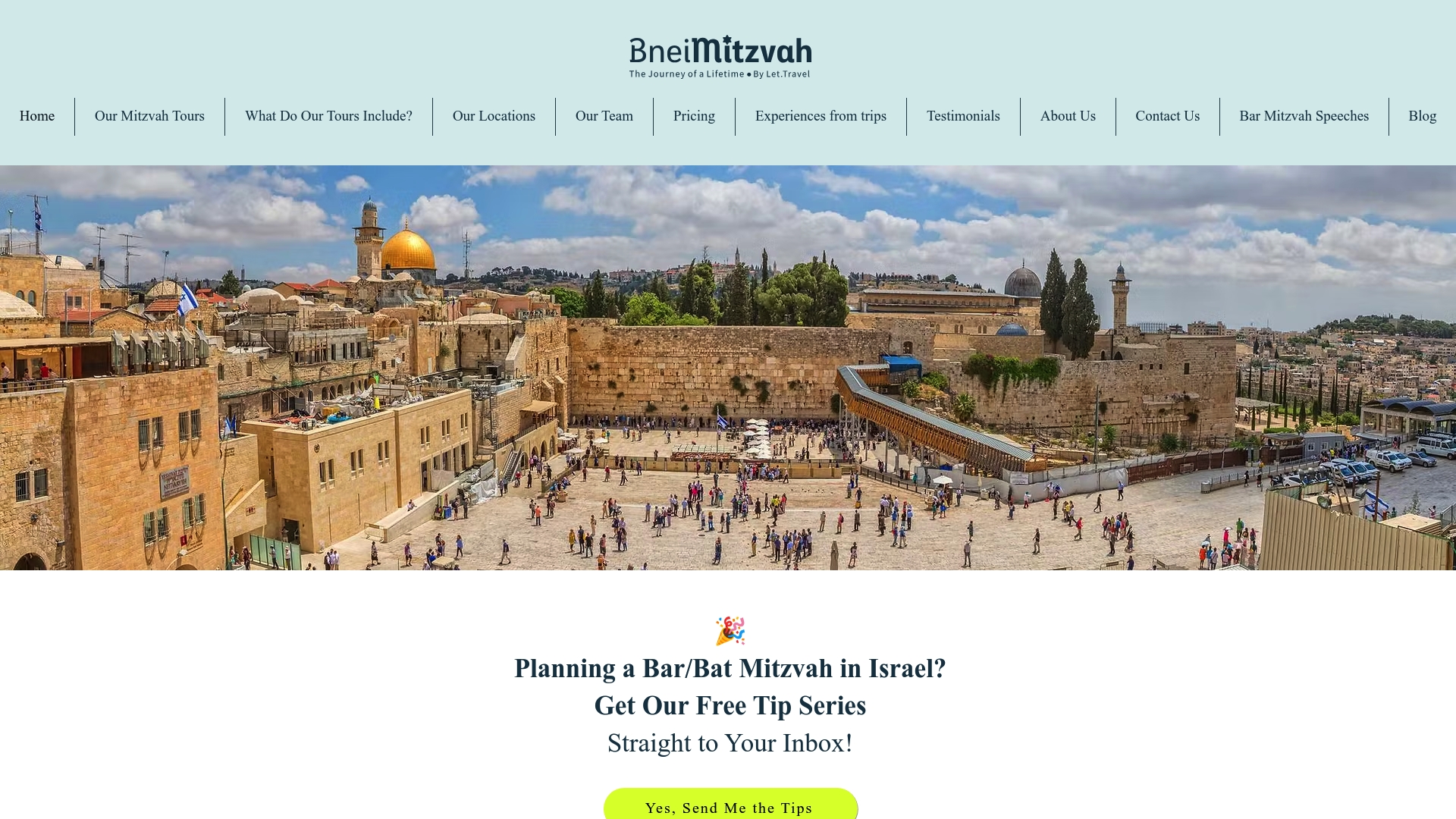
Our bar mitzvah tour and bat mitzvah trip options take your family to Israel, where the history, landscape, and spirit of Jewish life create a backdrop that moves everyone, regardless of background. From the Western Wall to the Sea of Galilee, every stop is chosen to deepen meaning and spark connection. Our planning and guidance resources walk you through every decision, from eligibility questions to ceremony design, so you arrive at your celebration feeling prepared and excited rather than overwhelmed.
Frequently asked questions
Can children in interfaith families have a bnei mitzvah in all synagogues?
Eligibility varies by movement. Reform synagogues welcome children of one Jewish parent raised as Jewish, while Conservative synagogues require maternal Jewish lineage or a formal conversion process.
What honors can non-Jewish parents have during a bnei mitzvah?
Non-Jewish parents can participate in speeches, candle lighting, and English readings in most synagogues, but Torah aliyah is restricted to Jewish participants in Conservative congregations.
How can interfaith families make their bnei mitzvah more meaningful?
Blending traditions respectfully through mitzvah projects and family education, choosing an inclusive synagogue, and involving all family members in creative roles creates a richer, more personal celebration.
Are there travel-based bnei mitzvah options for interfaith families?
Yes. Destination celebrations in Israel offer flexible, inclusive environments where the entire family, regardless of background, can connect to Jewish heritage and create lasting shared memories together.
Recommended
Comments