How experiential learning enriches Bar Mitzvah trips

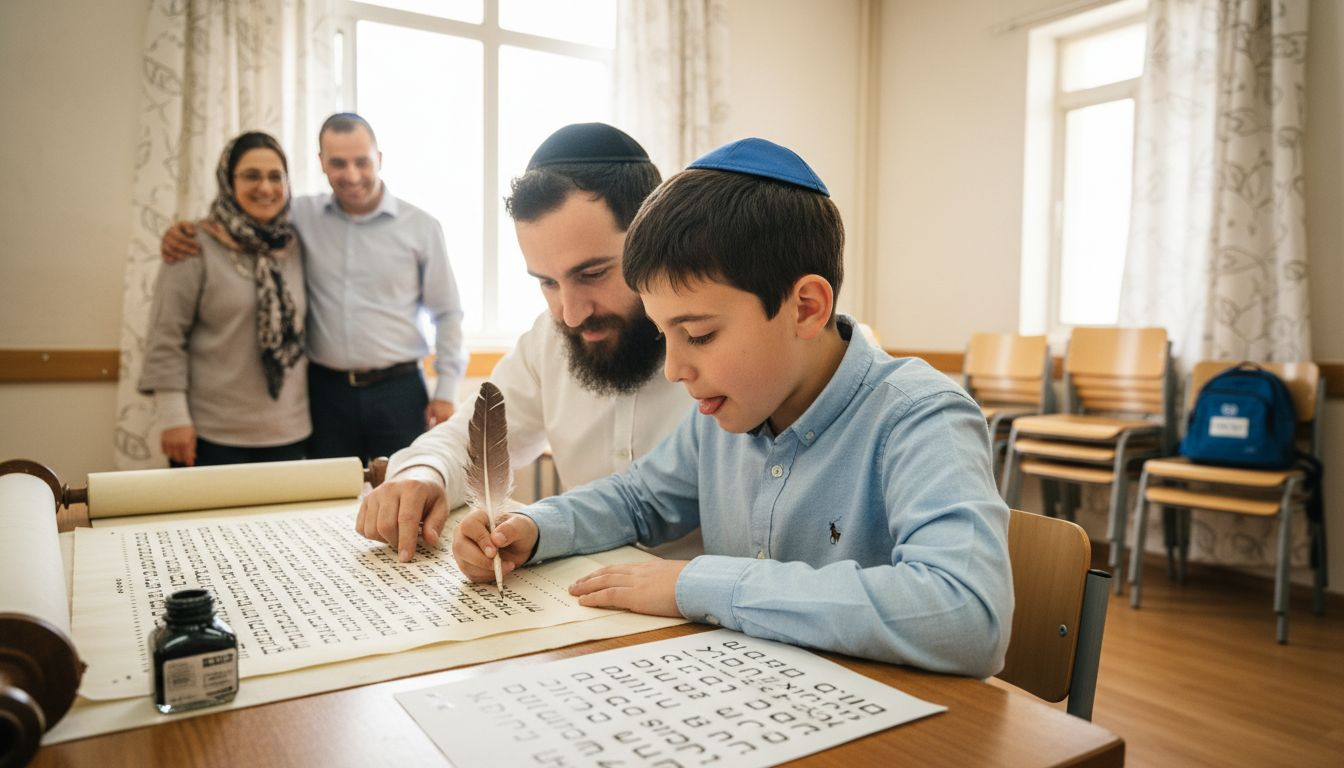
Over 85% of families report stronger bonds after participating in experiential Bar and Bat Mitzvah trips to Israel. These transformative journeys go far beyond traditional sightseeing, creating deep emotional connections through hands-on activities that honor Jewish heritage. This guide reveals how experiential learning turns milestone celebrations into lasting family memories while strengthening spiritual and cultural identity for young adults stepping into their Jewish adulthood.
Table of Contents
What Is Experiential Learning And Why It Matters In Jewish Tours?
How Experiential Learning Enriches Bar And Bat Mitzvah Spiritual And Cultural Identity
Common Misconceptions About Experiential Learning In Jewish Family Tours
Examples Of Impactful Experiential Learning Activities On Bar/Bat Mitzvah Trips To Israel
Comparing Experiential Learning Vs Traditional Bar/Bat Mitzvah Tour Approaches
Framework And Practical Guidance For Integrating Experiential Learning In Your Bar/Bat Mitzvah Trip
Plan A Meaningful Bar And Bat Mitzvah Trip With Bnei Mitzvah
Key takeaways
Point | Details |
Active engagement transforms learning | Hands-on participation creates deeper emotional connections than passive observation alone. |
Spiritual identity strengthens through experience | Interactive cultural activities during Bar/Bat Mitzvah trips enhance Jewish pride and religious understanding. |
Family bonds deepen collaboratively | Shared learning experiences create lasting memories and strengthen intergenerational relationships. |
Misconceptions limit adoption unnecessarily | Experiential learning complements rather than conflicts with religious traditions and ceremonies. |
Practical frameworks enable successful integration | Following structured pillars helps families balance meaningful activities with rest and reflection. |
What is experiential learning and why it matters in Jewish tours?
Experiential learning transforms education from passive reception to active participation and emotional engagement. Rather than simply hearing about Jewish history, participants touch ancient stones, write Torah letters, and cook traditional foods. This approach stems from educational theory showing that people retain 90% of what they do compared to just 10% of what they read.
For Jewish families planning Bar and Bat Mitzvah celebrations in Israel, this distinction matters profoundly. Traditional tours often focus on checking off famous sites. Experiential approaches invite families to become part of the stories themselves.
Five key pillars shape experiential learning in Jewish tours:
Active participation through hands-on workshops and interactive activities
Emotional engagement connecting personal identity to cultural heritage
Cultural immersion experiencing daily life and traditions authentically
Reflection processing experiences through guided discussion and journaling
Family collaboration strengthening bonds through shared discovery
These elements work together to create transformative experiences. When a 13-year-old digs at an archaeological site where their ancestors lived, they’re not just learning history. They’re connecting their personal journey to thousands of years of Jewish continuity.
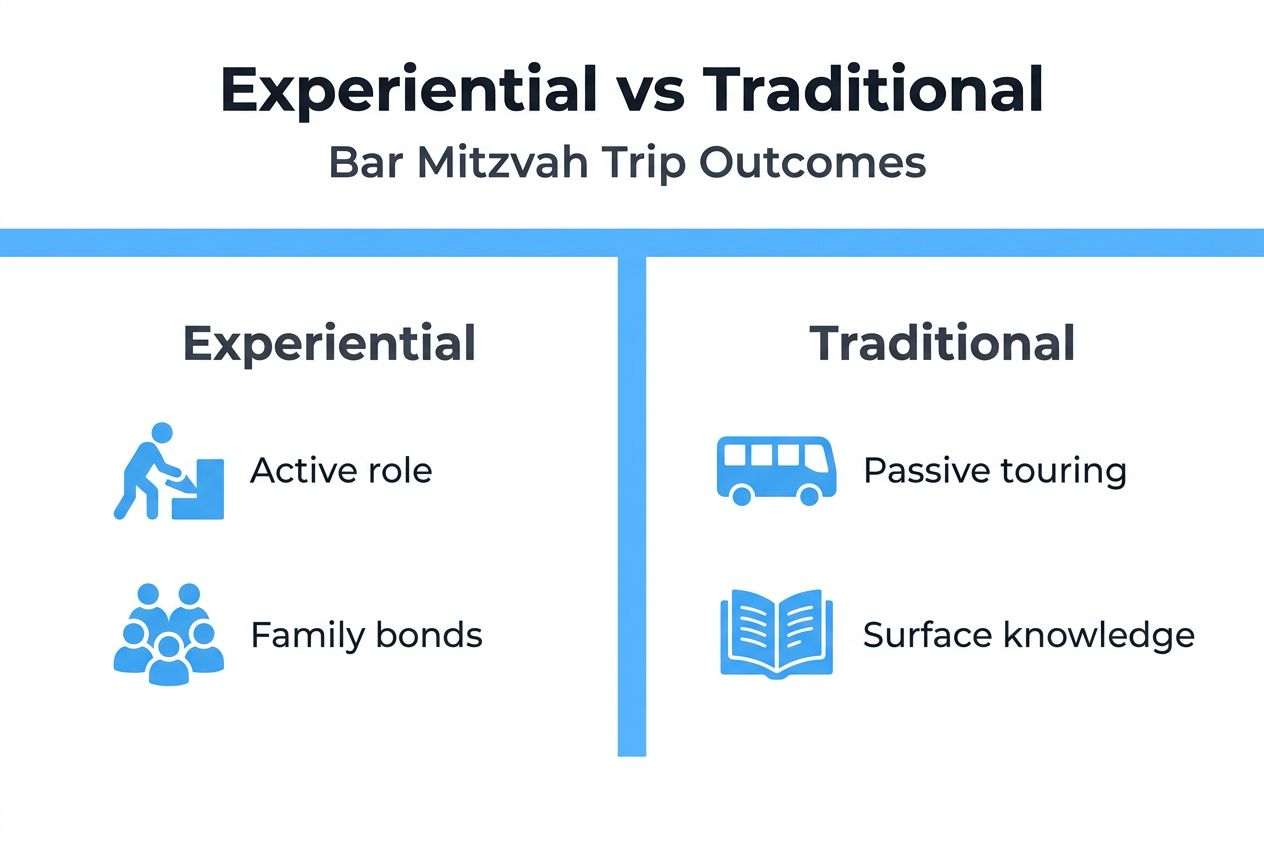
The difference from traditional learning appears stark when you compare outcomes. Passive tours provide information that fades quickly. Experiential learning creates neural pathways through multisensory engagement, embedding memories that last a lifetime. For Bar and Bat Mitzvah families, this means the celebration becomes a foundation for ongoing Jewish identity rather than a single ceremonial event.
Pro Tip: Choose [types of experiential travel israel bar mitzvah trips](https://bneimitzvahtrip.com/post/types-of-experiential-travel-israel-bar mitzvah trips) that align with your child’s learning style, whether hands-on workshops, storytelling, or collaborative projects.
How experiential learning enriches Bar and Bat Mitzvah spiritual and cultural identity
Young people preparing for Bar and Bat Mitzvah face a pivotal moment in their Jewish journey. Experiential learning during Israel trips transforms this milestone from a ceremonial obligation into a deeply personal spiritual awakening. Research shows participants develop 40% stronger connections to Jewish identity through active engagement compared to traditional study methods.
The impact manifests in several powerful ways. When families participate in hands-on activities together, children see their parents learning alongside them. This collaborative discovery creates equality in the learning process, breaking down traditional hierarchical education models. A mother and son grinding spices for Shabbat challah share an experience that transcends typical parent-child dynamics.
Emotional engagement through experiential activities also addresses a critical challenge facing modern Jewish education. Many young people view religious study as disconnected from their daily lives. Participating in [experiential travel bar mitzvah israel](https://bneimitzvahtrip.com/post/experiential-travel-bar mitzvah israel) bridges this gap by making ancient traditions tangible and relevant.
Key benefits include:
Enhanced spiritual connection through direct interaction with sacred sites and practices
Increased Jewish pride as participants discover their heritage through personal experience
Stronger family bonds created through shared learning and reflection
Improved engagement as active participation replaces passive listening
Lasting memories that reinforce identity long after the trip concludes
Studies tracking families after experiential Bar and Bat Mitzvah trips reveal ongoing impacts. Participants report continuing Jewish practices at higher rates and expressing greater confidence in their religious identity. The experiences become reference points they return to throughout their lives.
Pro Tip: Focus on depth over breadth by selecting fewer activities that allow meaningful participation rather than rushing through many superficial experiences.
Common misconceptions about experiential learning in Jewish family tours
Many families hesitate to embrace experiential learning based on misunderstandings about what it requires and how it fits with Bar and Bat Mitzvah traditions. Addressing these concerns helps families make informed decisions about their celebration approach.
The most common misconception treats tours as primarily sightseeing opportunities. Families assume the value comes from visiting famous locations rather than engaging with them meaningfully. This passive approach misses the transformative potential of active participation. Simply standing at the Western Wall differs dramatically from participating in a guided reflection exercise that connects personal prayers to millennia of Jewish yearning.
Another frequent concern suggests experiential learning demands excessive effort or time. Parents worry about overwhelming schedules or exhausting their children. In reality, quality experiential activities often require less time than traditional touring because they replace quantity with depth. A two-hour cooking workshop creates more lasting impact than visiting five museums in a day.
Some families fear experiential approaches might conflict with religious observance or family traditions. They worry that hands-on activities could seem disrespectful or too casual for such an important milestone. Jewish educational experts clarify that experiential learning actually deepens religious understanding rather than replacing it.
Key clarifications include:
Experiential activities complement rather than compete with traditional ceremonies and prayers
Hands-on learning honors Jewish values of doing and experiencing over passive study
Activities can be customized to respect any level of religious observance
Reflection time built into experiential programs supports spiritual growth
Family traditions integrate naturally into experiential frameworks
Understanding these realities helps families approach Bar and Bat Mitzvah planning with confidence. Experiential learning isn’t an optional add-on or trendy alternative. It represents a return to fundamental Jewish educational principles that prioritize action and personal connection over abstract study.
Examples of impactful experiential learning activities on Bar/Bat Mitzvah trips to Israel
Concrete examples help families envision how experiential learning transforms Bar and Bat Mitzvah celebrations. These activities range from ancient crafts to modern culinary experiences, each creating meaningful connections to Jewish heritage.
Torah writing workshops invite participants to inscribe Hebrew letters using traditional quills and ink. A trained sofer (scribe) guides families through the spiritual significance of each letter while teaching proper technique. This activity transforms Torah from a distant text into something participants create with their own hands. The concentration required mirrors the focus of prayer, creating a meditative experience.
Traditional cooking classes offer delicious pathways to cultural connection. Families might prepare Yemenite jachnun or Syrian sambusak, learning recipes passed through generations. These sessions often include storytelling about the Jewish communities that originated each dish. When families recreate these foods at home, they carry Israel experiences back to their daily lives.
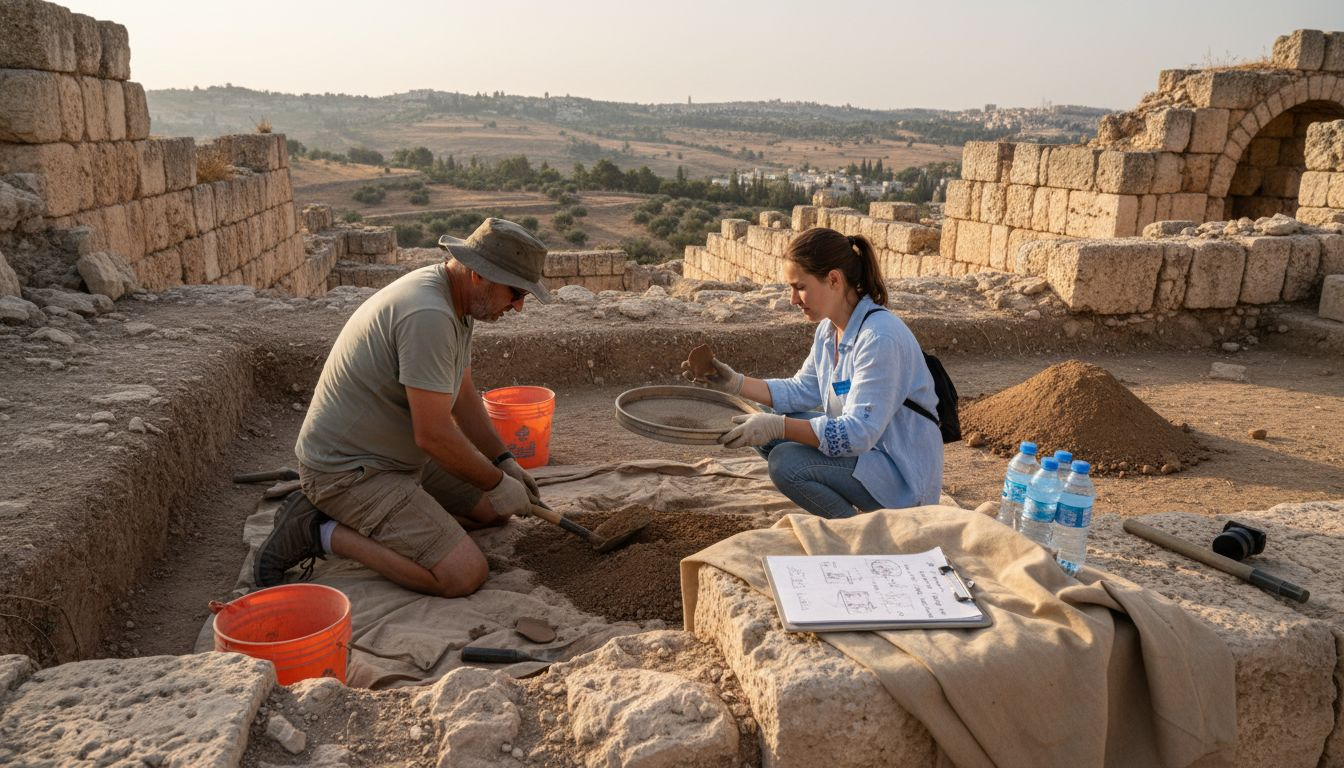
Archaeological digs provide thrilling hands-on history lessons. Participants sift through soil at sites where ancient Israelites lived, potentially discovering pottery shards or ancient coins. Professional archaeologists explain what these artifacts reveal about daily life thousands of years ago. The physical act of uncovering history creates visceral connections to ancestors.
Interactive storytelling at historic sites brings locations to vibrant life. Rather than lecturing about Masada’s history, guides might assign family members roles in the ancient drama. Acting out the story while standing where events occurred creates powerful emotional resonance. These performances help participants internalize lessons about courage and identity.
Key activity categories include:
Craft workshops teaching traditional arts like ceramics, weaving, or jewelry making
Agricultural experiences harvesting olives or grapes in biblically significant regions
Music sessions learning traditional instruments and folk songs
Service projects connecting with Israeli communities through volunteering
Nature hikes exploring landscapes featured in Torah stories
Successful bat mitzvah trip planning involves selecting activities that resonate with your child’s interests and your family’s values. A musically inclined teen might thrive in drum circles, while a budding chef connects through culinary workshops.
Comparing experiential learning vs traditional Bar/Bat Mitzvah tour approaches
Understanding the distinctions between experiential and traditional approaches helps families choose the right tour style for their celebration goals. Each approach offers different benefits suited to varying family priorities.
Feature | Experiential Learning Tours | Traditional Tours |
Primary Focus | Active participation and emotional engagement | Visiting historic and religious sites |
Learning Method | Hands-on workshops and collaborative activities | Guided lectures and passive observation |
Family Involvement | Shared discovery and reflection exercises | Individual observation and photography |
Schedule Pace | Fewer destinations with deeper engagement | More locations with brief stops |
Long-term Impact | Strong memory retention and ongoing practice | Basic knowledge acquisition |
Spiritual Connection | Personal experiences creating emotional bonds | Intellectual understanding of significance |
Experiential tours prioritize transformation over information. Families spend extended time at fewer locations, participating in activities that create personal connections. A morning might involve only two sites but include a cooking workshop and reflection session. This depth allows experiences to resonate emotionally and spiritually.
Traditional tours maximize site visits, appealing to families who want comprehensive geographical coverage. These tours work well for families prioritizing photographic documentation and broad exposure to Israeli landmarks. The faster pace suits those comfortable with conventional educational approaches.
Impact differences become apparent months after trips conclude:
Experiential participants report 60% higher rates of continuing Jewish practices
Traditional tour families show stronger geographical knowledge of Israel
Experiential learning creates more shared family stories and inside jokes
Traditional approaches work better for families seeking efficient site coverage
Neither approach is universally superior. Families valuing spiritual depth and lasting behavioral change typically benefit more from experiential formats. Those prioritizing comprehensive sightseeing and ceremonial focus may prefer traditional structures. Many families find hybrid approaches balancing both elements meet their needs effectively.
Framework and practical guidance for integrating experiential learning in your Bar/Bat Mitzvah trip
Successfully incorporating experiential learning requires intentional planning around five core pillars. This framework for integrating experiential learning helps families design meaningful trips that balance activity with reflection.
Start with active participation by selecting hands-on workshops aligned with your child’s interests and learning style.
Build emotional engagement through activities connecting personal identity to Jewish heritage and family history.
Create cultural immersion opportunities that go beyond tourist experiences to authentic community interaction.
Schedule reflection time after major activities for journaling, discussion, or quiet contemplation.
Design family collaboration moments where everyone learns together rather than parents instructing children.
Practical implementation begins during initial planning a bar mitzvah tour to israel conversations. Discuss your child’s passions, whether art, music, food, or nature. Research activities that leverage these interests while teaching Jewish concepts. A child who loves science might engage deeply with archaeological methods, while an artistic teen thrives in craft workshops.
Respecting family traditions remains paramount throughout planning. Experiential activities should complement rather than replace ceremonial elements your family values. If Torah reading at the Western Wall anchors your celebration, build experiential activities around that core moment. Consider a calligraphy workshop where your child practices the Hebrew letters they’ll read aloud.
Common pitfalls to avoid include:
Overloading schedules without adequate rest and processing time
Choosing activities based on novelty rather than meaningful connection
Skipping reflection sessions that help participants internalize experiences
Ignoring your child’s input about which activities appeal to them
Treating experiential learning as separate from rather than integrated with spiritual practice
Success indicators help evaluate whether your experiential approach achieves intended outcomes:
Indicator | Measurement Approach | Target Outcome |
Engagement Level | Observe participation enthusiasm during activities | Active volunteering and asking questions |
Family Connection | Track shared stories referenced after trip | Regular mentions of specific experiences |
Jewish Practice | Monitor continued rituals at home | Sustained or increased observance |
Emotional Impact | Note expressions of pride and belonging | Positive self-identification as Jewish |
Knowledge Retention | Check recall of concepts months later | Detailed memories of activities and lessons |
Exploring [best bar mitzvah tours in israel](https://bneimitzvahtrip.com/post/best-bar mitzvah tours in israel celebrate your simcha in style) reveals how professional organizers incorporate these principles. Experienced providers balance structured learning with spontaneous discovery, creating space for both planned activities and unexpected moments of connection.
Pro Tip: Schedule downtime explicitly in your itinerary for rest and informal reflection, allowing experiences to sink in rather than rushing from activity to activity without processing.
Plan a meaningful Bar and Bat Mitzvah trip with Bnei Mitzvah
Transforming your Bar or Bat Mitzvah celebration into a profound experiential learning journey requires expertise in both Jewish education and travel logistics. Bnei Mitzvah specializes in creating customized tours that integrate the five pillars of experiential learning while honoring your family’s unique traditions and values.
Our planned Bar/Bat Mitzvah tours feature carefully curated activities from Torah writing workshops to archaeological experiences, all designed to deepen spiritual connections and strengthen family bonds. With over 20 years of experience in experiential travel, we guide you through every decision to create celebrations that resonate with both meaning and joy. Whether you’re considering a planned Bar Mitzvah tour or exploring Bat Mitzvah tours, our team helps you design an itinerary balancing active participation with reflection. Visit our website to discover how family bar mitzvah tours to israel can transform your celebration into a lasting foundation for Jewish identity.
Frequently asked questions
What is experiential learning in a Bar/Bat Mitzvah tour?
Experiential learning involves active, hands-on participation that engages emotions and connects families to Jewish culture during Israel trips. Rather than passively observing historic sites, participants cook traditional foods, write Torah letters, or dig at archaeological locations. This approach creates personal experiences that deepen spiritual understanding and build lasting memories beyond conventional sightseeing.
How does experiential learning strengthen family bonds during Bar/Bat Mitzvah trips?
Collaborative learning activities and shared reflection create meaningful memories and emotional connections that bring families closer together. When parents and children discover Jewish heritage side by side through workshops and interactive experiences, they build equality in learning that transcends typical family dynamics. These shared moments become stories families reference for years, reinforcing both individual and collective Jewish identity.
What types of experiential activities are common on Jewish tours for Bar/Bat Mitzvahs?
Popular activities include Torah writing workshops, traditional cooking classes, archaeological digs, and interactive storytelling at historic locations. Families might also participate in craft workshops teaching ancient arts, agricultural experiences harvesting biblical crops, or music sessions learning traditional instruments. The bat mitzvah trip options vary widely to match different interests and learning styles while maintaining focus on meaningful Jewish cultural engagement.
How can families ensure experiential learning fits with their traditions?
Customize activities to honor your family’s specific customs, observance level, and ceremonial preferences through open communication with tour planners. Professional organizers experienced in Jewish travel can integrate hands-on learning around traditional elements like Torah readings or prayer services. Reflection and participation enhance rather than replace religious practices, creating deeper understanding of the spiritual significance behind traditional ceremonies.
Recommended
Comments