How travel deepens Jewish roots for Bar and Bat Mitzvah families

TL;DR:
Most heritage trips to Israel significantly increase Jewish identity and connection to Israel. Families should focus on immersive, purposeful programs that include learning, rituals, and community engagement. Smaller, well-structured trips and pre- and post-travel conversations enhance long-term impact and intergenerational Jewish continuity.
A majority of American Jewish families who travel to Israel on heritage trips report a dramatic, measurable rise in their connection to Jewish identity, yet most families still treat the experience as a vacation rather than a defining milestone. That gap between what travel can do and what families actually plan for is where so much potential goes unrealized. If you’re organizing a Bar or Bat Mitzvah celebration and wondering whether bringing your family to Israel is worth it, the research says yes, but only if you know what to look for and how to structure the experience for lasting impact.
Table of Contents
Key Takeaways
Point | Details |
Travel boosts Jewish identity | Immersive trips to Israel create lasting increases in Jewish connection for most participants. |
Benefits reach future generations | Children of trip alumni are far more likely to be raised Jewish and have Bar/Bat Mitzvah celebrations. |
Immersion is key | Programs combining rituals, learning, and community yield the most powerful results. |
One size doesn’t fit all | Outcomes depend on participants’ backgrounds, preparation, and the trip’s structure. |
The proven impact: travel and Jewish identity
The data on this is striking. Israel travel strengthens Jewish identity by producing measurable increases in attachment to Israel, belonging to the Jewish people, and engagement in Jewish life among participants of heritage trip models like Birthright. These are not soft, anecdotal results. They are numbers collected across thousands of participants over decades.
In a recent Summer 2025 cohort, experiencing an Israel immersion trip was directly associated with increases in connection to Jewish identity for participants, while nonparticipants showed measurable declines. Think about that contrast for a moment. Two groups of young American Jews, same year, completely opposite trajectories.
“85% of Israel heritage trip alumni reported greater attachment to Israel and the Jewish people after their trip, compared to those who did not participate.”
Here is a snapshot of what the data shows across key identity measures:
Identity measure | Participants | Nonparticipants |
Attachment to Israel | +85% | Declined |
Sense of Jewish peoplehood | +54% | Flat or negative |
Active Jewish community engagement | Significantly higher | Lower |
Connection to Israel (Summer 2025 cohort) | +60% | -26% |
These numbers matter enormously for families planning meaningful mitzvah journeys. A Bar or Bat Mitzvah is already one of the most significant moments in a young person’s Jewish life. Pairing it with immersive Israel travel doesn’t just enhance the celebration. It dramatically raises the odds that Jewish identity will stick, grow, and become a living part of your child’s adult life.
Understanding this connection is at the heart of heritage travel and family milestones. The evidence is clear: travel to Israel around a milestone event is one of the most effective tools available to Jewish families in the United States today.
Travel’s intergenerational ripple effect
Beyond the immediate boost for teens, the effects of heritage travel continue across generations. This is perhaps the most underappreciated finding in the entire body of research.
Heritage trip alumni are far more likely to raise their own children Jewish, celebrate their children’s Bar and Bat Mitzvah, and build active, practicing Jewish households. The ripple effect doesn’t stop at the participant. It reshapes the family tree.
Key intergenerational outcomes for heritage trip alumni:
84% raise their children Jewish, compared to significantly lower rates in the general American Jewish population
Nearly twice as likely to celebrate their children’s Bar or Bat Mitzvah
Stronger family narratives connecting children to Jewish history and ancestry
Deeper community ties that create ongoing social reinforcement of Jewish identity
More consistent holiday practice at home, from Shabbat to Passover
Stat: 84% of Israel heritage trip alumni raise their children Jewish, a figure that stands in sharp contrast to broader trends among unaffiliated American Jewish adults.
Pro Tip: Before and after any Israel trip with your family, schedule intentional conversations. Ask your child what surprised them, what moved them, and what they want to carry home. These conversations transform a travel experience into a family story that gets retold for decades.
When you look at planning Bar and Bat Mitzvah Israel trips through this lens, you’re not just organizing a celebration. You’re investing in your grandchildren’s Jewish identity. The research supports this fully. Unique family mitzvah experiences built around Israel travel create a shared family story that becomes part of your household’s identity for generations.
What actually works: ingredients of transformative Jewish travel
Not all travel is equally transformative. What’s behind the most effective trips?
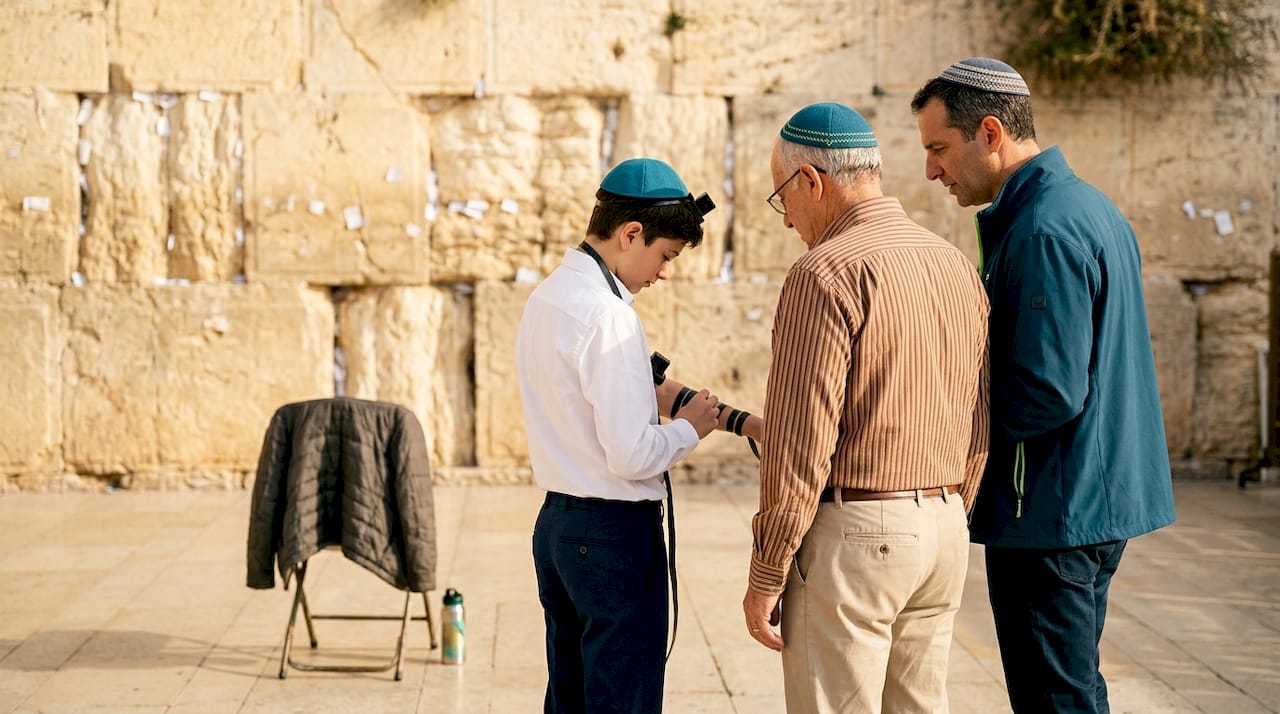
The key distinction is the difference between being a tourist and being a participant. A tourist visits the Western Wall and takes a photo. A participant stands at the Western Wall after learning its history, reciting a prayer with intention, and understanding what that moment means for their family’s story. The emotional and cognitive depth is completely different, and so is the lasting impact.
Immersive programs that combine daily Jewish life, learning, and community participation are positioned specifically to bridge Jewish ancestry and living Judaism. That phrase, “living Judaism,” is worth dwelling on. The goal isn’t nostalgia. It’s a felt, practiced connection to a tradition that is alive today.
Here are the core elements that separate transformative heritage travel from ordinary sightseeing:
Structured learning tied to the places you visit, not just descriptions of what happened there
Ritual involvement such as Shabbat observance, prayer at meaningful sites, or Torah study in context
Community participation including meals with Israeli families or local Jewish communities
Cultural practice from cooking traditional foods to learning Hebrew phrases in daily use
Shared family reflection built into the itinerary, not left to chance
Pro Tip: When evaluating any Israel program for your Bar or Bat Mitzvah trip, ask specifically how much time is allocated to ritual and learning versus pure sightseeing. The best programs integrate both, but the ratio reveals the program’s real priorities.
Experience type | Short-term impact | Long-term Jewish identity |
Classic sightseeing tour | Moderate cultural exposure | Limited lasting effect |
Immersive heritage program | Deep emotional engagement | Measurable, lasting impact |
Mitzvah-centered Israel trip | Personal milestone anchored in place | Highest impact on continuity |
Experiential Bar Mitzvah travel built around these elements gives your child something no synagogue ceremony alone can provide: a physical, emotional, and spiritual connection to the land where Jewish history began. And for families exploring heritage sites for mitzvah trips, the options are genuinely moving. From Masada to the Old City of Jerusalem to the shores of the Sea of Galilee, every site carries layers of meaning that deepen with preparation.
Challenges and differences: not all travel impacts are equal
To make the most of travel, it’s crucial to recognize challenges and set realistic expectations.
Not every family will experience the same outcomes, and pretending otherwise would be misleading. The research is honest about this. Outcomes depend significantly on who participates and the surrounding context. The Brandeis and Birthright evidence includes sharp changes among specific subgroups and compares participants to nonparticipants rather than assuming travel effects are universal.
Several variables shape how much impact a trip will have:
Trip length and structure: Longer, more intentional programs produce stronger outcomes than quick visits
Prior Jewish engagement: Participants with some existing Jewish education or community connection tend to benefit most
Age and readiness: The Bar and Bat Mitzvah window, roughly ages 12 to 14, is an especially receptive period
Family context: Interfaith households, varying denominational backgrounds, or political concerns around Israel can shape how teens receive and process the experience
“Connection to Israel rose 60% among trip participants and fell 26% among nonparticipants in the same recent cohort.”
That 86-point gap is extraordinary. But it does not mean every participant will feel equally transformed. What it means is that the conditions for transformation are present when the program is well-designed and the family is intentionally engaged.
Family bonding on Israel mitzvah tours also plays a major role in outcome. When parents and siblings travel together with shared curiosity, the experience reinforces identity from multiple directions simultaneously. A child who hears their parent moved to tears at Yad Vashem carries that moment differently than one who visits alone.
What most families miss when planning a Jewish heritage trip
Here is the hard truth we’ve observed after over 20 years in this space: most families focus almost entirely on the sites and almost not at all on the structure around them. They want to see Israel. That’s beautiful. But seeing Israel is not the same as being changed by it.
The research consistently shows that the deepest identity impact comes from planned, purposeful engagement, not from checking off holy sites on a list. A morning at the Western Wall matters far more when it is preceded by a family conversation about what the Kotel represents, followed by a shared Shabbat dinner where everyone reflects on what they felt.
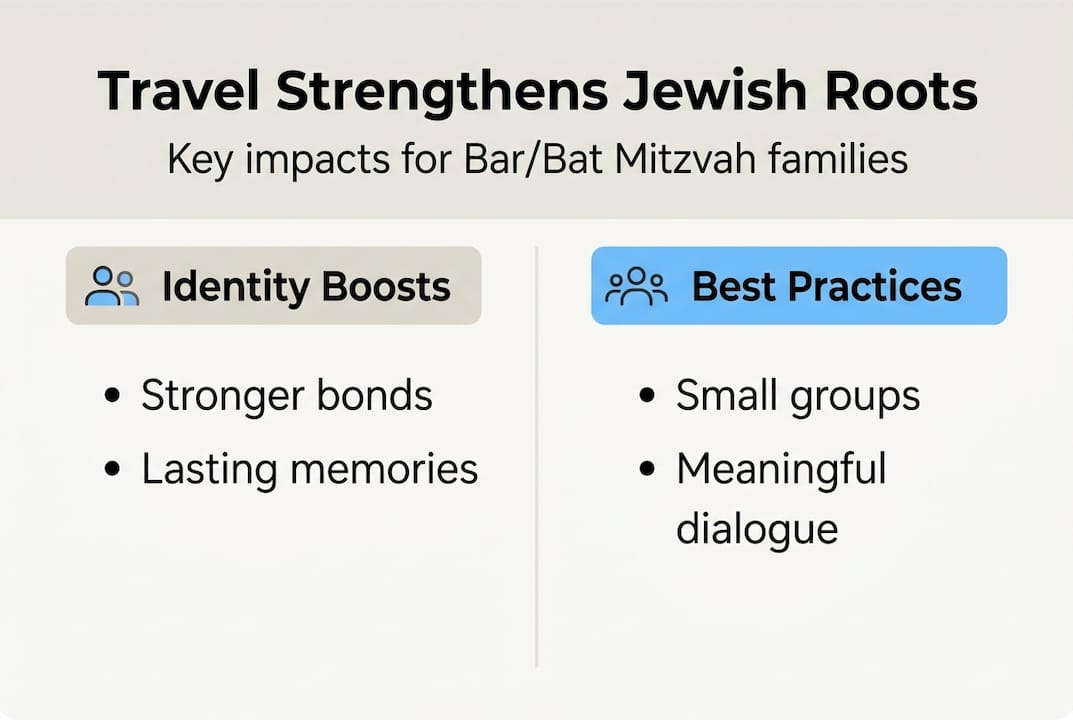
Here’s the contrarian insight that surprises most families: smaller, more focused groups consistently produce more lasting outcomes than large, sweeping tours. A smaller group means more time for meaningful conversation, more flexibility to linger in a place that moves your child, and more room for ritual to feel personal rather than performed.
The bridge between ancestry and living Judaism doesn’t build itself. It requires intentional conversation before you travel, during each day on the ground, and in the weeks after you return. Connecting Israel history and mitzvah celebrations to your family’s own story is what makes the experience transformative rather than simply memorable.
Ready to deepen your family’s Jewish roots in Israel?
At Bnei Mitzvah, we’ve spent over 20 years designing exactly the kind of purposeful, immersive experiences the research points to. Our trips weave together ritual, learning, community connection, and genuine celebration so your family doesn’t just visit Israel. You become part of its story.
Our planned Bar and Bat Mitzvah tours are designed for families ready to make this milestone mean something that lasts. Whether you are looking for a deeply spiritual program, an adventure-filled journey, or a blend of both, we offer curated options that fit your family’s values and your child’s personality. Explore everything we offer at Bar and Bat Mitzvah Tours in Israel and take the first step toward the most meaningful trip your family will ever take together.
Frequently asked questions
How does a heritage trip to Israel affect Jewish identity?
Israel travel produces measurable increases in attachment to Israel, Jewish peoplehood, and engagement in Jewish life, with especially strong effects among teens and young adults.
Will travel to Israel make my child more likely to have a Bar or Bat Mitzvah?
Heritage trip alumni are nearly twice as likely to celebrate their children’s mitzvah compared to those who did not participate in a heritage program.
What makes an Israel trip effective at strengthening Jewish roots?
Immersive programs combining daily Jewish life, learning, and community participation produce the greatest and most lasting impact compared to standard sightseeing tours.
Are all travel program outcomes the same for every participant?
No. Outcomes depend on program structure, participant background, trip length, and family context, so choosing a program thoughtfully is essential for your specific family.
Recommended
Comments