Why nature matters in Bar and Bat Mitzvah trips to Israel

TL;DR:
Nature is deeply rooted in Jewish tradition and enhances the spiritual connection to Israel.
Integrating outdoor activities like hikes and tree planting creates lasting family memories and character growth.
Planning outdoor experiences thoughtfully boosts teen wellbeing, resilience, and strengthens family bonds.
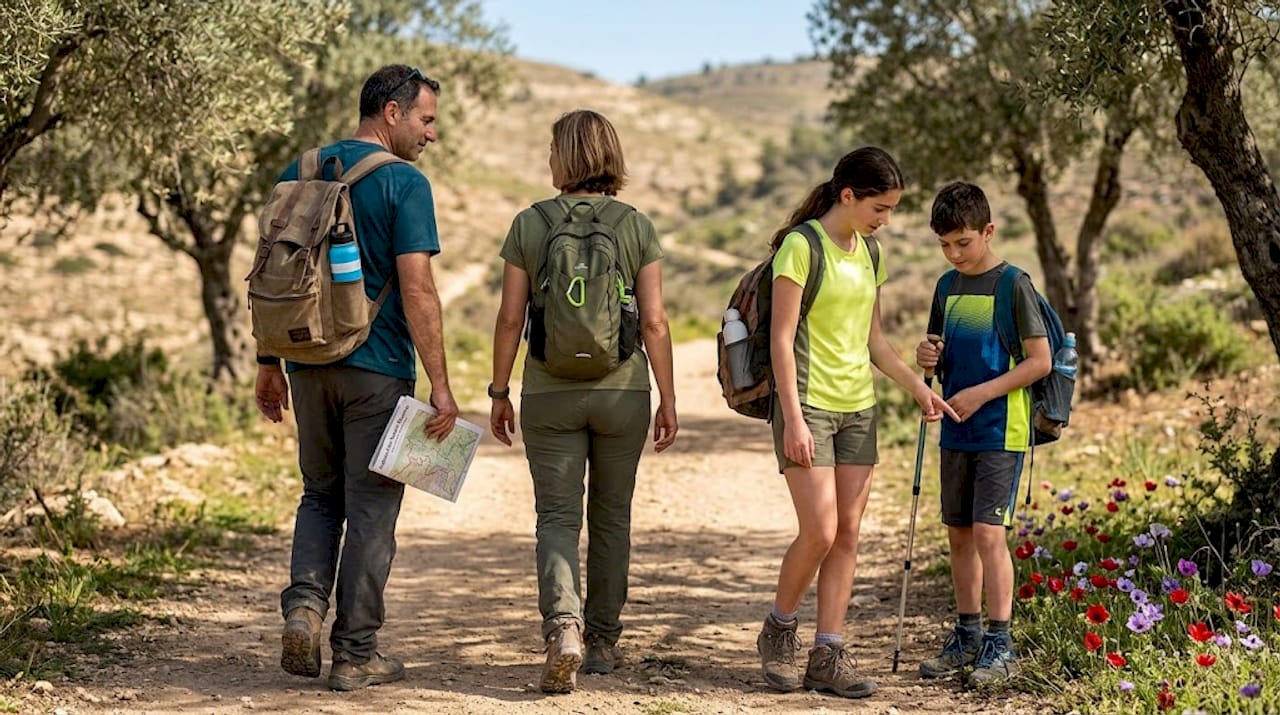
Most families planning a Bar or Bat Mitzvah trip to Israel think first about the Western Wall, Masada, and the ceremony itself. The religious landmarks get all the attention, and rightfully so. But the natural landscapes of Israel, the Negev Desert, the Galilee hills, the Judean wilderness, carry just as much meaning. Nature isn’t a bonus stop between historical sites. For families willing to lean into it, time spent outdoors becomes some of the most powerful, most remembered moments of the entire journey.
Table of Contents
Integrating nature into Bar and Bat Mitzvah trip itineraries
The wellbeing advantage: How nature enriches Bar and Bat Mitzvah experiences
Nature as legacy: Deep meaning for families, and practical tips to maximize it
Why most families underestimate the power of nature on milestone trips
Ready to design an unforgettable nature-rich Bar/Bat Mitzvah trip?
Key Takeaways
Point | Details |
Nature deepens connection | Experiencing Israel’s landscapes brings Jewish heritage and family bonds to life. |
Wellbeing is boosted outdoors | Teens and families see emotional, social, and health benefits when trips include nature. |
Legacy moments stick | Simple outdoor rituals and symbols create lasting, multi-generational meaning. |
Timing and planning matter | Scheduling outdoor activities during cooler months ensures comfort and safety. |
The roots: Why nature is central to Jewish tradition
With this guide’s purpose in mind, let’s explore why nature’s presence on Jewish trips isn’t just nice but deeply rooted in tradition.
Israel’s land isn’t simply a backdrop. For Jewish families, it’s woven into prayer, text, and identity across generations. The Torah references the Land of Israel hundreds of times, describing its valleys, mountains, and rivers as part of the covenant between God and the Jewish people. When your family walks those same landscapes, the connection stops being abstract. It becomes physical, emotional, and real.
Jewish tradition has always used nature as a vehicle for meaning:
Tu B’Shvat, the New Year of the Trees, is one of Judaism’s oldest ecological holidays. Families gather, plant trees, and reflect on renewal and responsibility.
Sukkot calls Jewish families to eat and live outdoors in temporary structures, a direct reminder of both the desert wandering and humanity’s relationship with the earth.
Tikkun Olam, repairing the world, finds natural expression through acts like tree planting, which connect modern families to generations past.
This isn’t just poetic. Experiential travel in Israel built around these traditions gives teens a lived memory of values they’ve only read about in Torah portions. And for bat mitzvah travel experiences, the outdoors offers a particularly meaningful space where young women can step into their new role in the Jewish community with confidence and awe.
Nature, in this context, isn’t an activity. It’s a language that the Land of Israel has always spoken to its people.
Integrating nature into Bar and Bat Mitzvah trip itineraries
Understanding tradition reveals nature’s importance, but how do families practically make this connection during a milestone trip?
The difference between a great trip and a forgettable one often comes down to intentional planning. Families who weave nature throughout their itinerary, rather than treating it as a single optional day, return home with a richer experience. Here’s how adventure family trip tips translate into a real schedule:
Element | Heritage-only itinerary | Nature-integrated itinerary |
Morning activities | Museum and historical sites | Hike in Ein Gedi or Galilee trails |
Ceremony setting | Synagogue or indoor hall | Desert plateau or garden site |
Afternoon activities | City tours and shopping | Biblical landscape exploration |
Group bonding | Dinner at a restaurant | Campfire reflection in the Negev |
Memorable moments | History lectures | Sunrise at Masada, tree planting |
As expert tour planners note, integrating nature works best when it’s sequenced thoughtfully. A post-ceremony hike through Ein Gedi after the Masada experience, a visit to Neot Kedumim’s biblical landscape on arrival day to set a reflective tone, and desert adventures scheduled on recovery days all create a natural rhythm. Here are the steps that experienced planners follow:
Assess family fitness before booking any trail or outdoor challenge.
Connect each outdoor moment to a Jewish theme so teens understand why they’re doing it.
Layer stories and texts into each landscape. Standing in the Judean desert is more powerful when you know whose footsteps you’re following.
Plan for downtime. Not every nature moment needs to be an adventure. A quiet garden visit counts.
Build in a group contribution. Tree planting, a group blessing outdoors, or a shared journal exercise grounds the experience.
Pro Tip: Book outdoor activities in Israel’s cooler months, November through March, for family comfort and safety. Summer heat can be intense and genuinely dangerous for younger kids and grandparents.
Mixing iconic natural landscapes with Jewish heritage sites doesn’t dilute either. It amplifies both.
The wellbeing advantage: How nature enriches Bar and Bat Mitzvah experiences
Knowing how to integrate nature leads to the next question: what concrete benefits do families and teens gain from these experiences?
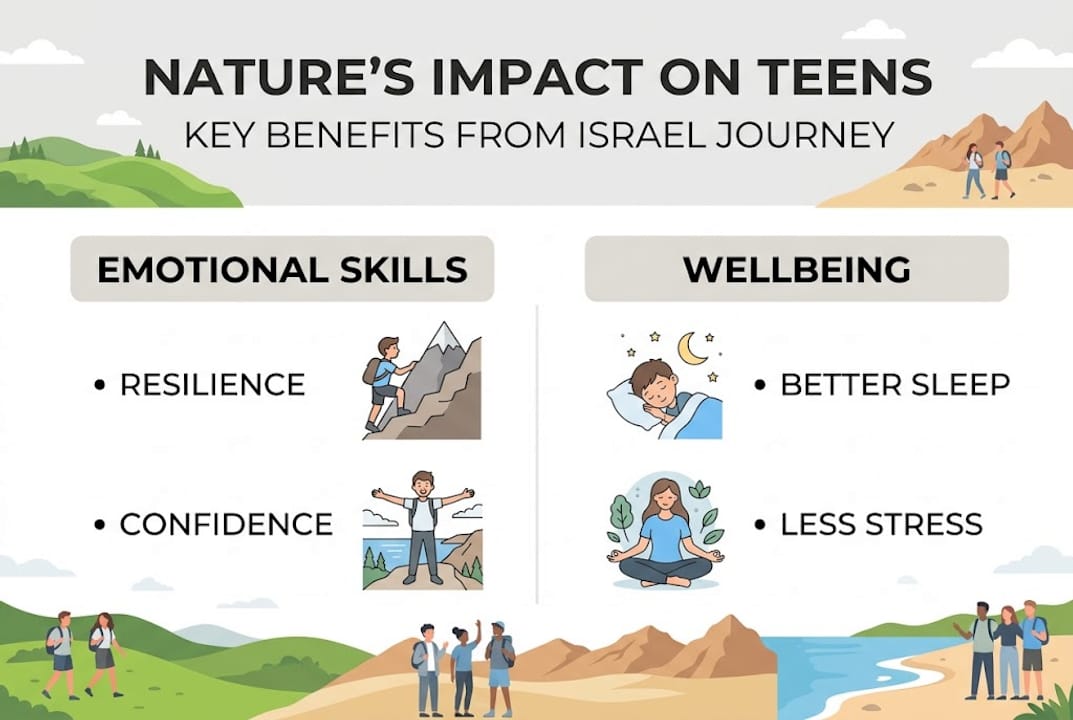
The answer is backed by solid data, not just good feelings. Research on nature-based interventions for adolescents shows that hiking predicts higher child wellbeing, measured as Health-Related Quality of Life, with a coefficient of ß=1.20, p=0.01, and more consistent sleep at ß=0.19, p less than 0.05. These are meaningful numbers that translate directly to a teen’s experience on a multi-day trip.
80% of teens apply resilience skills learned during nature-based programs in their daily lives afterward. That’s not just a trip memory. That’s character development.
Outcome | Heritage-only trips | Nature-integrated trips |
Sleep quality | Moderate | Significantly improved |
Emotional growth | Modest gains | Measurable improvement |
Peer bonding | Social dinners, group tours | Shared challenge, deeper trust |
Resilience skills | Limited context | Built through outdoor experiences |
Connection to Israel | Historical understanding | Embodied, personal, and emotional |
The benefits families report most often include:
Reduced loneliness for teens who feel disconnected from their Jewish identity before the trip
Improved mood sustained across the journey, not just on the ceremony day
Stronger family bonds, especially between teens and grandparents who walk trails together
Lasting resilience, a sense that “I can do hard things,” rooted in a physical experience on sacred land
Explore Israel adventure sports options to find activities that match your family’s energy level. And if you’re curious how outdoor experiences build on ceremony, see how experiential learning for Bar Mitzvah creates meaning that lasts far longer than a single day.
Nature-based experiences don’t just add variety. They bridge generations and enhance the Bar and Bat Mitzvah’s meaning in ways no indoor ceremony alone can achieve.
Nature as legacy: Deep meaning for families, and practical tips to maximize it
Now that the benefits are clear, how can each family maximize nature’s legacy in concrete, personal ways?
Every family that walks through the Galilee or plants a tree in Israel’s soil is doing something their great-grandparents could have only dreamed about. That weight is real. The goal is to make sure it registers.
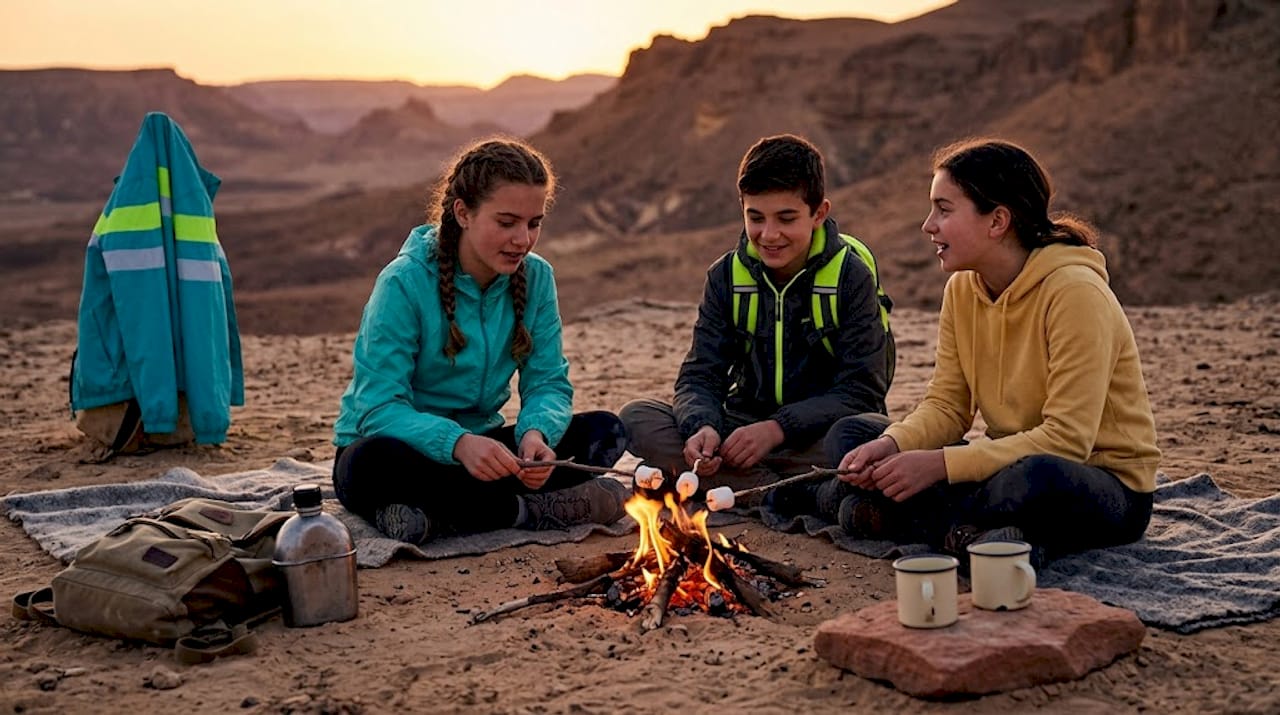
Nature-based acts, family hikes, desert ceremonies, tree planting at a national forest, create new family rituals that connect the past, the present, and the future. These moments become stories your teen tells their own children someday. Here’s how to make sure they stick:
Involve all ages. Plan one nature activity specifically designed so grandparents can participate alongside the Bar or Bat Mitzvah child. Shared effort creates shared memory.
Connect to Jewish texts. Before a hike, read a relevant Torah passage or psalm about the land you’re about to walk. It reframes the experience immediately.
Build in reflection time. Don’t rush from activity to activity. Give the family ten quiet minutes at a scenic overlook to let the significance settle.
Document the journey. A shared photo book, a group journal, or even a voice recording at a meaningful spot becomes a treasured artifact.
Schedule a group contribution. As noted, tree-planting echoes Tu B’Shvat traditions and gives your family something living to point to years from now.
Pro Tip: Bring a small journal and have each family member write one sentence at a scenic spot. Collect them all and read them aloud at dinner. This simple act turns a beautiful view into a family document.
Your Bar Mitzvah tour planning should account for these legacy moments from the beginning, not as an afterthought. They are the connective tissue that holds the whole experience together.
Why most families underestimate the power of nature on milestone trips
This brings us to a perspective few families consider when planning a Jewish heritage trip.
Most families pour their energy into the ceremony logistics and historical site visits, then treat a hike or desert excursion as “if we have time.” That’s a mistake we’ve seen repeated more times than we can count. The ceremony marks the milestone. The landscape makes it unforgettable.
Some of the most powerful moments we’ve witnessed happen on trails and at viewpoints, not in buildings. A grandfather and grandchild walking together in the Galilee, a teen standing silently at the edge of the Negev at sunrise, a family planting a tree and realizing they’ve literally rooted something in the land their ancestors prayed toward. Nature-based rituals are rooted in Jewish culture and carry real emotional weight that extends well beyond the trip itself.
Nature in Israel isn’t a scenic backdrop. It’s an ancient inheritance your family can actually touch, walk through, and carry home.
Consider group travel advantages when building your trip. Shared outdoor experiences in groups create bonds that outlast any dinner party or ceremony reception. Invest in the outdoors as deliberately as you invest in the ceremony, and your family will thank you for it for years.
Ready to design an unforgettable nature-rich Bar/Bat Mitzvah trip?
To turn ideas into reality, here’s how your family can begin planning an Israel trip that weaves tradition and nature together.
At Bnei Mitzvah, we’ve spent over 20 years crafting Bar Mitzvah tour options that treat nature as a core element, not a footnote. Our planned tours overview shows how we sequence hiking, heritage, and ceremony into a seamless, meaningful journey your whole family will feel. Whether you’re starting fresh or refining an existing idea, explore our Bar and Bat Mitzvah trip details to find the experience that fits your family’s values and vision.
Reach out to our team today. The landscapes of Israel are ready, and so are we.
Frequently asked questions
What are the best times of year to include nature activities on a Bar/Bat Mitzvah trip to Israel?
Travel from November through March for cooler, safer outdoor experiences, since summer heat in Israel can pose real risks for families with children and older adults.
Do nature-based activities really benefit teens on these tours?
Yes. Research confirms that hiking improves teen wellbeing and sleep quality, with 80% of teens reporting lasting resilience skills after nature-based programs.
How can our family honor tradition through nature on our trip?
You can plant a tree, hike biblical landscapes, or hold a ceremony in the desert, all of which echo Tu B’Shvat traditions and connect your family to Jewish heritage in a living, tangible way.
Is it necessary to use a guided provider to get the full nature experience?
Guided tours offer safer, carefully integrated nature elements with storytelling and cultural context built in, though families who research thoroughly can also personalize meaningful outdoor moments on their own.
Recommended
Comments