The Role of Tradition in Jewish Travel
- שי דוד

- Jun 5
- 7 min read
TL;DR:
Jewish travel is deeply shaped by tradition, influencing destinations, rituals, and daily practices throughout the journey.
Observance requirements for holidays, Shabbat, and customs like Bedikat Chametz dictate planning, logistics, and even mode of transportation.
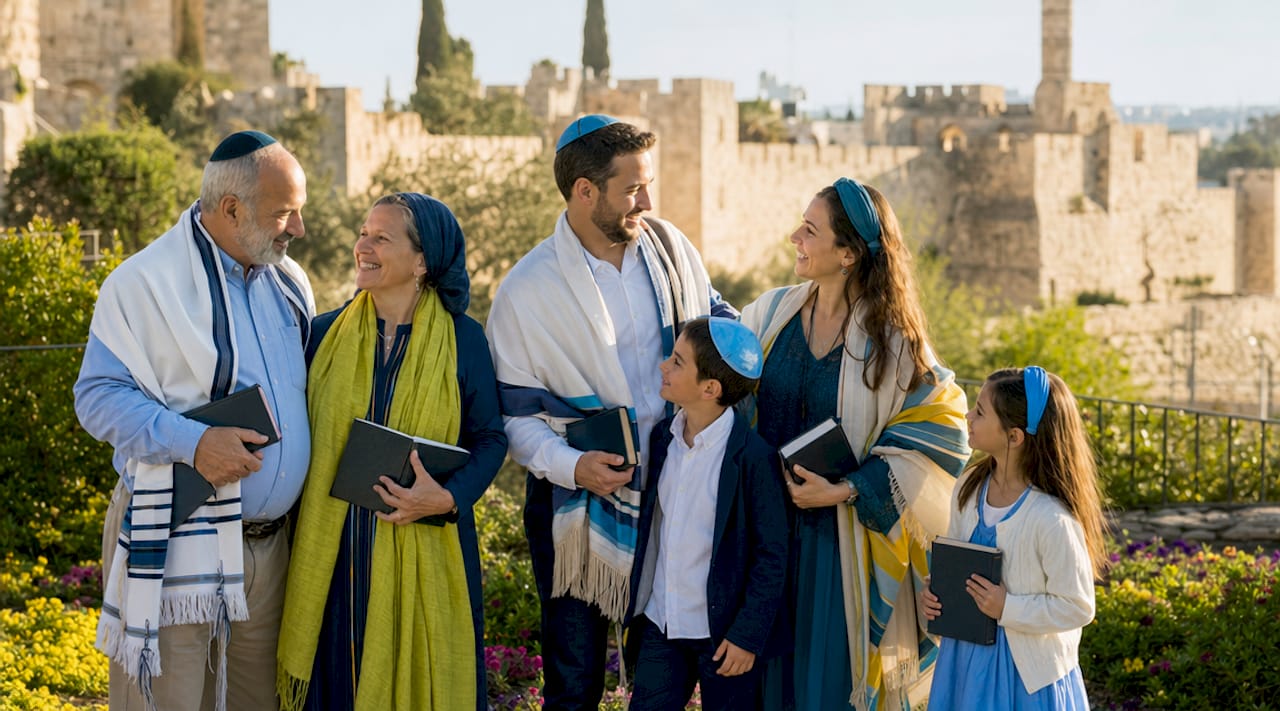
Tradition is the defining force in Jewish travel, shaping where families go, when they depart, how they pray along the way, and what they carry home. The role of tradition in Jewish travel goes far beyond choosing a destination. It governs the entire arc of a journey, from the rituals performed before leaving home to the prayers recited on the road and the customs observed at every stop. Jewish pilgrimage practices, Shabbat observance, and family minhagim (customs) all function as active travel companions, not background details. Understanding this transforms how you plan, experience, and remember every trip.
How does Jewish tradition shape travel planning and experience?
Jewish religious holidays are the most direct expression of how tradition shapes travel. Three pilgrimage festivals historically required Jews to travel to Jerusalem: Sukkot, Passover, and Shavuot. This obligation established a rhythm of purposeful travel that still echoes in how observant families plan their year.
Each festival brings its own logistical demands:
Passover requires kosher accommodations, access to a seder, and awareness of local minhagim. Passover programs and seder crawls show how families maintain holiday practices across diverse destinations, from Miami Beach hotels to Jerusalem guest houses.
Shavuot carries community-specific customs that travel with families wherever they go. Though the Torah prescribes few rituals, vibrant minhagim like decorating with flowers have developed across communities, adding beauty and spirit beyond halachic rules.
Sukkot involves carrying a lulav and etrog, which affects packing, timing, and destination selection. Families traveling during Sukkot must locate a sukkah at their destination or arrange to build one.
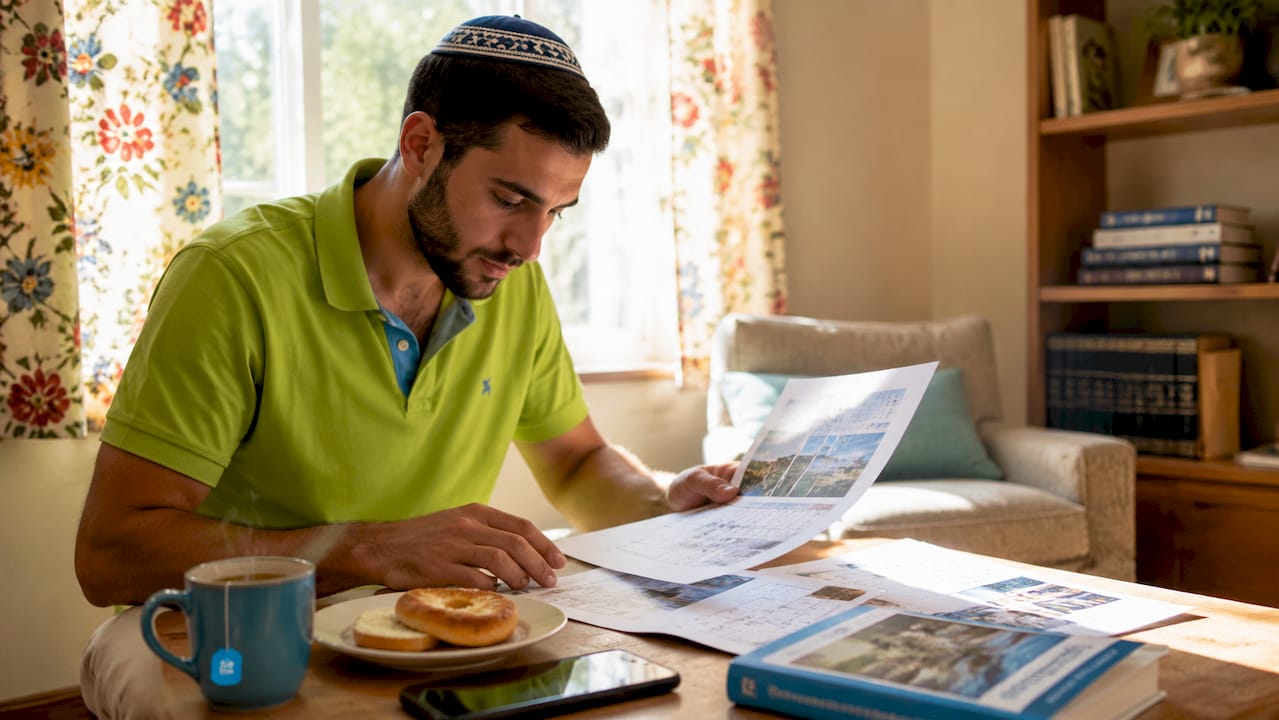
Before Passover travel, the obligation of Bedikat Chametz adds another layer. Travelers leaving within 30 days of Passover must perform this ritual search for leavened bread, synchronizing their departure timing with halachic requirements. Traditional items like feathers and wooden spoons used in this ritual become part of the travel kit, reinforcing continuity even on the road.
Pro Tip: When planning holiday travel, build your itinerary backward from the halachic deadline, not forward from your preferred departure date. This single shift prevents most last-minute conflicts between observance and logistics.
What rituals and prayers accompany Jewish travel?
Jewish tradition does not treat travel as a secular activity. It provides a complete ritual framework for the journey itself, beginning the moment you leave inhabited areas.
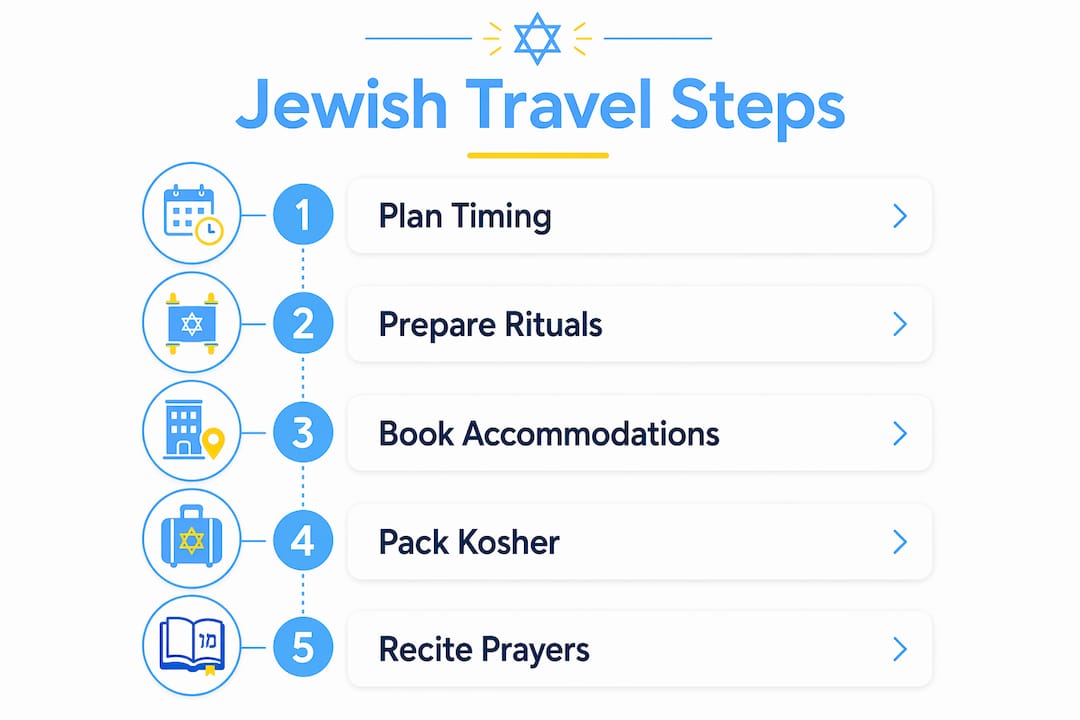
Recite Tefilat HaDerech. The traveler’s prayer is recited when journeying beyond city limits, generally defined as more than 72 minutes outside an inhabited area. The formula varies slightly by community, so knowing your family’s version before departure matters.
Give tzedaka before departing. Charitable giving before a journey is a widely observed custom, understood as a spiritual safeguard. Many families keep a small charity box near the door specifically for this purpose.
Plan around Shabbat. Travel on Friday afternoon and Saturday is restricted for observant Jews. This is not a minor inconvenience. It is a structural constraint that reshapes entire itineraries.
Observe prayer times on the road. Shacharit, Mincha, and Maariv require planning when traveling across time zones or through areas without a minyan. Apps like Siddur and MyZmanim help, but the obligation to plan remains yours.
Shabbat deserves special attention as a travel factor. Public transportation in Israel stops Friday afternoon until Saturday evening, which means itinerary design must account for this cultural rhythm. Experienced observant travelers treat Shabbat like a built-in pause, choosing lodging carefully so they do not need to relocate mid-Shabbat.
Pro Tip: Book your Shabbat accommodation in a walkable neighborhood near a synagogue. The 25-hour pause becomes a highlight of the trip rather than a logistical obstacle when you are already where you need to be.
How tradition shapes logistics for observant Jewish travelers
The impact of Jewish customs in travel is most visible in the practical decisions families make before and during a trip. The table below shows how tradition directly influences key logistical choices.
Travel decision | How tradition shapes it |
Departure timing | Must account for Shabbat, Yom Tov, and Bedikat Chametz deadlines |
Accommodation | Requires kosher kitchen access or certified kosher hotel programs |
Transportation | Shabbat prohibits driving; walking distance to synagogue becomes a priority |
Destination selection | Proximity to Jewish community, mikveh, and kosher food sources |
Packing | Lulav, etrog, siddur, and Shabbat candles travel as standard items |
Families driving to Passover programs report a qualitatively different holiday experience than those who fly. Road trips allow for planned kosher snacks, car-based rituals, and a slower transition into the holiday mindset. This shows that the impact of tradition on travel extends to the mode of transport itself, not just the destination.
Multi-city itineraries require even more coordination. A family traveling from New York to Tel Aviv to Tzfat during Sukkot must locate a sukkah in each city, confirm kosher dining options, and verify that their lodging is within walking distance of a synagogue for Shabbat. These are not obstacles. They are the architecture of Jewish values in travel, built into every decision.
Why does traveling with Jewish tradition deepen identity?
Travel as Jewish continuity transforms abstract history into lived identity. When a child recites Tefilat HaDerech for the first time on a flight to Israel, or when a family lights Shabbat candles in a Jerusalem hotel room, tradition stops being a classroom concept and becomes a personal memory.
“Encountering Jewish rituals in diverse locations strengthens conviction and transforms travel into spiritual continuity.” — New York Jewish Travel Guide
Visiting Jewish heritage sites compounds this effect. The Western Wall, the ancient synagogues of Tzfat, and the markets of Jerusalem’s Old City all carry layers of communal memory. Families who travel to deepen Jewish roots report that their children return with a stronger sense of belonging and pride than any classroom curriculum produces.
Cultural traditions in Jewish travel also connect diasporic communities across geography. A Sephardic family from Los Angeles observing Mimouna after Passover in Marrakech, or an Ashkenazi family joining a Shavuot tikkun leil study session in Budapest, discovers that minhagim are portable. They carry the community with you.
Visiting sites like Masada, Yad Vashem, and the Machane Yehuda market connects families to collective Jewish memory across centuries.
Participating in local Jewish community events during travel builds relationships that outlast the trip.
Milestone travel, particularly Bar and Bat Mitzvah trips to Israel, anchors a young person’s identity at the exact moment it is forming.
Key takeaways
Tradition is the structural backbone of Jewish travel, determining not just where families go but how every moment of the journey is experienced and remembered.
Point | Details |
Pilgrimage festivals drive travel | Sukkot, Passover, and Shavuot historically required Jerusalem travel and still shape annual trip planning. |
Tefilat HaDerech frames departure | Reciting the traveler’s prayer when leaving city limits turns every journey into a ritual act. |
Shabbat restructures itineraries | Friday afternoon transport restrictions require lodging and routing decisions built around observance. |
Minhagim travel with families | Community customs like Shavuot flower decorations and Passover seder formats follow families across geographies. |
Tradition deepens identity | Milestone travel to heritage sites transforms abstract Jewish history into personal, lasting memory. |
Why I think most families underestimate tradition as a travel tool
After years of working with families on milestone travel, I have noticed a consistent pattern. Families treat Jewish customs as constraints to manage rather than as the actual content of the trip. They ask how to work around Shabbat instead of asking how to make Shabbat the best 25 hours of the journey.
The families who leave Israel changed are the ones who leaned into the structure. They chose the hotel near the Kotel so they could walk Friday night. They packed the lulav and etrog and found a sukkah in a neighborhood they would never have visited otherwise. They let Tefilat HaDerech become a family moment rather than a checkbox.
Balancing observance with travel logistics is genuinely demanding. I will not pretend otherwise. But the reward is a trip that your children will describe to their own children. Generic tourism produces photographs. Tradition-anchored travel produces family bonds through milestones that hold.
My honest advice: stop optimizing tradition out of your itinerary. Build the trip around it instead.
— Shay
Plan a tradition-rich Bar or Bat Mitzvah trip with Bneimitzvahtrip
Bneimitzvahtrip has spent over 20 years designing Israel trips that treat Jewish tradition as the centerpiece, not an afterthought. Every itinerary integrates meaningful heritage sites, spiritual experiences, and kosher culinary moments into a celebration your family will carry for life.
Whether you are planning a Bar Mitzvah tour in Israel or a Bat Mitzvah celebration, Bneimitzvahtrip builds each program around your family’s customs, observance level, and milestone goals. The team handles Shabbat logistics, kosher accommodations, and ritual timing so you can focus entirely on the experience. Explore the full range of planned tours in Israel and find the program that fits your family’s tradition and vision.
FAQ
What is the role of tradition in Jewish travel?
Tradition defines the destinations, timing, rituals, and meaning of Jewish travel. It shapes everything from holiday pilgrimage obligations to daily prayer schedules and Shabbat observance on the road.
When should Tefilat HaDerech be recited during travel?
Tefilat HaDerech is recited when traveling beyond inhabited areas, with the halachic threshold generally set at more than 72 minutes outside a city. The exact formula varies by community tradition.
How does Shabbat affect travel itineraries in Israel?
Public transportation in Israel stops Friday afternoon and resumes Saturday evening, requiring travelers to plan lodging within walking distance of their Shabbat destination before sundown on Friday.
Why is Passover travel more logistically complex than other holidays?
Passover requires kosher accommodations, access to a seder, and for those departing within 30 days of the holiday, performance of Bedikat Chametz before leaving home. These obligations directly affect departure timing and accommodation choices.
How does traveling with Jewish heritage strengthen family identity?
Visiting Jewish heritage sites and observing rituals in new locations transforms tradition from abstract knowledge into personal memory. Research confirms that encountering Jewish customs across diverse geographies strengthens conviction and communal belonging.
Recommended
Comments