Understanding the Western Wall for Bar Mitzvahs in 2026

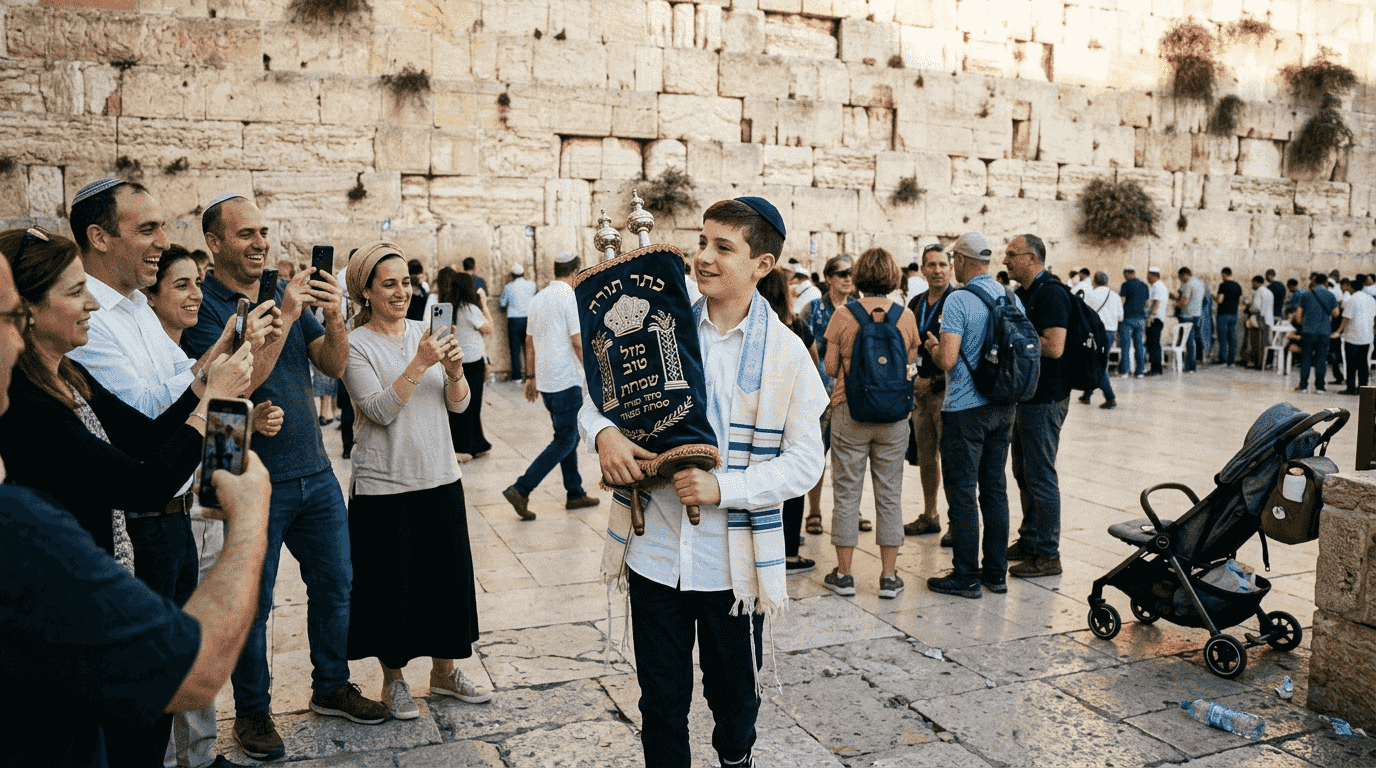
Many families planning a Bar Mitzvah in Israel assume the Western Wall is simply available for ceremonies without understanding its complex significance or the logistical realities involved. The truth is that celebrating at this ancient site requires careful planning, religious awareness, and coordination with multiple authorities. The Western Wall stands as Judaism’s holiest accessible prayer site, carrying profound spiritual weight that transforms a Bar Mitzvah into a deeply meaningful milestone. This guide clarifies the Wall’s historical importance, navigates the practical challenges families face, and explores ceremony options that align with your traditions and values.
Table of Contents
Planning A Bar Mitzvah Ceremony At The Western Wall: Logistics And Protocols
Understanding Prayer Customs And Ongoing Religious Debates At The Western Wall
Alternatives To Celebrating A Bar Mitzvah At The Western Wall
Plan Your Meaningful Bar Mitzvah Experience With Bnei Mitzvah
Frequently Asked Questions About The Western Wall And Bar Mitzvah Ceremonies
Key takeaways
Point | Details |
Sacred historical site | The Western Wall is the last remaining structure of the Second Temple, destroyed in 70 CE, and serves as the holiest site where Jews are permitted to pray. |
Advanced planning essential | Successful Bar Mitzvah events require meticulous planning starting six months to a year in advance, including transportation, permits, and coordination with the Heritage Foundation. |
Religious protocols matter | The Western Wall area is divided for men and women and managed with Orthodox customs, but all Jewish groups are welcome, though disputes over egalitarian prayer remain unresolved. |
Logistical coordination required | Families must handle permits, transportation, security protocols, and timing constraints to ensure smooth ceremony execution. |
Alternative options exist | Some families opt for alternative locations either in Israel or in their home communities due to logistical constraints or differing religious preferences. |
Historical and religious significance of the Western Wall
The Western Wall represents far more than ancient stones. It stands as the last remnant of the Second Temple complex, destroyed by Romans in 70 CE, making it the closest physical connection Jews have to their ancestral worship center. For nearly two millennia, this limestone structure has witnessed prayers, tears, and celebrations from millions of visitors seeking spiritual connection.
Understanding why families choose this location for Bar Mitzvahs requires grasping its unique position in Jewish consciousness. The Wall embodies continuity across generations, linking today’s young adults with ancestors who prayed at the same stones centuries ago. When a 13-year-old reads Torah here, he joins an unbroken chain of Jewish tradition stretching back through history.
The Wall represents Jewish resilience, continuity, prayer, reflection, and connection to the past, making it a powerful symbol in Bar Mitzvah celebrations. This symbolism transforms the ceremony from a personal milestone into a communal affirmation of identity. Families report feeling profoundly moved by the experience of celebrating where Jewish pilgrims have gathered for generations.
The spiritual atmosphere at the Wall creates an irreplaceable backdrop for this coming-of-age ritual:
Constant prayer activity surrounds the ceremony, reinforcing the living nature of Jewish tradition
The ancient stones provide tangible connection to biblical history and Temple worship
Diverse Jewish communities gather here, demonstrating the unity underlying denominational differences
The setting naturally inspires reflection on responsibility, heritage, and faith
Consider this perspective from families who have celebrated at the Wall:
Standing at the Western Wall for our son’s Bar Mitzvah felt like stepping into history. The weight of generations pressed around us, and we understood viscerally what it means to be part of an ancient people with an enduring future.
This communal dimension distinguishes Bar/Bat Mitzvah at the Western Wall from synagogue ceremonies. Strangers often join the celebration, offering blessings and sharing in the joy. The public nature of the event reinforces the Bar Mitzvah’s meaning as entry into the adult Jewish community, not merely a family party.
The Wall’s religious significance also stems from its proximity to the Temple Mount’s Foundation Stone, believed in Jewish tradition to be the world’s spiritual center. This geography adds layers of meaning to prayers offered here, making the location especially potent for marking major life transitions.
Planning a Bar Mitzvah ceremony at the Western Wall: logistics and protocols
Transforming the dream of a Western Wall Bar Mitzvah into reality demands substantial advance work. The complexity often surprises families accustomed to booking synagogue dates a few months ahead. Families must handle logistics such as securing permits, arranging transportation, coordinating with religious authorities, and anticipating security protocols to avoid common pitfalls.
The planning timeline follows a specific sequence that maximizes your chances of securing your preferred date:
Contact the Western Wall Heritage Foundation 9 to 12 months before your target date to check availability and understand current requirements
Submit formal permit applications with ceremony details including participant numbers, timing preferences, and any special accommodations needed
Book Jerusalem accommodations immediately after permit confirmation, as hotels near the Old City fill quickly during peak seasons
Arrange ground transportation for your group, accounting for security checkpoints and limited vehicle access near the Wall
Coordinate with a Torah scribe or bring your own Torah scroll, as the Wall does not provide scrolls for private ceremonies
Schedule a site visit if possible to familiarize the Bar Mitzvah child with the space and practice the ceremony flow
Confirm all arrangements two weeks before departure and obtain written confirmation of your permit
Security considerations add another layer to successful Bar Mitzvah preparations. Everyone entering the Western Wall plaza passes through metal detectors and bag checks. Large groups attract additional scrutiny, so arrive early to allow time for security processing. Photography restrictions apply in certain areas, and professional photographers must obtain advance permission.
The Wall’s popularity creates scheduling challenges that families must navigate strategically. Peak morning hours see heavy traffic from tour groups and daily worshippers. Many experienced planners recommend early morning slots between 7:00 and 8:30 AM or late afternoon times after 4:00 PM for better space availability and reduced crowds.
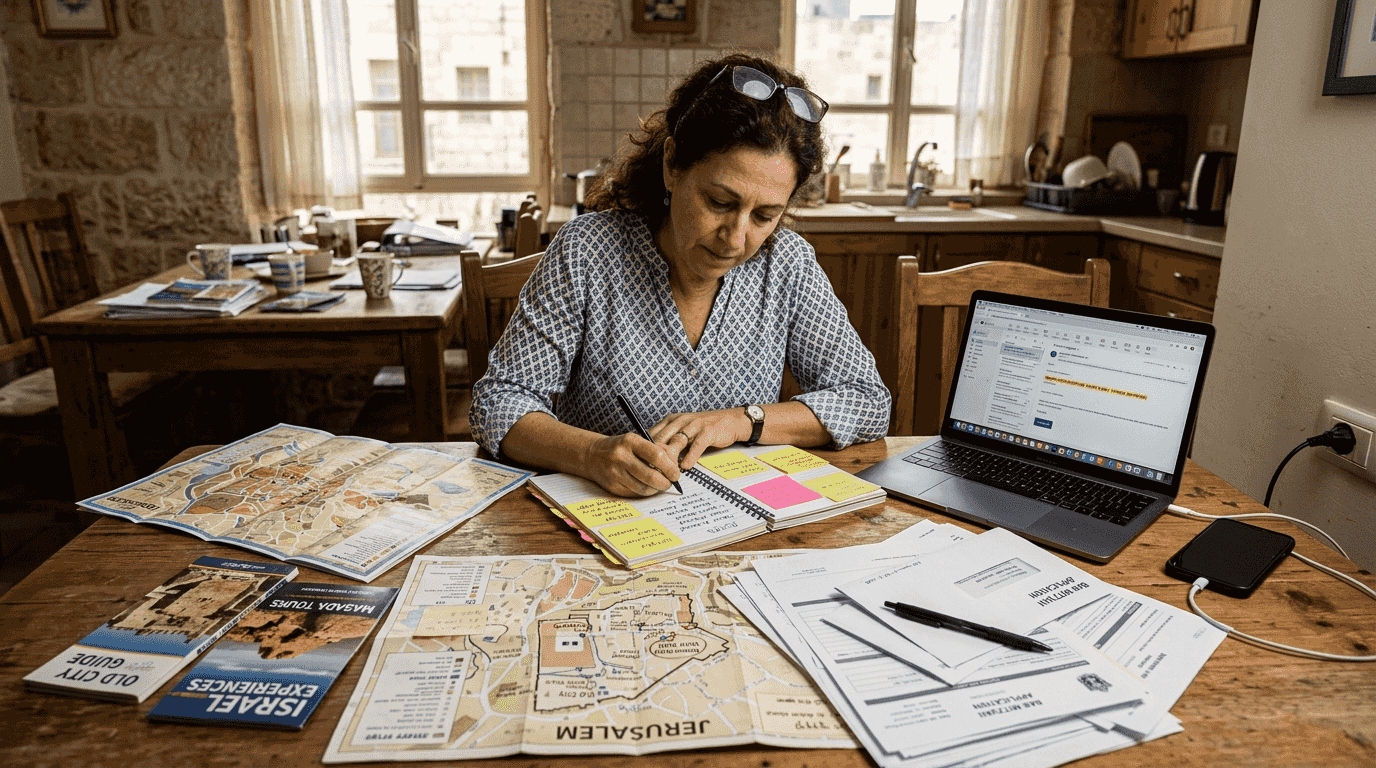
Pro Tip: Hire a local coordinator experienced with Western Wall ceremonies to handle permit applications, security liaison, and day-of logistics. Their relationships with authorities smooth the process considerably and free you to focus on the ceremony’s spiritual aspects.
Weather planning matters more than families initially realize. Jerusalem summers bring intense heat that can overwhelm participants in formal clothing. Winter months offer cooler temperatures but occasional rain. The Wall plaza provides minimal shade, so summer ceremonies require water stations and shortened programs. Consider seasonal factors when selecting your date.
Communication with religious leaders deserves careful attention in planning. If you’re bringing a rabbi from your home community, brief them on Wall protocols and Orthodox sensitivities. Local rabbis familiar with the site can provide valuable guidance on navigating religious complexities while honoring your family’s traditions.
Bar Mitzvah ceremony logistics extend beyond the ceremony itself to reception planning. The Wall plaza prohibits food and celebrations, so families typically move to nearby venues for festive meals. Coordinating transportation between locations for elderly guests or large groups requires advance planning.
Understanding prayer customs and ongoing religious debates at the Western Wall
The religious landscape at the Western Wall shapes ceremony possibilities in ways families must understand before committing to this location. Orthodox authorities manage the site according to traditional Jewish law, creating specific protocols that affect how Bar Mitzvahs unfold. These customs reflect centuries of practice but also generate ongoing controversies that influence planning decisions.
Gender separation stands as the most visible religious protocol at the Wall. A physical barrier divides the men’s section on the left from the women’s section on the right when facing the Wall. Bar Mitzvah ceremonies occur in the men’s section, meaning mothers, sisters, and female guests observe from the women’s area. This arrangement aligns with Orthodox synagogue practice but differs from Conservative and Reform customs many American families follow.
Tensions over mixed-gender prayer and women’s participation in Torah readings impact families planning celebrations, requiring advance understanding and decisions. The frozen Kotel Agreement, which would have designated a space for egalitarian worship, remains unimplemented despite years of negotiation. This political stalemate leaves families seeking mixed-gender ceremonies with limited options at the traditional Wall plaza.
Key religious customs affecting your ceremony include:
Torah reading follows Orthodox pronunciation and cantillation, which may differ from your synagogue’s practice
Women cannot read from the Torah in the main plaza areas
Musical instruments are prohibited on Shabbat and holidays
Amplification systems require special permission and may not be available
Photographs during Shabbat ceremonies face restrictions
Comparing ceremony options helps families make informed choices aligned with their values:
Location | Mixed Gender | Women’s Torah Reading | Amplification | Permit Complexity |
Main Wall Plaza | No | No | Limited | Moderate |
Robinson’s Arch | Yes | Yes | Yes | Lower |
Private Jerusalem Venue | Yes | Yes | Yes | Low |
Home Synagogue | Yes | Depends | Yes | Lowest |
Robinson’s Arch, located at the southern end of the Western Wall complex, offers an alternative for egalitarian ceremonies. This archaeological area provides Western Wall access with fewer restrictions, allowing mixed-gender prayer and women’s Torah reading. However, it lacks the iconic visual impact of the main plaza and sees less foot traffic, creating a different ceremonial atmosphere.
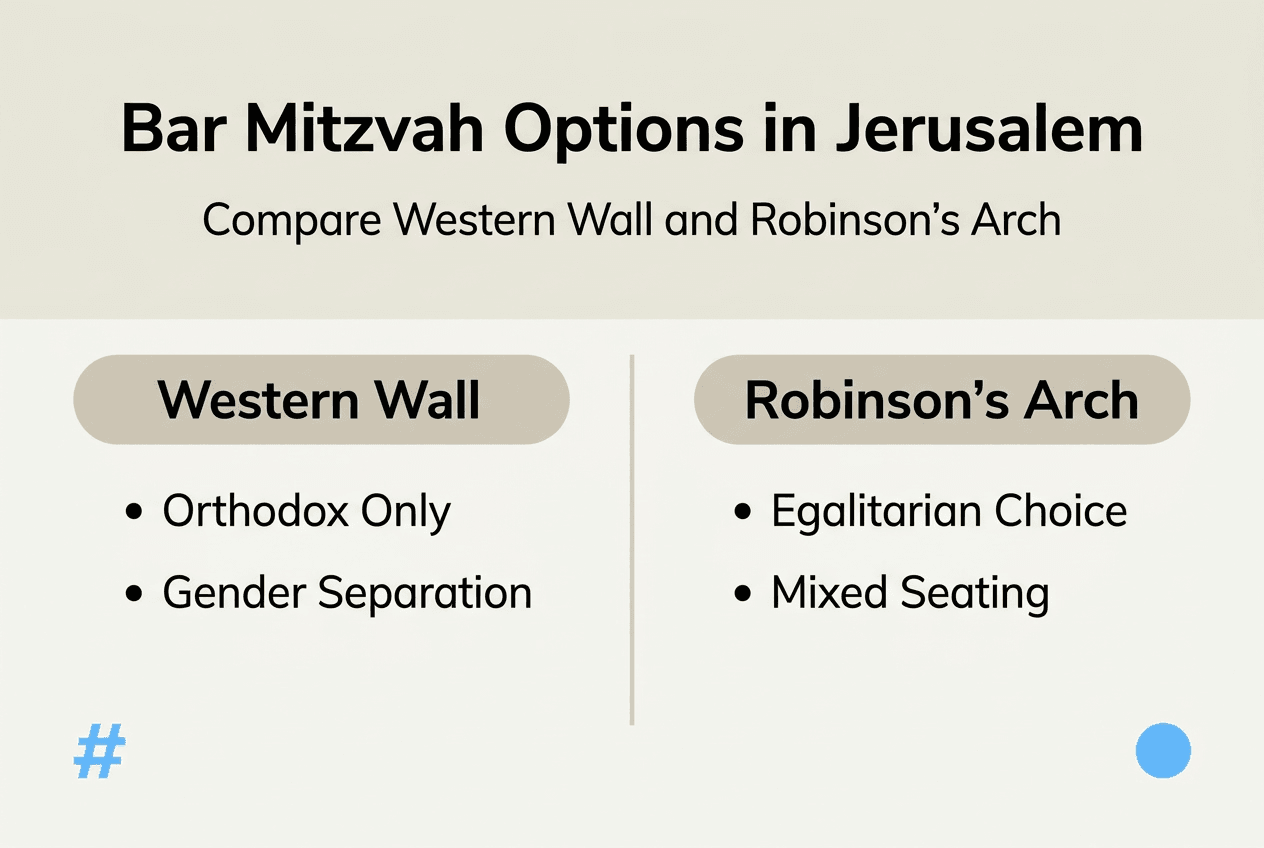
Pro Tip: Visit both the main plaza and Robinson’s Arch before deciding. The emotional resonance of each location varies significantly, and seeing them helps families determine which space better serves their spiritual goals and practical needs.
Understanding these dynamics before committing prevents disappointment and family conflict. Some families feel strongly about including all members fully in the ceremony, making Robinson’s Arch or alternative venues better choices. Others prioritize the traditional Wall experience despite gender separation, viewing it as authentic engagement with Orthodox Jewish practice.
The Bar Mitzvah ceremony experience ultimately depends on matching location choice with family values. Open discussions about expectations and religious comfort levels help ensure everyone feels included and respected during this milestone celebration.
Alternatives to celebrating a Bar Mitzvah at the Western Wall
Not every family finds the Western Wall the ideal Bar Mitzvah location despite its profound significance. Logistical challenges, religious considerations, or personal preferences lead many to explore alternatives that still create meaningful celebrations. Understanding your options empowers better decision making aligned with your family’s unique needs.
Jerusalem offers numerous historic sites beyond the Western Wall that provide spiritual depth without the same complexity. The City of David, ancient synagogues in the Jewish Quarter, and overlooks of the Temple Mount create powerful backdrops for ceremonies. These locations often provide more flexibility regarding ceremony format, timing, and guest accommodation while maintaining connection to Jewish history.
Synagogues throughout Israel welcome visiting families for Bar Mitzvah celebrations. Major cities like Tel Aviv, Haifa, and Eilat host diverse congregations matching various denominational preferences. This approach combines an Israel experience with familiar synagogue ceremony structure, reducing logistical stress while still marking the occasion in the Jewish homeland.
Common alternative considerations include:
Travel logistics and costs for extended family members who may struggle with international trips
Religious denomination alignment and comfort with Orthodox protocols
Desired ceremony format including mixed-gender participation and musical elements
Guest list size and space requirements that may exceed Wall plaza capacity
Timing flexibility around school schedules, work commitments, and Jewish holidays
Some families choose dual celebrations, holding a small ceremony at the Western Wall during a family trip and a larger reception in their home community. This hybrid approach honors the Wall’s significance while accommodating practical realities of gathering large groups. The Israel portion becomes an intimate spiritual experience, while the home celebration includes the broader community.
Comparing location factors helps clarify the best choice:
Factor | Western Wall | Israel Synagogue | Home Community |
Spiritual Significance | Highest | High | Moderate |
Logistical Complexity | High | Moderate | Low |
Guest Accessibility | Challenging | Moderate | Easy |
Cost | High | Moderate | Low to Moderate |
Ceremony Flexibility | Limited | Moderate | High |
Family Travel Required | Yes | Yes | No |
Your home synagogue remains a valid and meaningful choice that many families overlook while caught up in Israel planning excitement. Celebrating where your child learned Torah, surrounded by the community that nurtured their Jewish education, carries its own profound significance. The familiarity reduces stress and allows focus on spiritual preparation rather than travel logistics.
Planned Bar/Bat Mitzvah tours offer another alternative by packaging the ceremony with educational travel experiences. These programs handle logistics while exposing your family to multiple Israeli sites, creating a richer context for understanding Jewish identity and history. The Bar Mitzvah becomes one highlight within a broader journey of discovery.
Deciding factors often come down to family dynamics and values. Consider who must attend for the celebration to feel complete. Evaluate your child’s comfort with travel and new environments. Assess honestly whether the Wall’s significance outweighs the planning demands. There’s no wrong choice, only the right fit for your unique situation.
Plan your meaningful Bar Mitzvah experience with Bnei Mitzvah
Navigating Western Wall ceremonies and Israel travel requires expertise that transforms potential stress into joyful celebration. Bnei Mitzvah specializes in creating unforgettable Bar and Bat Mitzvah experiences that honor tradition while managing every logistical detail. Our planned Bar/Bat Mitzvah tours combine meaningful locations, inspiring stories, exciting activities, and spiritual enrichment into cohesive journeys your family will treasure forever.
With over 20 years of expertise in tourism and event planning, we handle permits, transportation, Bar Mitzvah accommodation, and ceremony coordination so you focus on the spiritual significance. Our planned Bar Mitzvah tour packages include expert guides who bring history alive, carefully selected venues that match your religious preferences, and exceptional culinary experiences celebrating Israeli culture. We coordinate with Western Wall authorities, arrange professional photography, and ensure every family member feels included in this milestone. Pro Tip: Book 12 months ahead to secure preferred dates and customize your itinerary around your family’s interests and needs.
Frequently asked questions about the Western Wall and Bar Mitzvah ceremonies
How early should I start planning a Bar Mitzvah at the Western Wall?
Begin planning 9 to 12 months before your target date to secure permits and accommodations. Peak seasons like spring and fall require even earlier booking. Early planning also allows time to prepare your child for the unique environment and coordinate travel for extended family members.
Are permits required to hold a Bar Mitzvah ceremony at the Wall?
Yes, the Western Wall Heritage Foundation requires advance permits for private ceremonies. Applications include ceremony details, participant numbers, and timing preferences. Processing takes several weeks, so submit applications well ahead of your travel dates to avoid disappointment.
Can non-Orthodox families celebrate at the Western Wall?
All Jewish denominations are welcome at the Western Wall, though ceremonies follow Orthodox protocols including gender separation. Families seeking egalitarian formats should consider Robinson’s Arch, which permits mixed-gender prayer and women’s Torah reading within the Western Wall complex.
What are the main logistical challenges for families traveling from the USA?
Coordinating international travel for multiple families, managing jet lag around ceremony timing, navigating security protocols, and understanding Israeli customs create the biggest challenges. Weather differences and language barriers add complexity. Working with experienced tour operators familiar with American family needs significantly reduces these stresses.
Are there options for egalitarian prayer during the ceremony?
Robinson’s Arch at the southern Western Wall provides space for egalitarian ceremonies with mixed-gender participation and women’s Torah reading. This area offers Western Wall access with greater religious flexibility, though it lacks the main plaza’s iconic setting and constant prayer activity that many families seek.
Recommended
Comments