Western Wall ceremony guide for Bar Mitzvahs 2026

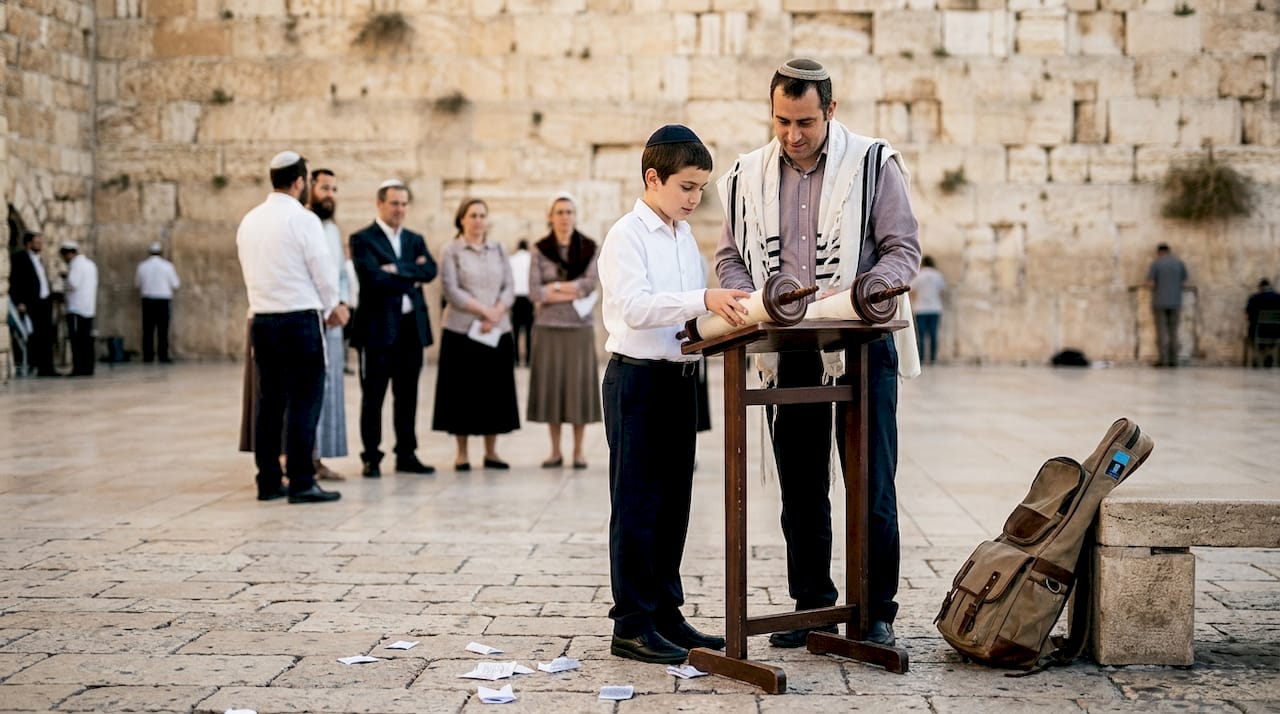
Many American Jewish parents assume the Western Wall ceremony is reserved for ultra-Orthodox families or requires deep religious expertise. That’s simply not true. The Western Wall ceremony refers to Bar and Bat Mitzvah celebrations at the Kotel in Jerusalem, Judaism’s holiest accessible prayer site and a remnant of the Second Temple. Whether your family is Reform, Conservative, or Orthodox, there’s a path to a meaningful ceremony here. This guide walks you through everything: the meaning, the logistics, the options, and how to make it unforgettable.
Table of Contents
Key Takeaways
Point | Details |
Ceremony meaning | A Western Wall ceremony connects your child to Jewish history and tradition at Jerusalem’s holiest prayer site. |
Advance planning | Families need to begin planning 6–12 months ahead for a smooth celebration. |
Ceremony types | Families can choose between traditional Orthodox and egalitarian/mixed-gender ceremonies. |
Special experiences | Group events and unique cases allow for meaningful adaptations of the ceremony. |
Expert insight | Balancing spiritual connection and logistics leads to a truly memorable ceremony. |
What is the Western Wall ceremony?
To understand what makes the Western Wall ceremony unique, let’s clarify its core meaning and what actually happens during these celebrations.
Bar and Bat Mitzvah celebrations at the Kotel are a tradition marking Jewish coming of age at the holiest accessible prayer site in Judaism. Standing before these ancient stones, your child becomes a full member of the Jewish community in one of the most spiritually charged locations on earth. For many families, the emotional weight of that moment is unlike anything they expected.
A typical ceremony includes several key elements:
Tefillin wrapping for boys, symbolizing commitment to Torah and mitzvot
Torah reading from a scroll, often with family members called up for an aliyah
Prayers and blessings recited by the child and family
Leaving a personal note in the Wall’s ancient crevices
Receiving a certificate commemorating the milestone
The Western Wall Heritage Foundation organizes and oversees these events, coordinating time slots, permits, and ceremony structure. Their involvement ensures that official Bat Mitzvah guidelines are followed and that each family receives a structured, guided experience.
“The Kotel is not just a wall. It is a living connection between every Jewish generation that came before and every one that will follow.”
For a deeper look at what a successful ceremony involves, the structure is more flexible than most parents realize, especially once you understand your options.
Planning a Bar or Bat Mitzvah at the Western Wall
Now that we understand what the ceremony represents, let’s walk through how to plan your child’s meaningful Bar or Bat Mitzvah at the Kotel step by step.
Advance planning for the ceremony is non-negotiable. The recommended window is 6 to 12 months ahead of your desired date. Here’s a practical sequence to follow:
Set your date and style based on your family’s religious practice and travel schedule
Contact the Western Wall Heritage Foundation to request permits and reserve your time slot
Arrange transportation and security logistics for your group, especially if traveling from the US
Coordinate with a local guide or tour operator who knows the site’s rhythms and rules
Prepare your child with the prayers, Torah portion, and ritual items they’ll need
Note that no food or music is allowed in the main plaza. This surprises many families who picture a festive outdoor celebration. The ceremony itself is sacred and focused.
Monday and Thursday mornings are the busiest times at the Wall because Torah scrolls are traditionally read on those days. If you prefer a quieter atmosphere, consider a Sunday or Friday morning slot.
Bat Mitzvah ceremonies organized by the Western Wall Heritage Foundation are 30-minute guided events that include prayers, parental blessings, a note placed in the Wall, and a certificate. They are free of charge and available Sunday through Friday from 8 a.m. to 5 p.m.
Pro Tip: Build buffer time into your schedule on ceremony day. Crowds, security checks, and emotional moments all take longer than expected. Families who rush feel it.
For a broader view of the Bar Mitzvah experience in Jerusalem, the city itself becomes part of the celebration when you plan thoughtfully.
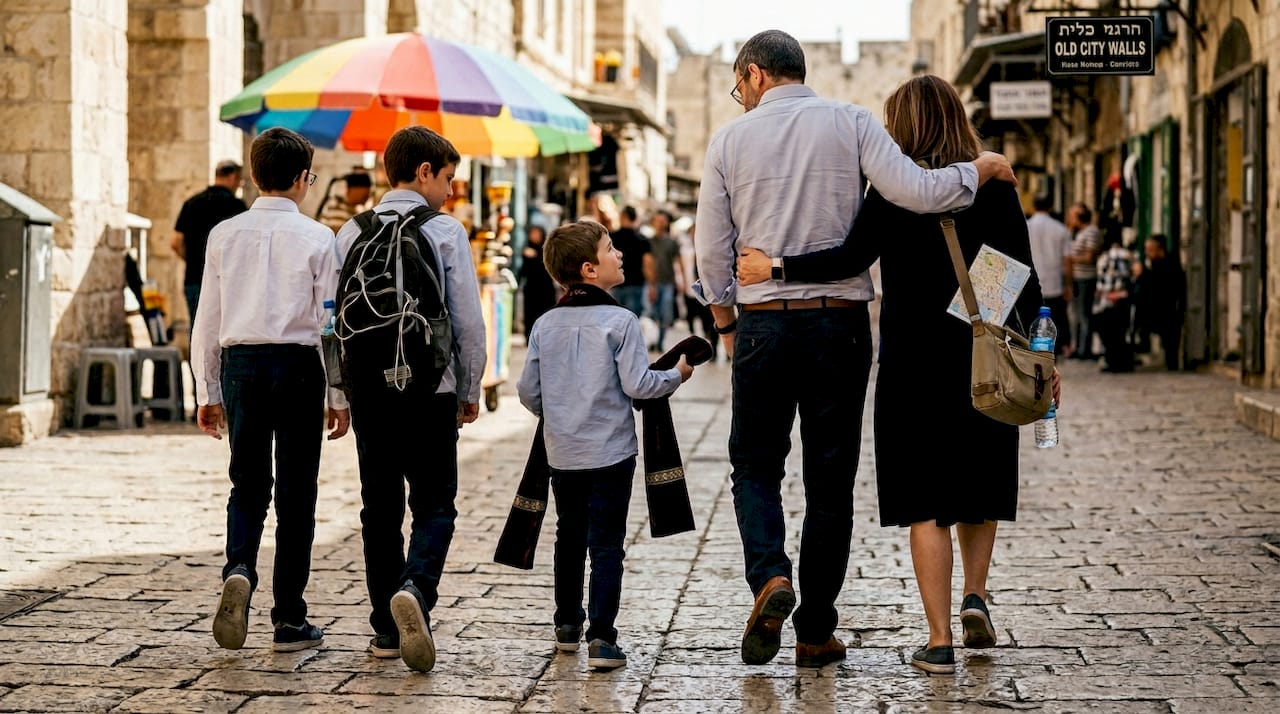
Traditional versus egalitarian ceremonies: Key differences
Having covered logistics, let’s explore crucial differences in ceremony style and inclusivity so you can choose what aligns with your family’s values.
The main plaza at the Western Wall is under Orthodox control and operates with gender separation. Men and women pray in separate sections, and only men may read from the Torah there. For families from Reform or Conservative backgrounds, this can feel limiting.
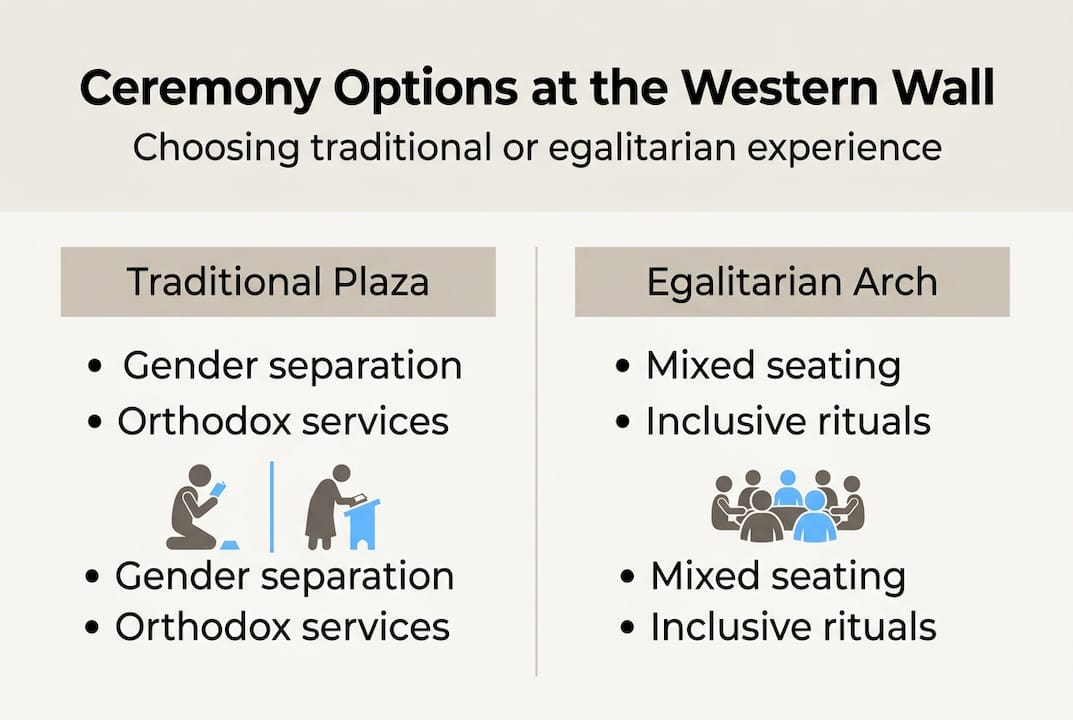
The egalitarian alternative at Robinson’s Arch, located at the southern end of the Wall complex, allows mixed-gender participation and women’s Torah reading. Families sit together, and the ceremony feels more familiar to non-Orthodox American Jewish families.
Here’s a quick comparison:
Feature | Main plaza | Robinson’s Arch |
Gender seating | Separate | Together |
Women’s Torah reading | Not permitted | Permitted |
Orthodox oversight | Yes | No |
Certificate provided | Yes | Yes |
Note in the Wall | Yes | Yes |
Key considerations when choosing your location:
Main plaza suits Orthodox or traditional families who observe gender-separated prayer
Robinson’s Arch suits egalitarian, Reform, or Conservative families
Both locations carry deep spiritual significance
Both require advance coordination
“Where you stand at the Wall matters less than why you stand there. Both spaces connect you to the same ancient stones.”
It’s worth noting that ongoing political disputes between Orthodox authorities and non-Orthodox movements have complicated egalitarian access over the years. Understanding the ceremony logistics at the Western Wall before you arrive helps you navigate these realities without stress.
Uncommon Western Wall ceremony experiences
Beyond traditional or egalitarian options, some Western Wall ceremonies stand out for their special focus or extraordinary participants.
Group ceremonies at the Kotel are more common than most people realize. In 2025, 123 orphans celebrated their Bar Mitzvah together in a large group event that included tefillin wrapping and Torah reading. A separate event brought 35 IDF orphans together for a ceremony with special activities honoring their service and sacrifice.
These events show how the Western Wall ceremony can be adapted to serve communities with unique needs:
Lone soldiers celebrating without family present
Children from underserved communities experiencing their first connection to Jewish heritage
Group tours combining multiple families from the same synagogue or school
Special needs participants with tailored ceremony pacing and support
Here’s a snapshot of notable group ceremony types:
Group type | Typical size | Special elements |
Orphan groups | 50 to 150+ | Community sponsors, tefillin, Torah |
IDF soldiers | 20 to 50 | Military honors, group prayer |
Synagogue tours | 10 to 40 | Custom Torah portions, family aliyot |
School groups | 15 to 60 | Educational components, guided tour |
Pro Tip: If you’re planning a Bar and Bat Mitzvah group tour, start coordinating with local contacts at least 9 months out. Group logistics at the Kotel require extra layers of permits and timing.
These stories of resilience and community show that the Western Wall ceremony is not a fixed script. It’s a living tradition that bends to meet families where they are.
A new perspective: What most parents miss about the Western Wall ceremony
Here’s something we’ve seen repeatedly over 20 years of planning these experiences: families who obsess over every logistical detail often leave feeling like they managed an event rather than lived a moment.
Advance permits and crowd planning are genuinely essential. We’re not suggesting you wing it. But there’s a difference between smart preparation and over-engineering every minute of the day.
The families who walk away with the deepest memories are the ones who built in unstructured time. Time to stand quietly at the Wall. Time for a parent to cry without rushing to the next item on the itinerary. Time for the child to feel the weight of the moment rather than perform for a schedule.
Knowing how to plan Bar Mitzvahs at the Kotel is the foundation. But the real work is giving your family permission to be present.
Ready to plan your Western Wall Bar or Bat Mitzvah?
You now have a clear picture of what the Western Wall ceremony involves, how to plan it, and how to choose the right style for your family. The next step is putting that knowledge into motion with the right support.
At Bnei Mitzvah, our Bar and Bat Mitzvah tours in Israel are built around families like yours. Whether you want a custom Bar Mitzvah tour tailored to your traditions or full-service Bar Mitzvah planning support, we handle the logistics so you can focus on the meaning. With over 20 years of experience, we know how to make this milestone feel exactly as significant as it should.
Frequently asked questions
How long is a Western Wall Bar or Bat Mitzvah ceremony?
A typical ceremony at the Western Wall lasts about 30 minutes, including prayers, blessings, and special rituals. Some families extend the experience with additional guided activities before or after.
What items or rituals are included in a Western Wall ceremony?
The ceremony typically includes tefillin wrapping, Torah reading, prayers, parental blessings, leaving a note in the Wall, and receiving a commemorative certificate. Specific elements may vary depending on the ceremony style you choose.
Can girls have a Bat Mitzvah ceremony at the Western Wall?
Yes. Bat Mitzvah ceremonies are available, with the egalitarian option at Robinson’s Arch allowing women’s Torah reading and mixed-gender family participation.
How early should families start planning a Western Wall ceremony?
Start 6 to 12 months in advance to secure your preferred date, obtain permits, and coordinate all travel and ceremony logistics without stress.
Recommended
Comments