What is heritage travel for Bar Mitzvah families?

TL;DR:
Heritage travel connects families to authentic history, culture, and stories, emphasizing meaningful engagement over sightseeing.
For Bar and Bat Mitzvah trips, it deepens identity by fostering emotional bonds through personal and cultural experiences in Israel.
There is a version of a Bar or Bat Mitzvah trip to Israel that checks every box on a list and leaves everyone feeling vaguely empty. You visited the Kotel. You saw Masada. You took pictures at the Dead Sea. And somehow, none of it landed the way you hoped. That is the gap that heritage travel is designed to close. Understanding what is heritage travel means recognizing that the point is never the attraction. It is the connection. For Jewish families planning a Bar or Bat Mitzvah celebration in Israel, that distinction changes everything about how you plan, what you prioritize, and what your child carries home long after the trip ends.
Table of Contents
Why heritage travel matters for Bar and Bat Mitzvah families
Types of heritage travel experiences in Israel for Bar and Bat Mitzvah celebrations
Common misconceptions about heritage travel and what most families miss
Why most heritage travel for Bar and Bat Mitzvah families misses the mark — and how to fix it
Plan your authentic Bar and Bat Mitzvah heritage trip to Israel with Bnei Mitzvah
Key Takeaways
Point | Details |
Heritage travel defined | It is travel connecting you emotionally and authentically to your ancestry and cultural roots. |
Meaning for Mitzvah families | Heritage travel deepens Jewish identity through immersive experiences during Bar/Bat Mitzvah trips. |
Experience types | Focus can range from family-lineage sites to living rituals and broader cultural history. |
Authenticity matters | Genuine, interactive experiences create lasting emotional bonds and sustainable engagement. |
Plan with purpose | Include rituals, community, and sensory moments to make the Mitzvah trip meaningful and memorable. |
Understanding heritage travel: definitions and dimensions
Heritage travel is not a new concept, but it is frequently misunderstood. Most people assume it means visiting old places. It is actually something far more intentional. Heritage travel connects travelers authentically to history, culture, and the stories of the past and present, including both personal ancestry and broader cultural heritage. The place itself is secondary. The meaning attached to it is everything.
There is also an important distinction worth understanding before you plan anything. Heritage travel is both personal and cultural. Personal heritage travel means visiting places tied directly to your own family’s roots, the villages, synagogues, or neighborhoods your ancestors lived in. Cultural heritage travel means engaging with historically significant places and traditions even without a direct ancestral connection. For Jewish families, Israel offers both in extraordinary depth.
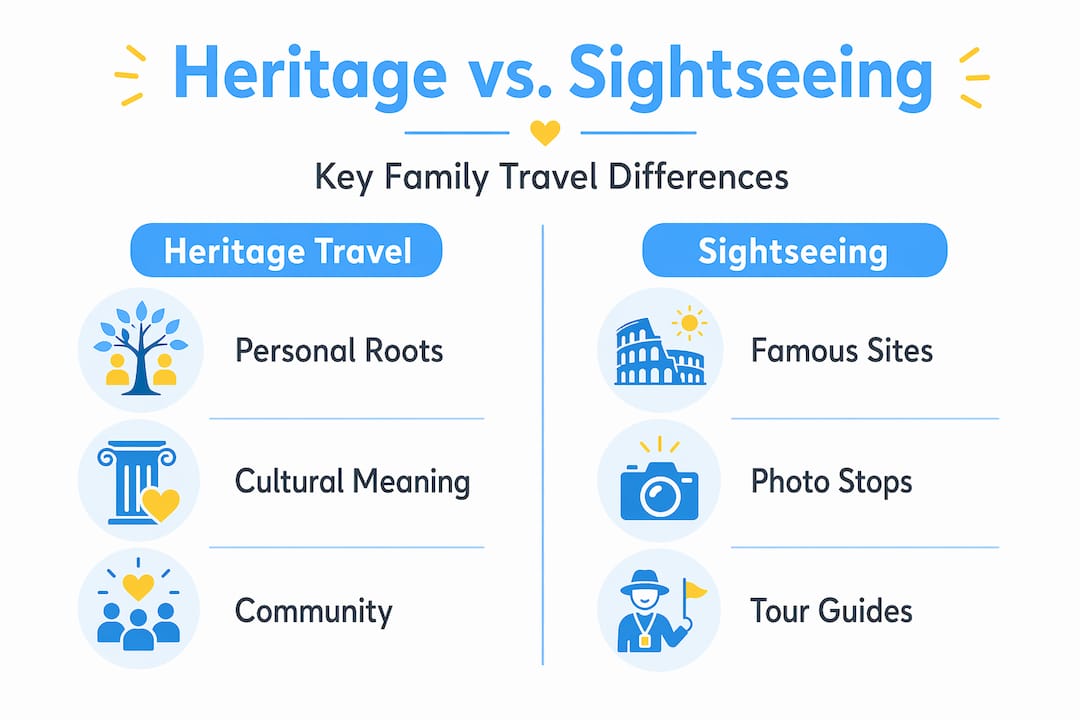
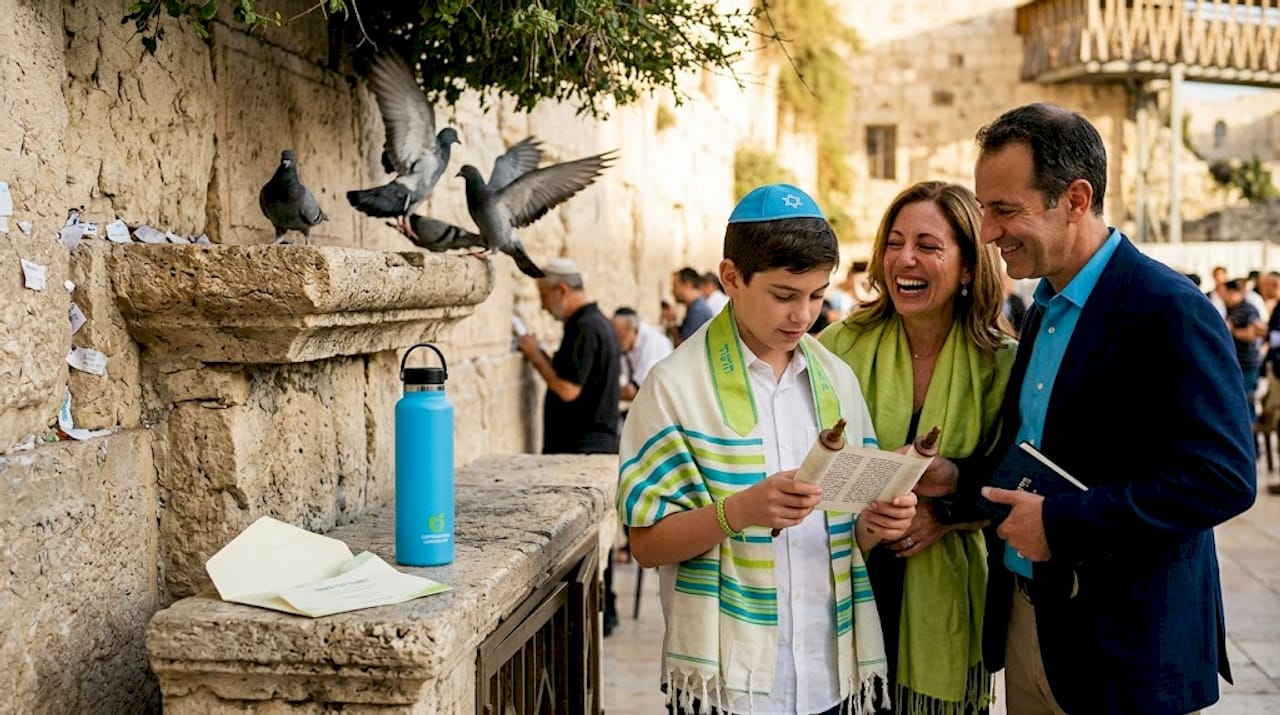
For Bar and Bat Mitzvah families specifically, this dual nature matters. Your child may not have a great-great-grandparent buried in Jerusalem. But standing at the Western Wall, participating in a Shabbat meal in an ancient Jerusalem neighborhood, or learning from a local community member at a working synagogue all constitute heritage travel in Bar and Bat Mitzvah trips because they connect a young person to a living, continuous culture.
Key elements that define genuine heritage travel:
Intentional engagement: visiting with a purpose beyond photography or novelty
Cultural context: understanding why a site or practice matters, not just what it looks like
Emotional resonance: leaving with a feeling of connection, not just information
Authenticity: prioritizing real, lived experiences over staged or overly commercialized ones
Continuity: linking the past to the present and to your family’s future
Why heritage travel matters for Bar and Bat Mitzvah families
A Bar or Bat Mitzvah is, at its core, a moment of identity. Your child stands before their community and says: this is who I am and who I belong to. Heritage travel, when done well, builds the substance behind that statement.
Reconnecting to the past through authentic traditions and experiences is central to what makes heritage travel different from a regular vacation. And research backs this up. Authenticity drives emotional bonding and visitor satisfaction in heritage tourism, which means that when families experience Israel genuinely, rather than through a polished tourist lens, the impact runs deeper.
“The most meaningful trips are the ones where your child stops being a spectator and starts feeling like they belong to the story.”
For Jewish families, this translates into specific, tangible benefits:
A 13-year-old who reads Torah at the Kotel understands their connection to Jewish history in a way that no classroom lesson can replicate
Sharing a Shabbat dinner with an Israeli family builds a bridge between American Jewish identity and Israeli Jewish life
Walking through the Jewish Quarter of Jerusalem while learning its layered history gives the celebration a setting that feels earned, not rented
The role of heritage in travel is particularly powerful for deepening Jewish roots through travel when it is woven into every day of the trip, not just one ceremonial moment.
Pro Tip: Build at least one community encounter into your itinerary, a Shabbat meal with a local family, a conversation with a Jerusalem artisan, or a workshop with an Israeli educator. These moments are where identity actually forms.
Types of heritage travel experiences in Israel for Bar and Bat Mitzvah celebrations
Israel is one of the best heritage travel destinations on earth for Jewish families, not only because of its history but because Jewish culture there is alive and continuous. The key is knowing which type of heritage experience fits your family’s goals.
Clarifying whether your itinerary centers on family-lineage sites, living rituals and community practices, archival research, or broader Jewish history and cultural heritage shapes the entire trip. Here are the four main approaches:
Family lineage and ancestral sites: Visiting places tied to your specific family history, neighborhoods in old cities, former communities, or synagogues your family once attended.
Living rituals and community engagement: Participating in active Jewish practice with Israeli communities, including prayer, celebration, and cultural traditions as they are lived today.
Archival and genealogical research: Using institutions like Yad Vashem or the National Library of Israel to connect your family’s documented history to physical place.
Broader Jewish cultural heritage: Exploring the arc of Jewish history through heritage travel attractions in Israel, from ancient Jerusalem to modern Tel Aviv’s artistic and culinary culture.
Experience type | Best for | Emotional impact | Interactive level |
Family lineage sites | Families with traceable Israeli/European roots | Very high | Medium |
Living rituals and community | All Jewish families | Extremely high | Very high |
Archival and genealogical research | Families interested in history and documentation | High | Medium |
Broader Jewish cultural heritage | First-time visitors to Israel | High | High |
Planned heritage travel around family milestones should include interactive elements and sense-of-place moments, not just guided narration. Listening is passive. Doing is transformative.
Pro Tip: If your family has Eastern European roots, combining a visit to Yad Vashem with a living community experience in a Jerusalem neighborhood creates a powerful emotional arc from loss to continuity. That arc is exactly what Bar and Bat Mitzvah celebrations are built on.
Planning your heritage travel Bar or Bat Mitzvah trip: tips for authenticity and meaningful connection
The difference between a good trip and a great one is usually in the planning details. Authentic, high-quality experiences that foster a strong sense of place increase satisfaction and cultural engagement measurably. Here is how to build that into your itinerary:
Start with your “why”: Before booking anything, define what connection you want your child and family to leave with. Ancestral? Spiritual? Cultural? The answer shapes every decision.
Prioritize immersion over coverage: Three deeply experienced sites beat twelve rushed ones. Resist the urge to see everything.
Build in living rituals: Shabbat observance, a local market visit, a cooking class with Israeli flavors. These are not extras. They are the point.
Involve your child in the preparation: A young person who reads about the sites before arriving participates differently. Brief them, not just pack for them.
Choose local guides with community ties: A guide who has lived inside Jerusalem’s Jewish Quarter for decades tells a different story than one who has memorized a script.
Schedule reflection time: After a powerful visit, give your family 15 minutes to talk about what they felt. This is what converts an experience into a memory.
For experiential learning in Bar Mitzvah trips, this kind of structured reflection is one of the most underused tools available to families. And for creating meaningful Bar Mitzvah memories, the investment in planning pays off in ways that no souvenir can.
Common misconceptions about heritage travel and what most families miss
The biggest mistake families make is treating heritage travel as upgraded sightseeing. Heritage travel means much more than ticking off tourist attractions. It is about meaning and authentic cultural connection. But many itineraries, even well-intentioned ones, fall into the trap of covering ground rather than creating depth.
Common pitfalls to avoid:
Overpacking the schedule: When every hour is booked, there is no room for the unexpected conversation or the spontaneous moment that becomes the highlight of the trip
Relying only on famous sites: The Kotel matters. So does a conversation with an elderly Jerusalem resident in a small neighborhood synagogue
Skipping food and sensory culture: Israeli cuisine, markets, and daily rhythms are heritage in real time. Eating a shakshuka made by a local family is exploring cultural heritage as much as visiting an ancient ruin
Treating the ceremony as the whole trip: The Torah reading is a centerpiece, not the entire frame. Heritage travel fills the frame with meaning
Ignoring the child’s perspective: A 13-year-old needs agency. Let them choose one activity. Ask what surprised them each day
Pro Tip: Work with a specialist who has deep knowledge of both heritage travel practices and Jewish tradition in Israel. Generic tour operators can show you sites. A specialist builds you a story.
Why most heritage travel for Bar and Bat Mitzvah families misses the mark — and how to fix it
After years of working with families on Bar and Bat Mitzvah trips, the pattern is clear. The trips that fall flat share one feature: they deliver information instead of experience. They tell families what happened at a site. They do not help families feel part of what is still happening.
Most heritage travel models are built around narration. A guide stands in front of something old and explains it. Families listen, take photos, and move on. The sites are real. The connection is not.
Sustainability in heritage tourism depends on cultivating authentic, high-quality experiences that connect visitors emotionally and motivate cultural engagement across generations. That is not achieved by better historical summaries. It is achieved by designing moments that require your family to participate, not just observe.
The fix is not complicated, but it does require intention. Replace one museum visit with a workshop led by a local craftsperson. Replace a hotel dinner with a Shabbat meal in someone’s home. Replace a narrated tour of a neighborhood with a walking challenge where your child navigates using a historical map. These swaps cost almost nothing in time. They produce memories that last decades.
For families seeking to build deep roots through meaningful heritage travel, the question to ask every guide or planner is simple: “What will my child do here?” If the answer is only “listen and look,” push for more.
Plan your authentic Bar and Bat Mitzvah heritage trip to Israel with Bnei Mitzvah
Understanding heritage travel is the first step. The second is finding a partner who builds it into every hour of your trip.
At Bnei Mitzvah, our planned Bar and Bat Mitzvah tours are built specifically around the principles of authentic heritage travel. Every itinerary combines meaningful heritage sites, living cultural experiences, spiritual milestones, and immersive community encounters. Our Bar Mitzvah tour in Israel and Bat Mitzvah tours to Israel are shaped by over 20 years of expertise in experiential travel and Jewish heritage. We do not just plan logistics. We design the story your family will tell for the rest of your lives. Reach out to start building your personalized itinerary.
Frequently asked questions
What is heritage travel?
Heritage travel means visiting places tied to your ancestry or cultural roots to connect authentically with history, traditions, and stories related to your family or culture. It is travel designed to connect travelers to history and culture rather than simply see attractions.
How is heritage travel different from regular sightseeing?
Heritage travel emphasizes meaningful cultural connection and authentic experiences rather than just visiting popular tourist attractions. It is about meaning and authenticity, focusing on connection to place and people rather than checking destinations off a list.
Why is heritage travel important for Bar and Bat Mitzvah families?
It helps families emotionally connect with their Jewish heritage and identity through immersive cultural experiences tied to Israel and Jewish traditions. Cultural authenticity fosters emotional bonding and strengthens family heritage in ways that passive tourism cannot.
What should I include when planning a heritage travel trip for a Bar Mitzvah?
Include interactive rituals, community involvement, cultural meals, and visits to authentic heritage sites to create a meaningful and memorable experience. Planning should align with immersion principles and add sense-of-place elements throughout the itinerary.
Can heritage travel be personalized to my family’s history?
Yes, heritage travel can focus on personal ancestral sites or broader cultural Jewish heritage to fit your family’s story and interests. Heritage travel includes personal ancestry-based journeys as well as broader engagement with cultural Jewish heritage across Israel.
Recommended
Comments