Why Visit Ancient Jewish Sites: A Guide to Living History

TL;DR:
Visiting ancient Jewish sites connects visitors to living Jewish tradition through physical spaces that have endured for centuries.
These sites use sensory elements like light, scent, and sound to engage worshippers and reveal their complex cultural histories.
Visiting ancient Jewish sites is the most direct way to experience Jewish continuity as a physical, living reality rather than a concept in a book. These places, from the synagogues of the Mediterranean to the layered streets of Barcelona and the active pilgrimage site of El Ghriba in Tunisia, hold centuries of faith, resilience, and cultural identity within their walls. For anyone drawn to Jewish history and heritage, the reasons to visit go far beyond sightseeing. Cultural studies confirm that encountering these sites transforms abstract history into a personal, felt connection to ancestral identity.
Why visit ancient Jewish sites: the case for immersive heritage
Ancient Jewish sites are defined as places where Jewish communities built, worshipped, and sustained their traditions across generations. The term “Jewish heritage travel” describes the practice of visiting these locations with the specific goal of deepening cultural and spiritual understanding. These are not passive destinations. They demand your full attention and reward it with insight that no documentary or textbook can replicate.

The importance of visiting Jewish heritage lies in what these sites communicate about endurance. A community that maintained its identity through exile, persecution, and diaspora left physical evidence of that endurance in stone, mosaic, and ritual object. Standing inside those spaces makes that endurance real.
How did ancient synagogues engage the senses?
Modern visitors often underestimate how physical ancient Jewish worship actually was. Ancient synagogues used lighting and incense to create a sacred atmosphere that engaged sight, smell, and sound simultaneously. This was not accidental. It was a deliberate architecture of devotion.
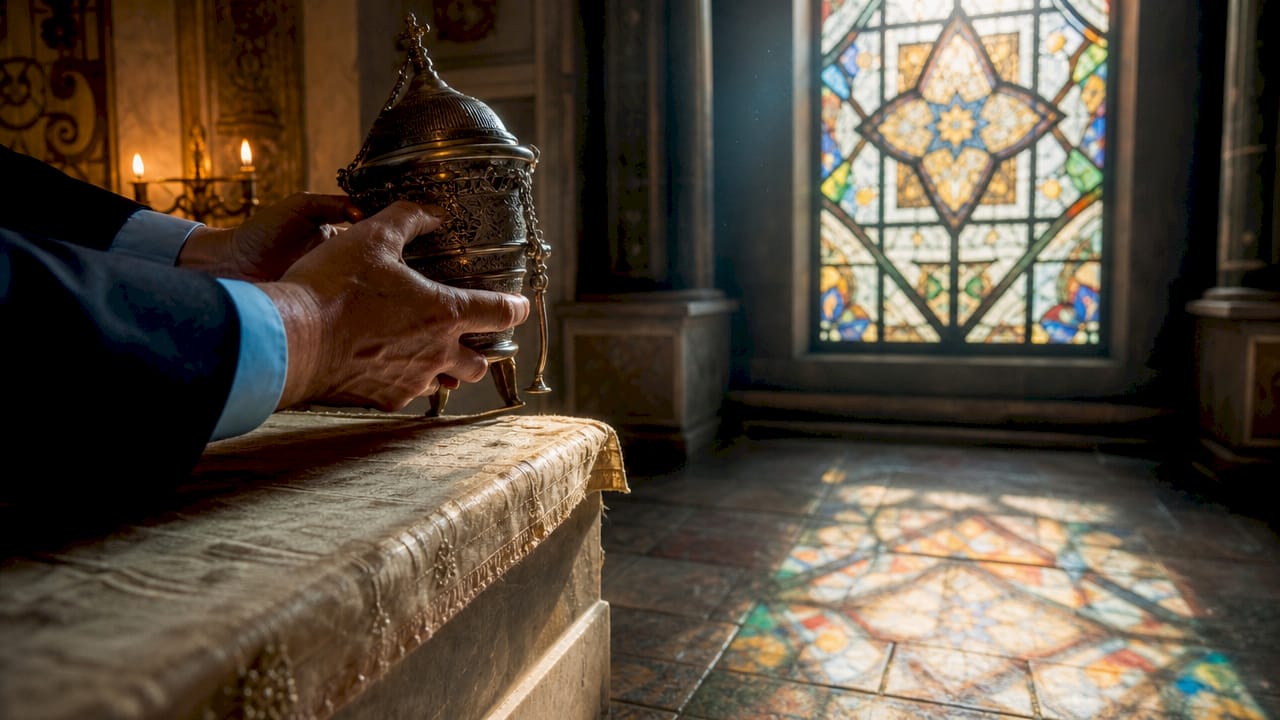
Archaeologists have recovered incense burners, ritual lamps, and ceremonial shovels from synagogue sites across the Mediterranean. These artifacts prove that incense use continued after the Temple’s destruction, shaping a multisensory worship experience that blurred the boundary between the sacred and the everyday. That detail challenges the common assumption that ancient Jewish prayer was purely intellectual or text-based.
When you walk through a well-preserved ancient synagogue, you are not just reading history on a placard. You are stepping into a sensory environment that was carefully designed to move people spiritually. The smell of stone, the quality of light through ancient windows, and the proportions of the space all carry meaning.
Lighting: oil lamps and hanging fixtures created dramatic, directional illumination that focused attention on the Torah ark
Scent: incense burners placed throughout the space produced a persistent, recognizable sacred atmosphere
Sound: the acoustic properties of stone interiors amplified communal prayer and reading
Architecture: columns, mosaics, and orientation toward Jerusalem communicated theology through design
Pro Tip: Before visiting any ancient synagogue, read one short account of the community that built it. That context transforms what you see from “old stones” into a specific human story.
What makes some ancient Jewish sites living communities?
The most powerful ancient Jewish sites are not museums. They are active places of worship where history and present-day practice exist side by side. The El Ghriba Synagogue on the island of Djerba in Tunisia is the clearest example of this.
El Ghriba has operated continuously for over 2,000 years. Visitors do not simply observe a preserved space. They witness real prayer, see handwritten notes left by pilgrims asking for blessings, and participate in traditions that have run unbroken across millennia. That continuity is the site’s most significant feature.
El Ghriba’s architecture reflects layered Jewish, Berber, and Mediterranean identities, built up through centuries of use and restoration. The building itself is a record of cultural exchange and survival. No single restoration erased what came before. Each layer added to the story.
Active sites like El Ghriba differ from preserved ruins in one critical way: they show you that Jewish tradition is not past tense. The community is still here. The prayers are still said. That realization changes how you understand Jewish resilience.
Arrive with respect for active worship. Services may be in progress, and visitors are expected to observe quietly.
Look for the physical evidence of ongoing use: worn prayer benches, fresh candles, and recent votive offerings.
Ask a guide about the annual Lag B’Omer pilgrimage, which draws thousands of Jewish visitors from across North Africa and Europe.
Take time to sit and absorb the atmosphere rather than moving through quickly.
Pro Tip: Visit El Ghriba on a weekday morning to experience the site during active prayer rather than during peak tourist hours.
How does archaeology reveal the evolution of Jewish communities?
Archaeological evidence from ancient Jewish sites reshapes what we know about how communities lived, organized, and adapted. Two sites stand out for the depth of insight they provide.
The Dura-Europos synagogue in modern-day Syria contains murals that illustrate social, military, and religious life within a large Jewish community under Roman rule. These paintings are extraordinary because they depict biblical narratives in vivid figurative art, a practice many assumed ancient Jews avoided entirely. The murals prove that Jewish communities engaged creatively with their visual culture in ways that challenge simplified assumptions.
The Greater Synagogue of Barcelona tells a different kind of story. It preserves 1,700 years of Jewish history and sits below the current street level of the Gothic Quarter. That physical depth is itself a lesson in urban history. The city grew up around and over this community, and the synagogue survived beneath it.
Site | Location | Key historical insight |
Dura-Europos synagogue | Syria | Figurative murals reveal Jewish artistic and communal life under Rome |
Greater Synagogue of Barcelona | Spain | Below-street location shows 1,700 years of urban layering |
El Ghriba Synagogue | Tunisia | Continuous 2,000-year use demonstrates living heritage |
These sites collectively show that Jewish communities were never monolithic. They adapted to Roman rule, medieval Christian cities, and North African cultures while maintaining a recognizable core identity. That adaptability is the real story archaeology tells.
Practical tips for visiting ancient Jewish sites
Preparation makes the difference between a meaningful visit and a confusing one. Many ancient synagogues exist below modern street level, requiring visitors to descend into preserved Roman-era spaces with distinct atmospheres. Knowing this in advance helps you arrive ready to engage rather than simply react.
Book a guided tour whenever possible. Expert guides connect architectural details to specific historical events and community stories.
Dress modestly at active sites. Head coverings are required at many synagogues, and respectful attire signals awareness of the space’s ongoing religious function.
Allow more time than you think you need. Underground sites and layered historical locations reward slow, attentive exploration.
Engage with educational programs at sites that emphasize living heritage rather than static history. These programs connect past practices to present-day Jewish life.
Pair site visits with community interaction. Sharing a meal or attending a local Shabbat service deepens the experience beyond what any tour can provide.
For families celebrating a Bar or Bat Mitzvah, Israel heritage sites offer a particularly meaningful context for the milestone. The connection between a young person’s coming-of-age and the long history of the Jewish people becomes tangible at these locations.
Key takeaways
Visiting ancient Jewish sites is the most direct path to understanding Jewish identity as a living, evolving reality rather than a fixed historical record.
Point | Details |
Sites are living, not static | Active sites like El Ghriba show ongoing worship, not just preserved history. |
Sensory design was intentional | Ancient synagogues used light, scent, and sound to create sacred experiences. |
Archaeology challenges assumptions | Dura-Europos murals prove Jewish communities engaged in rich visual culture under Rome. |
Preparation improves every visit | Guided tours, modest dress, and extra time transform a visit into a genuine encounter. |
Heritage travel strengthens identity | Educational programs at sites link past practices to present-day Jewish life and community. |
What I’ve learned from standing inside these spaces
I’ve spent years helping families connect with Jewish history through travel, and the pattern I see most often surprises people. Visitors arrive expecting a history lesson. They leave having had something closer to a personal reckoning.
The moment that stays with me is watching a teenager read a prayer note left at El Ghriba by a stranger from a different country. The note was in a language the teenager didn’t speak. But the act of leaving it, the faith behind it, needed no translation. That is what active heritage sites do. They make the abstract specific.
The conventional wisdom says that younger generations are disconnected from Jewish history. My experience says the opposite. When you put a young person in a space where that history is physically present and still in use, the connection happens quickly and without effort. The site does the work.
The role of Israeli landscapes in heritage and identity follows the same logic. Place carries meaning that words alone cannot deliver. The most important thing you can do is show up, slow down, and let the space speak.
— Shay
Planned heritage tours that bring these sites to life
Bneimitzvahtrip has spent over 20 years building tours that go beyond surface-level sightseeing. Every trip combines visits to meaningful historical locations with expert storytelling, community interaction, and experiences designed to make Jewish heritage feel personal rather than distant.
For families marking a Bar or Bat Mitzvah, these tours create a context that makes the milestone genuinely significant. The history your family encounters at ancient synagogues and historical Jewish landmarks becomes part of your own story. Bneimitzvahtrip handles every detail so your family can focus entirely on the experience. Browse the full range of planned Bar and Bat Mitzvah tours to find the right fit for your family.
FAQ
Why visit ancient Jewish sites rather than just reading about them?
Physical sites engage the senses and emotions in ways that reading cannot. Cultural studies show that encountering living history at these locations strengthens personal Jewish identity in ways that text-based learning does not replicate.
What is the most important ancient Jewish site to visit?
El Ghriba Synagogue in Tunisia stands out because it has operated continuously for over 2,000 years, making it both an archaeological landmark and an active place of worship.
Why visit ancient synagogues specifically?
Ancient synagogues preserve the physical evidence of Jewish communal life, including artifacts like incense burners and ritual lamps that reveal how worship was practiced across different eras and regions.
Are ancient Jewish sites appropriate for children and families?
Active sites and guided tours are well-suited for families. Bneimitzvahtrip specializes in family heritage experiences that make these locations accessible and meaningful for all ages, including children celebrating Bar and Bat Mitzvahs.
How do I prepare for visiting an underground or layered historical site?
Wear comfortable shoes, book a guided tour in advance, and allow extra time. Many ancient synagogues sit below modern street level, and the transition into those preserved spaces requires a slower pace to absorb fully.
Recommended
Comments