Israeli history's role in Bar and Bat Mitzvah celebrations

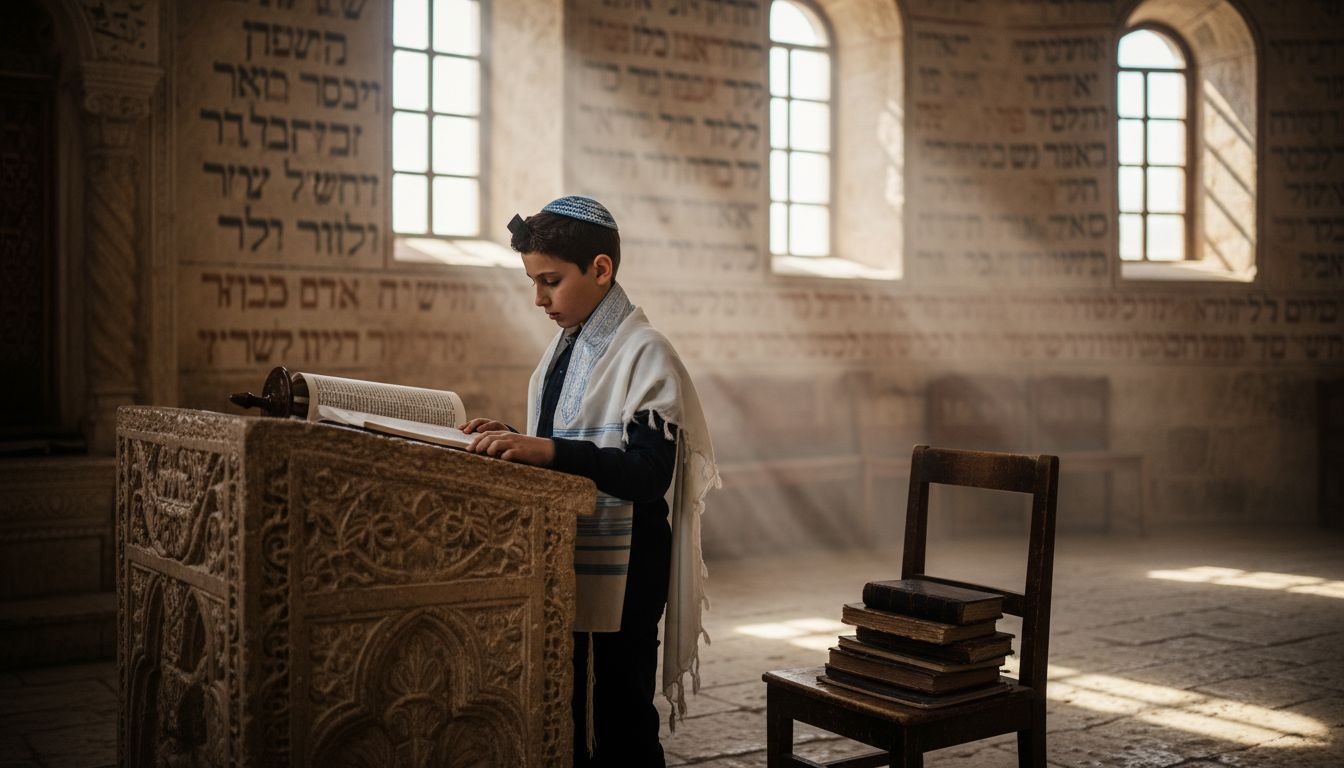
Most families planning Bar and Bat Mitzvah trips to Israel focus on the ceremony itself, unaware that the country’s rich historical tapestry can transform their celebration from a single event into a profound journey of identity and connection. Israeli history provides the essential context that bridges ancient traditions with modern Jewish life, offering families an opportunity to ground their child’s coming of age in the very places where Jewish civilization was forged. Understanding this connection allows you to craft a mitzvah experience that resonates far beyond the ceremony, creating memories and meaning that last a lifetime.
Table of Contents
Key takeaways
Point | Details |
Historical context enriches mitzvah meaning | Israeli historical narratives connect rituals to Jewish identity and nationhood |
Site visits deepen family bonds | Touring heritage locations creates tangible links between past and present |
Educational programs enhance understanding | Guided tours provide chronological context for mitzvah responsibilities |
Personalization creates lasting impact | Incorporating historical themes into ceremonies makes celebrations uniquely meaningful |
Strategic planning maximizes experience | Selecting sites around key historical moments optimizes both learning and celebration |
How Israeli history shapes mitzvah traditions
The age of 13 for boys and 12 for girls marking the transition to Jewish adulthood didn’t emerge in a vacuum. These milestones developed through centuries of Jewish legal tradition, refined during periods of exile, persecution, and renewal that define Israeli history. When your child stands at the Western Wall or walks through Jerusalem’s ancient streets, they’re not just visiting tourist sites. They’re connecting with the very foundations of their identity as a Jewish adult.
Israeli historical narratives provide essential context to mitzvah rituals and identity. The concept of taking on commandments gains profound weight when you understand how Jewish communities maintained these practices through Roman occupation, medieval expulsions, and the struggle for modern statehood. Your family’s mitzvah celebration becomes part of this unbroken chain stretching back thousands of years.
Consider these historical connections that enrich mitzvah meaning:
Ancient Jerusalem served as the spiritual center where Jewish law and tradition crystallized
Masada represents the fierce commitment to Jewish identity even in desperate circumstances
The Western Wall stands as the last remnant of the Second Temple, connecting modern Jews to their ancestral worship
Independence Hall in Tel Aviv marks the rebirth of Jewish sovereignty after 2,000 years
These locations aren’t just backdrops for photos. They’re living testimonies to the resilience and continuity that your child now joins as a responsible member of the Jewish community. When families visit these sites during mitzvah trips, children grasp that their personal milestone connects to something vastly larger than themselves.
“Standing where our ancestors stood, where they fought for survival and celebrated renewal, transforms abstract history into personal legacy. Your child’s mitzvah becomes a link in an unbreakable chain.”
The rituals your child performs during their mitzvah ceremony carry echoes of historical struggles and triumphs. Reading from the Torah connects to scribes who preserved these texts through exile. Wearing a tallit links to Jews who risked their lives to maintain this practice. Understanding this historical weight doesn’t burden the celebration, it elevates it, giving your family a richer appreciation for what this rite of passage truly represents.
Educational tours and experiential learning in Israel
Walking through Yad Vashem or exploring the archaeological tunnels beneath Jerusalem’s Old City offers something no classroom can replicate: direct encounter with history that shaped Jewish identity. Planned Bar/Bat Mitzvah tours offer structured educational experiences around key Israeli historical events, transforming abstract dates and facts into visceral, memorable lessons your child will carry forward.
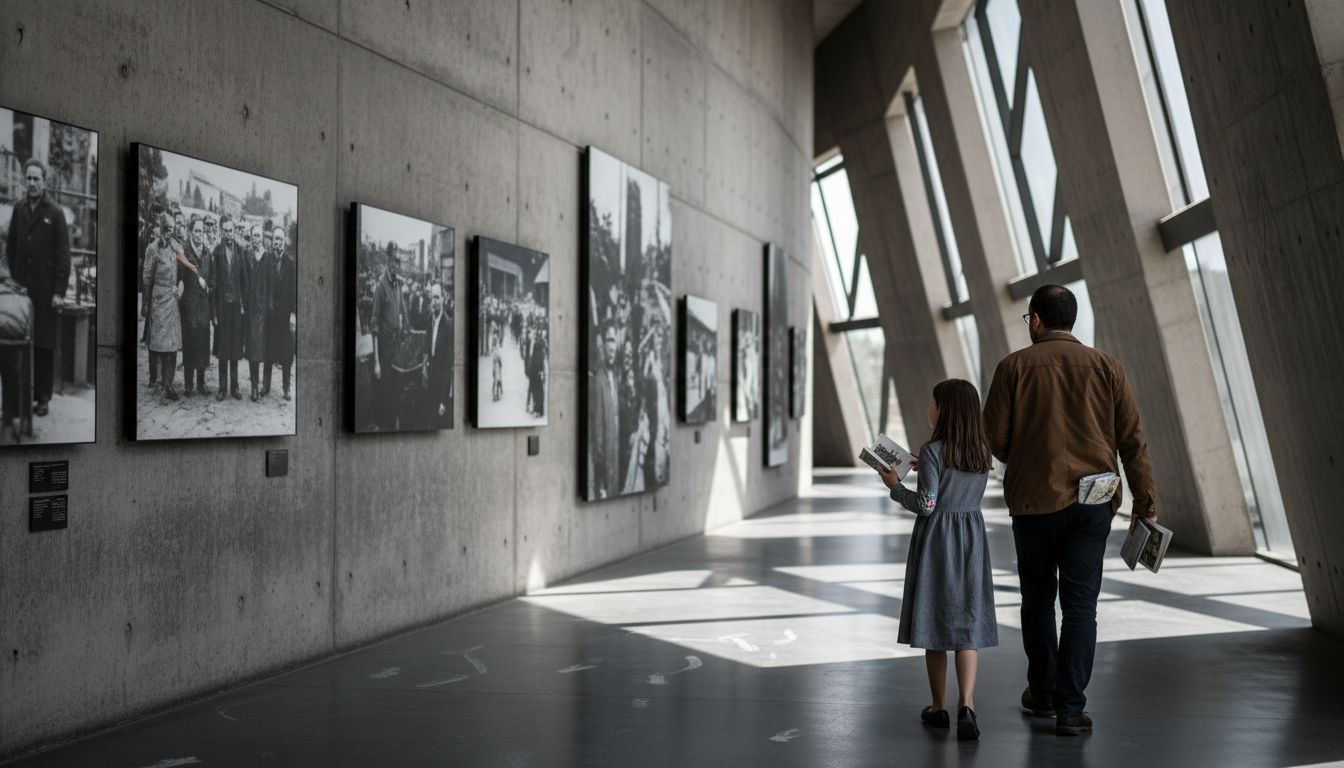
Educational tour stops typically include a carefully curated mix of ancient and modern sites. The Israel Museum houses the Dead Sea Scrolls, allowing families to see the oldest biblical manuscripts in existence. The City of David archaeological site reveals Jerusalem as it existed during the First Temple period. Independence Hall presents the dramatic moment of Israel’s founding in 1948. Each location provides chronological understanding of how Jewish history unfolded, giving context to the responsibilities your child assumes at their mitzvah age.
Pro Tip: Inquire about custom tours that connect historical lessons with your family’s specific values and interests, whether that’s social justice themes, scientific achievement, or artistic expression throughout Jewish history.
To maximize educational impact during your mitzvah trip, follow these steps:
Pick sites based on your child’s interests, whether they’re drawn to military history, archaeology, art, or social movements
Include storytelling and guided discussions at each location rather than passive observation
Tie visits back to mitzvah themes by asking how historical events relate to the responsibilities your child is assuming
Schedule reflection time after major site visits for family conversations about what you’ve learned
| Historical Period | Key Sites | Educational Focus | Mitzvah Connection | | — | — | — | | Biblical Era | City of David, Western Wall | Ancient Jewish sovereignty | Foundation of Jewish law and practice | | Roman Period | Masada, Beit She’an | Resistance and diaspora | Maintaining identity under oppression | | Modern Founding | Independence Hall, Palmach Museum | Statehood and renewal | Rebuilding Jewish national life | | Contemporary | Yad Vashem, Supreme Court | Memory and justice | Responsibility to history and future |
Guided discussions transform sightseeing into genuine learning. When your tour guide explains how the Maccabees fought for religious freedom at Modi’in, connect that to your child’s new responsibility to make ethical choices. When you visit Ammunition Hill and learn about the 1967 reunification of Jerusalem, discuss what it means to defend values and community. These conversations turn historical facts into personal meaning.
Top Israel educational sites offer interactive exhibits and programs specifically designed for mitzvah age children. The Diaspora Museum uses multimedia presentations to show Jewish communities worldwide. The Palmach Museum employs actors and immersive environments to recreate pre-state underground operations. These experiential approaches engage young people far more effectively than traditional museum displays, making history feel immediate and relevant.
The chronological journey through Israeli history helps your child understand their mitzvah as part of an ongoing story. They see how each generation faced challenges, made choices, and passed traditions forward. Now it’s their turn to carry that responsibility, informed by the struggles and triumphs of those who came before.
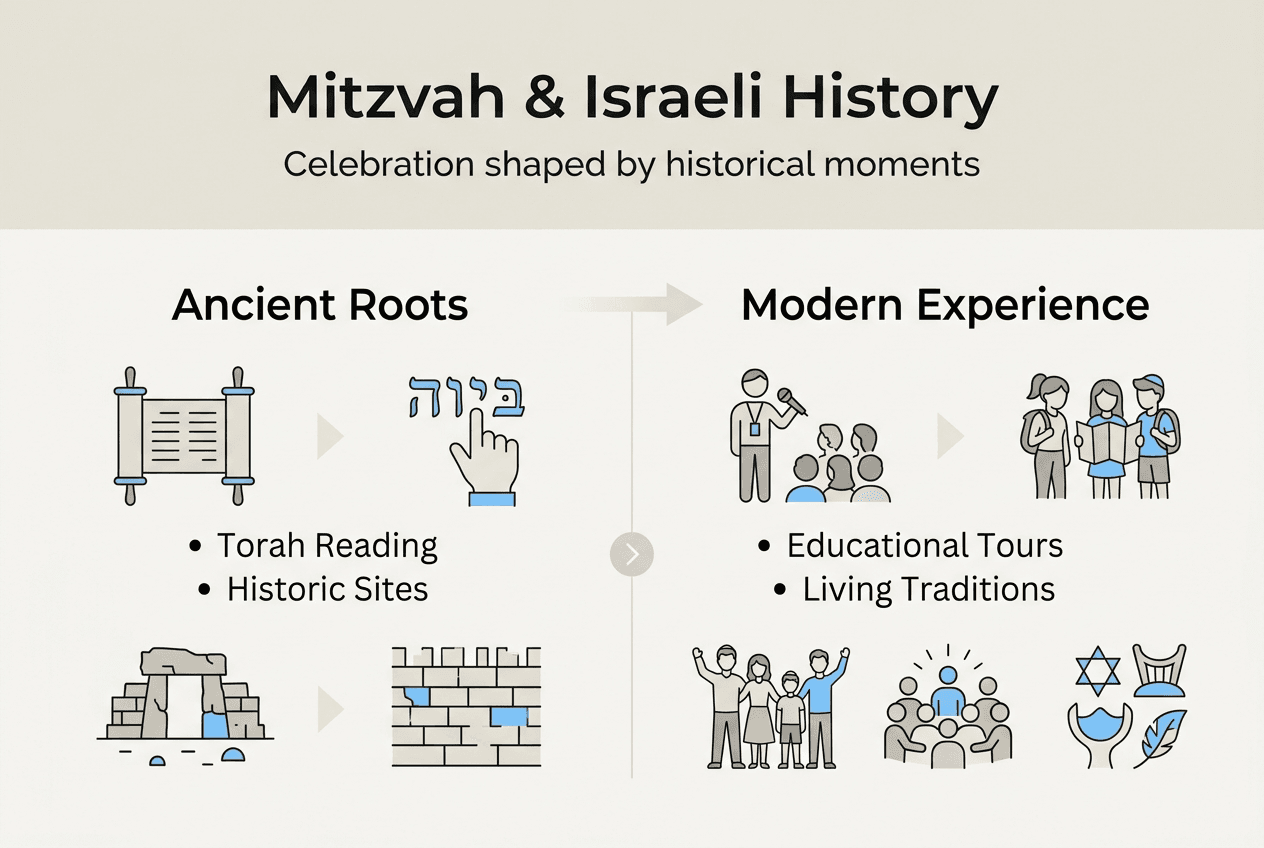
Personalizing your mitzvah experience through history
Every family brings unique values and interests to their mitzvah celebration. Some prioritize social justice, others emphasize spiritual depth, and many focus on resilience and triumph over adversity. Bar/Bat Mitzvah family trips use key Israeli historical moments as thematic foundations for mitzvah events, allowing you to craft a celebration that reflects what matters most to your family.
Consider these historical themes you can weave through your mitzvah experience:
Independence and self-determination, drawing from Israel’s founding story
Resilience through adversity, connecting to survival and renewal after the Holocaust
Unity across diversity, reflecting how Jews from 100+ countries built one nation
Innovation and creativity, highlighting Israel’s transformation of desert into garden
Justice and ethics, exploring how Jewish law evolved to address modern challenges
Pro Tip: Engage your child in choosing which historical narratives resonate most with them, then build ceremony elements and site visits around those themes for maximum personal meaning and lasting memory.
Approach | Heritage Focus | Modern Israel Focus |
Primary emphasis | Ancient sites, biblical connections | Contemporary achievements, innovation |
Typical locations | Jerusalem Old City, Masada, Safed | Tel Aviv, Technion, startup hub tours |
Ceremony elements | Traditional prayers, Torah readings | Creative interpretations, social action projects |
Family takeaway | Connection to ancestral roots | Pride in modern Jewish accomplishment |
Best for families who value | Continuity and tradition | Progress and adaptation |
You don’t have to choose exclusively between heritage and modern focus. The most meaningful mitzvah trips blend both, showing how ancient values inform contemporary Jewish life. Visit the Western Wall in the morning, then tour a Tel Aviv social enterprise addressing poverty in the afternoon. This combination demonstrates that Jewish responsibility spans both preserving tradition and solving modern problems.
To personalize your mitzvah with historical themes, follow these steps:
Choose a central theme that reflects your family’s values and your child’s interests
Incorporate storytelling from that historical period into the ceremony itself, perhaps through readings or symbolic objects
Integrate site visits that illuminate your chosen theme, spending extra time at locations most relevant to your focus
Create ceremony elements that explicitly connect historical lessons to your child’s future responsibilities
For example, if your family values resilience, you might visit Yad Vashem to honor those who perished, then tour a kibbutz founded by Holocaust survivors to celebrate renewal. Your child’s Torah portion discussion could explore how Jewish communities rebuilt after destruction. The mitzvah ceremony itself might include lighting candles for lost relatives alongside planting a tree symbolizing new growth.
Tailored hospitality services can help you identify which historical moments best align with your family’s story. Perhaps your ancestors came from a specific region now part of Israel, allowing you to visit their hometown. Maybe your family has a tradition of activism, making sites related to social movements particularly meaningful. These personal connections transform generic tourism into profound family storytelling.
The ceremony itself becomes richer when historical context informs every element. Instead of generic blessings, your child can explain how the prayers they’re reciting were preserved through centuries of diaspora. Rather than abstract discussion of responsibility, they can reference specific historical examples of Jews who faced difficult choices. This grounding in real history makes the mitzvah feel substantial and significant.
Planning your Bar or Bat Mitzvah trip centered on Israeli history
Transforming historical interest into a cohesive, meaningful mitzvah trip requires thoughtful planning that balances educational depth with celebration and family enjoyment. Successful mitzvah trips include careful selection of locations tied to Israeli history and family engagement, ensuring every day advances both learning and joy.
Key considerations for your historically focused mitzvah trip:
Timing matters, with spring and fall offering ideal weather for extensive site exploration
Site selection should prioritize quality over quantity, allowing deep engagement rather than rushed visits
Family interests must guide choices, as teenagers engage more when topics align with their passions
Educational content needs age-appropriate presentation that challenges without overwhelming
Balance is essential between structured learning and free time for processing and celebrating
Follow this framework to organize your historically enriched mitzvah trip:
Set clear goals for historical learning, identifying 3 to 5 key themes or periods you want your family to explore deeply
Choose your itinerary accordingly, clustering geographically related sites while maintaining thematic coherence
Prepare participants with background information before the trip through books, films, or family discussions
Include meaningful ceremonies at historically significant locations, perhaps a private service at the Western Wall or a reflection session at Masada
Build in downtime after intensive educational experiences for family conversations and emotional processing
The rhythm of your days should alternate between active learning and integration. A morning exploring archaeological sites might be followed by an afternoon at the beach. An intense visit to Yad Vashem could precede a celebratory dinner. This pacing prevents exhaustion while allowing historical lessons to sink in.
Professional guides make an enormous difference in bringing history alive. Expert educators can adjust explanations to your child’s level, answer unexpected questions, and connect disparate historical threads into coherent narratives. They know which stories will resonate with teenagers, which artifacts deserve extended attention, and how to facilitate family discussions that deepen understanding.
Consider working with best Bar Mitzvah tour locations that specialize in combining historical education with mitzvah celebrations. These providers understand how to sequence sites for maximum impact, when to push for deeper engagement and when to lighten the mood, and how to weave your family’s specific story into Israel’s broader narrative.
Authentic experiences require more than just showing up at famous sites. Arrange meetings with historians, archaeologists, or Holocaust survivors who can share personal perspectives. Participate in archaeological digs where your family uncovers artifacts firsthand. Attend a Shabbat service at a historic synagogue. These direct encounters create memories that outlast any museum visit.
Logistics deserve careful attention. Book accommodations near major historical sites to minimize travel time. Schedule the most intensive educational experiences when your child is most alert. Allow flexibility for spontaneous discoveries, whether that’s an unexpected museum exhibit or a local festival. Planning a mitzvah tour with professional support ensures these details enhance rather than hinder your experience.
Remember that the goal isn’t to see everything or become history experts. The goal is connection, understanding how Israeli history informs Jewish identity and how your child’s mitzvah fits into that ongoing story. A few deeply experienced sites will create more lasting impact than a rushed tour of dozens of locations.
Plan your unforgettable Bar or Bat Mitzvah tour in Israel
Bnei Mitzvah specializes in creating mitzvah celebrations that integrate Israeli history into every aspect of your family’s journey. Our planned Bar/Bat Mitzvah tours combine expert historical guidance with personalized ceremony planning, ensuring your child’s coming of age is grounded in the rich context of Jewish heritage and modern Israeli achievement.
With over 20 years of experience in tourism and event planning, we understand how to balance educational depth with joyful celebration. Our Bar Mitzvah tour options include visits to heritage sites that bring history alive, from ancient Jerusalem to the modern innovation hubs of Tel Aviv. We work with your family to identify which historical themes resonate most, then craft an itinerary that makes those connections tangible and meaningful.
Our Bat Mitzvah trips offer the same thoughtful integration of history, spirituality, and celebration, with additional focus on women’s roles in Jewish history and contemporary Israeli society. Every element, from site selection to ceremony design, reflects your family’s values and your child’s interests. Contact us today to begin planning a mitzvah experience that will resonate deeply with your family’s heart and soul for generations to come.
Frequently asked questions
What is the significance of Israeli history in Bar and Bat Mitzvah celebrations?
Israeli history connects participants to Jewish identity and heritage during this rite of passage, providing context for the responsibilities they’re assuming. Understanding how Jewish traditions survived and evolved through millennia of challenges makes the mitzvah ceremony feel weightier and more meaningful. Your child joins an unbroken chain of Jewish adults who carried these practices forward through every historical circumstance.
How do historical sites deepen the mitzvah experience?
Visiting locations where Jewish history unfolded creates tangible, emotional connections that abstract learning cannot match. Standing at Masada where Jews chose death over surrender, or touching stones from the Second Temple period, transforms historical facts into personal memory. These visceral experiences help teenagers grasp their place in Jewish continuity far more effectively than classroom instruction.
What educational programs enhance mitzvah trips?
Guided tours with expert educators provide chronological understanding of Israeli history while connecting events to mitzvah themes. Interactive museums like the Palmach Museum and Diaspora Museum use multimedia and immersive environments to engage young people. Custom programs can focus on specific interests, whether archaeology, military history, social justice movements, or artistic achievement throughout Jewish civilization.
How can families personalize mitzvah celebrations with history?
Select historical themes that align with your family’s values, such as resilience, innovation, or justice, then build ceremony elements around those narratives. Incorporate storytelling from relevant historical periods into readings and speeches. Visit sites that illuminate your chosen themes, and create symbolic ceremony moments that explicitly link historical lessons to your child’s future responsibilities as a Jewish adult.
What should families consider when planning historically focused mitzvah trips?
Balance educational depth with celebration and family enjoyment by alternating intensive learning with relaxation time. Choose quality over quantity in site selection, allowing deep engagement at fewer locations rather than rushed visits to many. Work with professional guides who can adjust content to your child’s level and interests. Prepare participants with background information before the trip, and build in reflection time for processing what you’ve learned together.
Recommended
Comments