What Is an Aliyah Family Trip? A Guide for Jewish Families
- שי דוד

- Jul 6
- 7 min read

TL;DR:
An aliyah family trip is a structured visit to Israel that evaluates daily life aspects before making aliyah. It involves real-world activities such as school visits, housing tours, community meetings, and daily errands to assess if families can build a life there. Families who treat the trip as an investigation rather than a vacation gain valuable insights and increase their chances of a successful move.
An aliyah family trip is a structured, intentional visit to Israel that allows Jewish families to assess the realities of daily life before committing to aliyah. Known formally as a “pilot trip,” this type of visit focuses on schools, housing, neighborhoods, and community fit rather than tourist attractions. Organizations like Nefesh B’Nefesh and Olim Advisors have long guided families through this process, and specialists like Bneimitzvahtrip help families layer in meaningful cultural and spiritual experiences alongside the practical evaluation. Done well, an aliyah family vacation replaces guesswork with ground-level clarity.
What is an aliyah family trip and what does it actually involve?
An aliyah family trip, or pilot trip, is an operational exercise in real-life evaluation. Families spend their days doing what they would do as residents, not as tourists. That means riding public transit, buying groceries, sitting in on school tours, and walking through potential neighborhoods at different times of day.
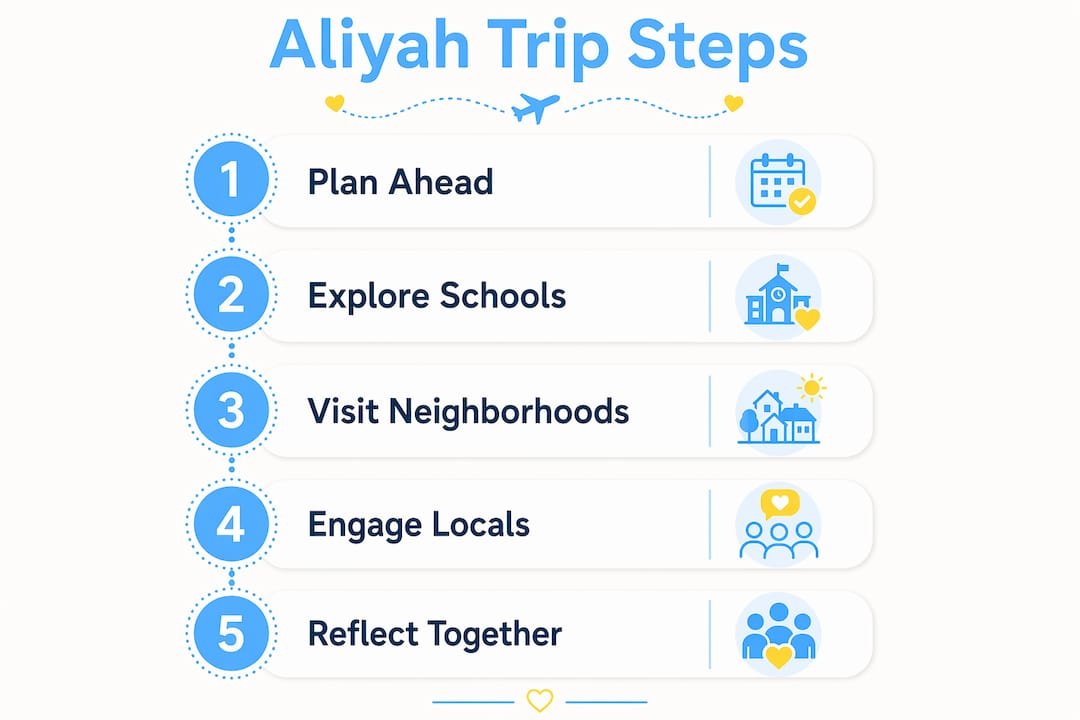
A well-planned pilot trip typically covers these core activities:
School visits: Touring local schools, meeting principals, and reviewing curriculum differences between Israeli and American educational systems
Real estate viewings: Walking through apartments and homes in target neighborhoods to assess size, cost, and commute times
Community meetings: Sitting down with local families, community coordinators, and English-speaking olim who made the move years earlier
Daily errands: Visiting supermarkets, pharmacies, and local markets to understand costs and convenience
Transportation tests: Taking buses, trains, and taxis to gauge how realistic daily commutes would feel for the whole family
A structured pilot trip typically lasts between 7 and 21 days, with a recommended minimum of 4–5 days to allow thorough visits without feeling rushed. Shorter trips often leave families with more questions than answers. Longer trips, in the 10–14 day range, give children time to settle in and form genuine impressions.
Pro Tip: Ask your school contacts to connect you with an English-speaking parent whose child is the same age as yours. That conversation will tell you more than any official tour.
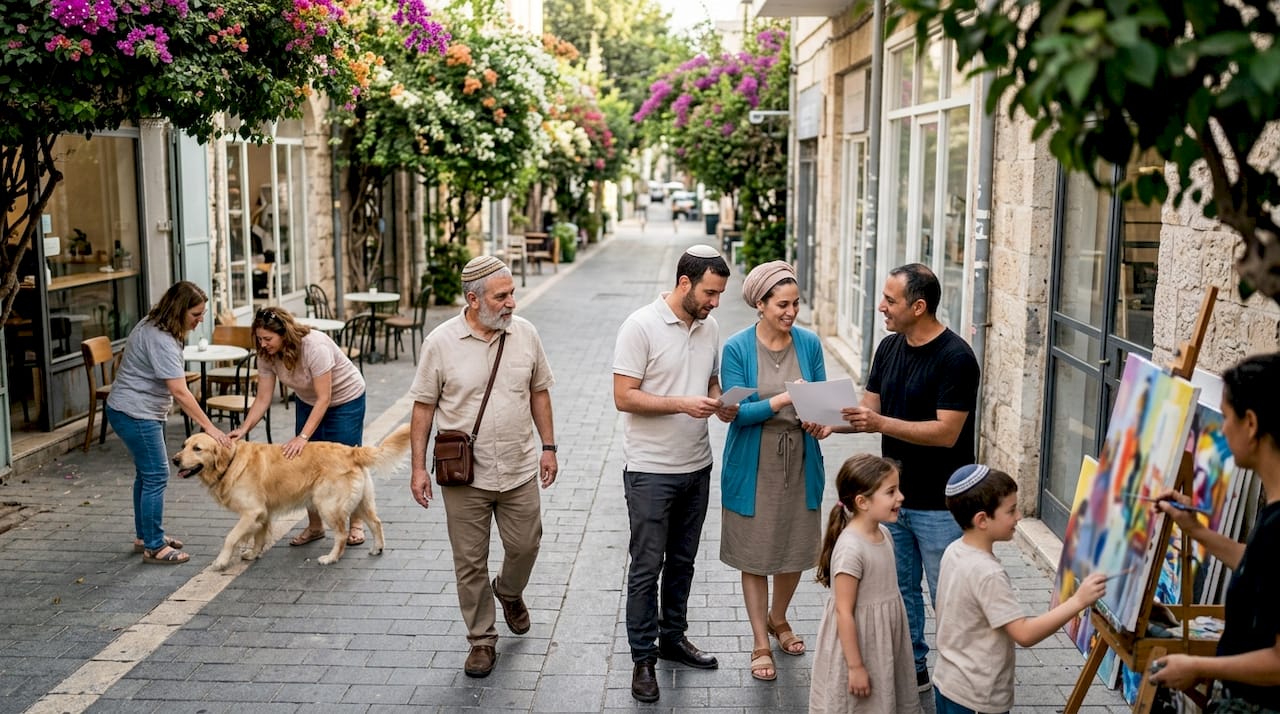
Children notice details that adults overlook. Letting kids express their feelings during the trip builds resilience and improves long-term aliyah adaptation. Their authentic responses give parents insights that no spreadsheet can provide.
How does an aliyah trip differ from a regular family vacation to Israel?
The distinction is fundamental. A family vacation to Israel centers on the Western Wall, Masada, the Dead Sea, and Shabbat dinners in Jerusalem. An aliyah trip centers on a Tuesday morning school drop-off and whether the apartment on HaRav Kook Street has enough closet space.
A pilot trip is not a vacation with a few serious meetings sprinkled in. It is a full investigation of whether your family can build a life here, conducted with the rigor of a job interview and the emotional weight of a major life decision.
Families who confuse the two often return home with beautiful memories but no useful data. Treating aliyah purely emotionally leads to friction after the move. The pilot trip exists to replace assumptions with verified facts.
Three common misconceptions families bring to their first pilot trip:
“We’ve been to Israel before, so we know what it’s like.” Previous visits as tourists do not prepare you for the realities of Israeli bureaucracy, school registration, or apartment hunting.
“We’ll figure out the details after we move.” Post-move surprises are far more costly, financially and emotionally, than pre-move research.
“The kids will adapt.” Children adapt better when they have had a voice in the decision. A pilot trip gives them that voice.
Emotional fatigue and doubt during a pilot trip are normal. They are not signs that aliyah is wrong. They are signs that the trip is working, pushing families to refine their priorities before committing.
How to organize an aliyah trip: practical planning tips
Effective aliyah trip planning starts 3 to 4 months in advance. That lead time allows families to pre-schedule school tours, realtor appointments, and community meetings, all of which book up quickly, especially during the spring and summer months when many families visit.
Planning element | Recommended approach |
Trip timing | Spring (april–may) or fall (september–october) for mild weather and active school schedules |
School appointments | Contact principals directly 8–10 weeks before arrival |
Housing viewings | Book a local English-speaking realtor before departure |
Budget (excluding airfare) | Baseline costs range from ₪5,000 to ₪15,000+, with accommodation running ₪300–₪1,000 per night |
Daily food costs | Budget ₪150–₪300 per person per day for meals |
Balance is critical when children are involved. Including regular downtime and enjoyable activities prevents burnout and negative associations with Israel. Plan one fun activity for every two serious appointments. A morning at a Tel Aviv beach or an afternoon at the Jerusalem Biblical Zoo costs nothing in terms of logistics and pays dividends in family morale.
Pro Tip: Keep a shared family journal during the trip. Each person writes three words at the end of every day. Patterns in those words reveal priorities that formal debriefs often miss.
Documentation matters. Take photos of apartments, note the names of teachers you meet, and record voice memos after each school visit. Families who document well make faster, clearer decisions after returning home. For families also planning a custom Israel learning itinerary, combining aliyah research with a structured cultural program makes the trip significantly more efficient.
How aliyah trips support Bar and Bat Mitzvah celebrations
An aliyah family trip and a Bar or Bat Mitzvah tour to Israel are not mutually exclusive. Many American Jewish families combine both into a single, deeply meaningful visit. The logistics overlap, and the emotional impact compounds.
Families who weave a Bar or Bat Mitzvah celebration into their pilot trip gain several distinct benefits:
Deepened Jewish identity: Immersive trips to Israel strengthen children’s connection to their heritage in ways that classroom education cannot replicate.
Shared family memory: A Bar or Bat Mitzvah at the Western Wall or in the Galilee creates a reference point the whole family carries forward.
Practical community exposure: Attending Shabbat services in a target neighborhood doubles as both a spiritual experience and a community evaluation.
Reduced trip costs: Combining two major trips into one saves on airfare and logistics.
Emotional anchoring: Children who celebrate a milestone in Israel often develop a stronger personal connection to the country, which eases the emotional side of aliyah later.
Bneimitzvahtrip specializes in exactly this kind of layered experience. With over 20 years of expertise in tourism, event planning, and experiential travel, the team builds itineraries that serve both the practical goals of aliyah exploration and the spiritual goals of a meaningful Bar Mitzvah tour. For families curious about what educational tours for kids in Israel look like in practice, Bneimitzvahtrip offers detailed guidance on structuring those visits.
Key Takeaways
An aliyah family trip is the single most effective way to replace assumptions about life in Israel with verified, family-specific data before making the move.
Point | Details |
Define the trip correctly | A pilot trip evaluates daily life realities, not tourist highlights. |
Plan 3–4 months ahead | Pre-schedule school tours, realtor meetings, and community contacts before departure. |
Include children actively | Kids’ honest reactions during the trip improve long-term aliyah adaptation. |
Budget realistically | Baseline costs excluding airfare range from ₪5,000 to ₪15,000+ depending on duration. |
Combine with Bar/Bat Mitzvah | Layering a milestone celebration into the trip deepens identity and reduces total travel costs. |
What I’ve learned from watching families take this trip
Shay here. After years of working with families on Israel trips, the pattern I see most often is this: families who treat the pilot trip as a vacation come home inspired but unprepared. Families who treat it as an investigation come home with a real plan.
The hardest part is not the logistics. It is sitting in a small apartment in Modiin or Raanana and asking yourself honestly, “Could we actually live here?” That question carries weight. Doubt during the trip is not failure. It is the trip doing its job.
The families who succeed at aliyah are almost always the ones who gave their children a real voice during the pilot trip. Not a vote, but a voice. When a 12-year-old says, “I liked that school because the kids were nice to me,” that matters more than any ranking or curriculum comparison. Capture those moments. They become your compass.
One more thing: do not skip the fun. A morning at Caesarea’s Roman amphitheater or a sunset over the Sea of Galilee reminds everyone why Israel is worth the effort. The goal is not to grind through appointments. The goal is to fall in love with the place while seeing it clearly.
— Shay
Planning your Israel trip with Bneimitzvahtrip
Families planning a meaningful Israel trip do not have to choose between practical exploration and celebration. Bneimitzvahtrip builds itineraries that hold both.
With over 20 years of expertise in tourism, event planning, and experiential travel, Bneimitzvahtrip designs family trips that combine community visits, cultural programming, and Bar or Bat Mitzvah celebrations into one cohesive experience. Every itinerary is built around your family’s specific goals, whether you are evaluating aliyah, marking a milestone, or both. Local coordination, family-friendly accommodations, and curated cultural experiences are all part of the package. Explore our planned tours and take the first step toward a trip your family will carry with them for life.
FAQ
What is a pilot trip for aliyah?
A pilot trip for aliyah is a structured visit to Israel focused on evaluating schools, housing, neighborhoods, and daily life before committing to the move. It differs from tourism by prioritizing realistic lifestyle assessment over sightseeing.
How long should an aliyah family trip be?
A pilot trip typically lasts 7–14 days, with a minimum of 4–5 days recommended to allow thorough visits without feeling rushed. Families with children benefit from the longer end of that range.
How far in advance should I plan an aliyah trip?
Start planning 3–4 months before departure. That lead time allows you to pre-schedule school tours, realtor appointments, and meetings with local families, all of which fill up quickly.
Can I combine an aliyah trip with a Bar or Bat Mitzvah celebration?
Yes. Many families combine both into a single visit, which deepens Jewish identity, creates a shared family milestone, and reduces overall travel costs. Bneimitzvahtrip specializes in itineraries that serve both goals.
What should I budget for an aliyah pilot trip?
Excluding airfare, baseline costs range from ₪5,000 to ₪15,000+, with accommodation running ₪300–₪1,000 per night and daily food costs of ₪150–₪300 per person.
Recommended
Comments